

Rooftop Unit Service in Albuquerque, NM
Repair, upkeep and replacement planning for the package units on your roof, section by section.
- NM CID License #413436
- 24 Google reviews
- Led by Dominic Montoya, over 20 years in the trade
- Free written estimates
Rooftop unit service in Albuquerque covers the package units on flat commercial roofs: repair, seasonal upkeep and planned replacement. Red Wrench Company works through the electrical, cooling, gas heat, airflow and economizer sections of the unit, tells you what failed and gives you a written price before repairs start. When an older RTU has stopped earning its repair bills, we can price replacement beside the repair. Call (209) 563-1270.
What a Failing Rooftop Unit Looks Like From Below
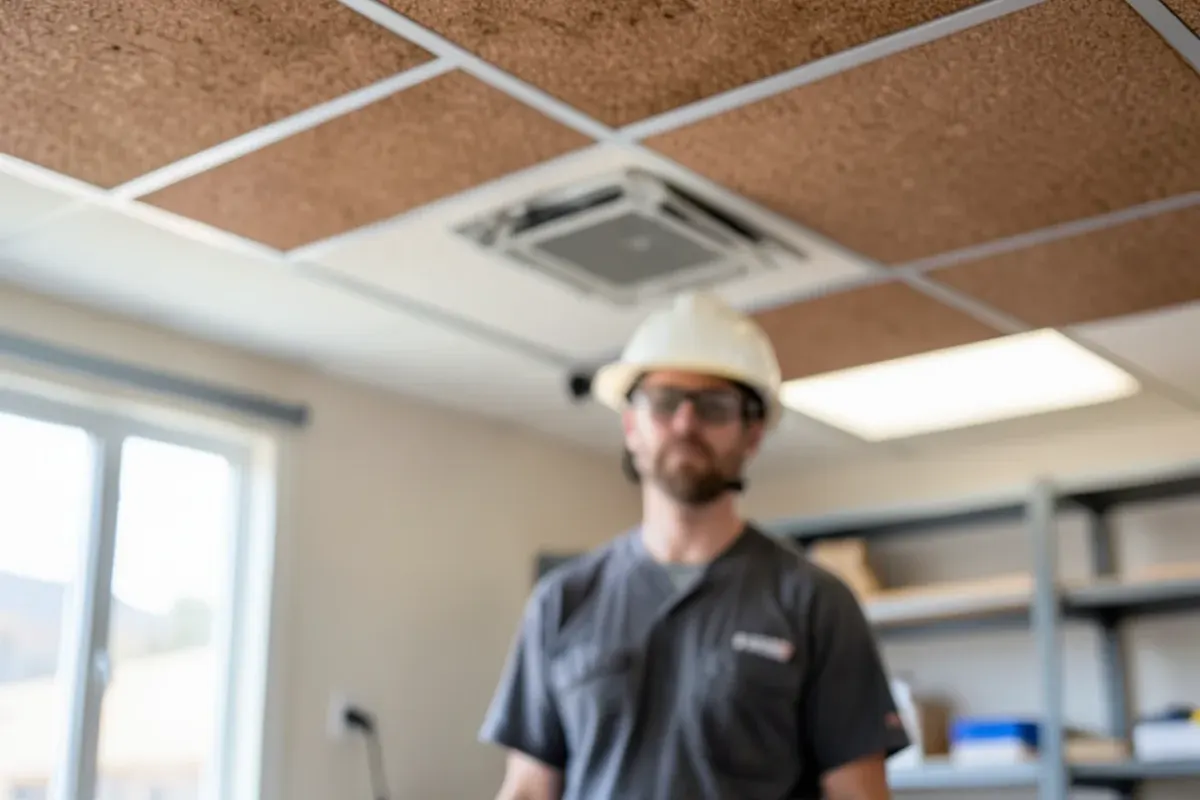
Most RTU problems get noticed indoors first. A rooftop unit, or RTU, is a single cabinet that holds the compressor, coils, blower and often gas heat, so one failure can take out a whole zone. Watch for:
- A zone that drifts warm through the afternoon
- Air from the diffusers that is moving but not cold
- No heat on a cold morning while the fan runs
- A squeal or thump overhead when the blower starts
- A water stain on a ceiling tile near the curb
- Dust or a musty smell at start-up
- A breaker that trips more than once
Roof-level signs are just as useful. Look for oil around refrigerant lines, standing water in the drain pan, panels that have come loose, or a condenser fan that is not turning.
How Does Albuquerque Weather Wear Down an RTU?
A rooftop unit takes every kind of local weather with no shelter.
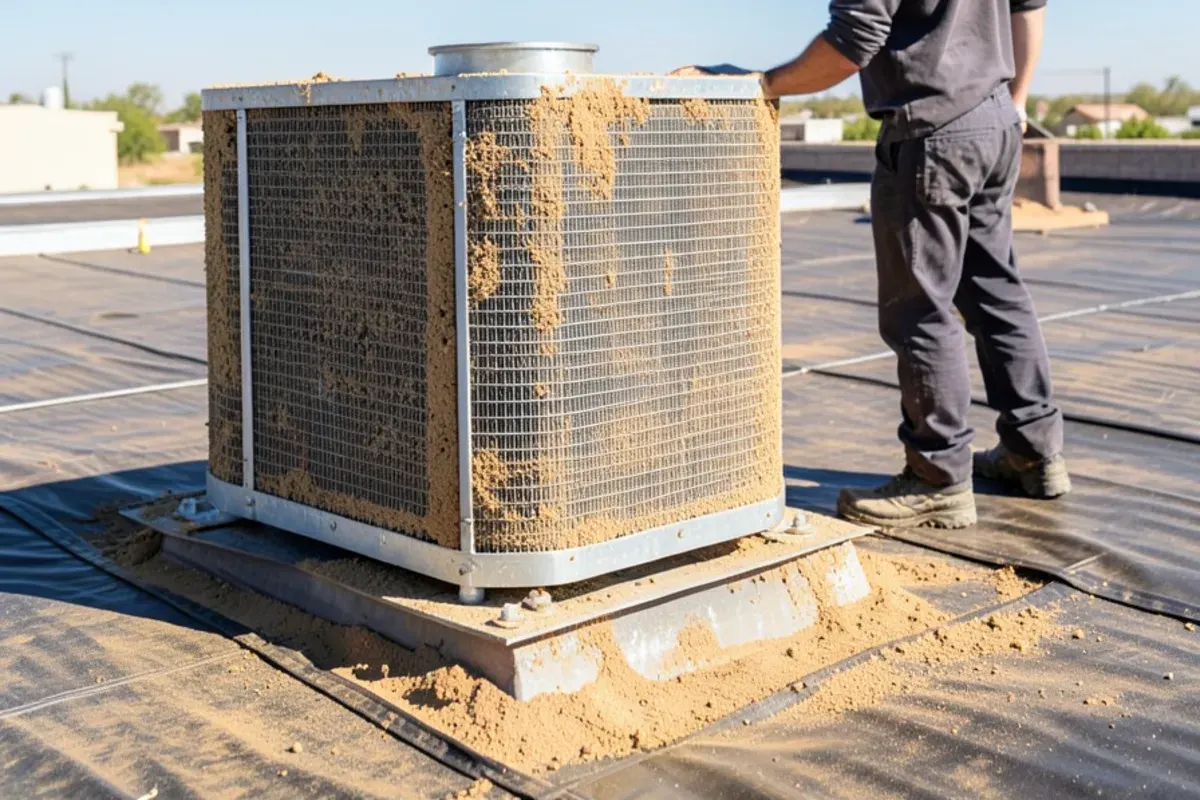
- Dust. The City of Albuquerque's 2024 dust plan says many high wind events come in spring. That grit packs condenser coils and filters and works into damper linkages.
- Wind. The same storms work at panels and loose screws.
- Sun. At about 5,300 feet, strong sun hardens gaskets, wire insulation and exposed drain lines.
- Heat. National Weather Service Albuquerque logged 10 days at or above 90°F in September 2026 against a normal of 3.7, which stretches the season for tired compressors.
- Cold. About 113 freezing nights a year (BestPlaces) can freeze a condensate trap or drain line.
- Monsoon rain. July through September storms find any weak spot at the curb and flashing.
- Altitude. Thin air changes combustion, so gas sections must follow the manufacturer's high-altitude instructions.
What We Check on the Roof
We go through the whole unit section by section, because the part that looks broken may be the victim of something else.
| Section | What we check | Why it matters |
|---|---|---|
| Electrical | Disconnect, contactors, capacitors, wire condition, amp draw | Heat and sun are hard on these parts |
| Cooling | Refrigerant pressures, temperatures, coil condition | A low charge means a leak, not a top-off |
| Gas heat | Ignition, burners, flame sensor, heat exchanger, venting | A cracked exchanger is a safety issue |
| Airflow | Filters, belts, pulleys, blower bearings | Most easy failures live here |
| Economizer | Damper, actuator, linkage, sensors | Stuck dampers waste energy unseen |
| Condensate | Pan, trap, drain line | Overflows end up on your ceiling |
| Cabinet and curb | Panels, gaskets, curb seal | Keeps water and dust out |
The economizer deserves its own look. It is the damper system that brings in cool outdoor air when conditions allow, and it fails quietly. A California Public Interest Energy Research study found 64 percent of units with economizers were not operating correctly. In a dry climate with cool nights, a working one matters here.
Rooftop Unit Service in Albuquerque: Repair, Retrofit or Replace?
Weigh the condition of the whole unit before you decide on the failed part.
| Path | When it fits | Trade-off |
|---|---|---|
| Repair | One failed part on sound equipment | Fastest and usually cheapest; the rest of the unit keeps aging |
| Major repair | A compressor or motor on a unit with life left | Worth it on newer units; a tough call on old ones |
| Retrofit controls or economizer | Unit runs well, but controls have failed | Recovers lost performance without a crane |
| Planned replacement | Rust, a failed heat exchanger, repeated breakdowns | Highest cost, but you pick the season and the crane day |
Ask for both prices when a major repair lands on an older unit. We can write them up on one estimate, so the owner sees the decision clearly. Our replacement planning guide walks through the questions for building owners.
From Ladder to Sign-Off: The Service Visit
- We meet whoever has roof access and hear what the building has been doing.
- We confirm the call at the thermostat or controller, then lock out power before opening panels.
- We work through the sections above, starting with the likely fault.
- We show you the part or the reading, then write up the price before repair starts.
- If the part is on hand, the repair usually finishes on that visit. If not, we tell you when it should arrive.
- We run the unit through a full cycle, check supply air temperature, close and secure every panel, and leave you a plain record.
Tell us what the roof looks like before the visit. OSHA's construction rule calls for fall protection at unprotected edges 6 feet or more above a lower level and around skylights, so low parapets, skylights and hatch conditions shape how the work gets planned. General industry rules can differ for routine upkeep.
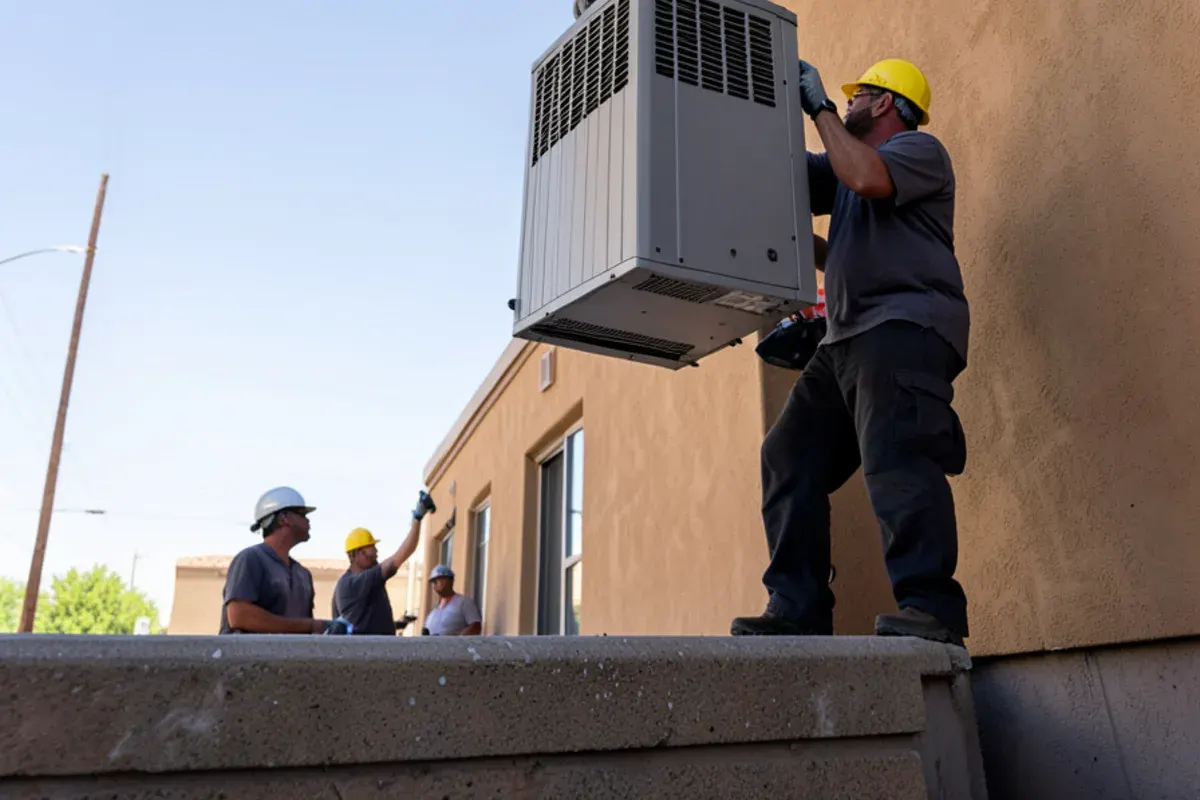
A planned replacement adds steps. Size comes from a commercial load calculation instead of the old nameplate, especially if the space has changed use. New units often need a curb adapter to fit the old opening, and the roof has to carry the new weight. We also plan the crane, the shutdown and the electrical and gas tie-ins. Bring your roofer in for the flashing if the roof warranty calls for it.
On a replacement, the quote should state who pulls the permit, and ours does. A mechanical permit is required for replacements. Inside City limits the 2024 Uniform Administrative Code governs, and larger projects can need sealed engineering plans, so confirm the threshold with City Building Safety.
Energy code can shape the new unit too. The published 2021 IECC calls for an economizer on individual fan systems of 54,000 Btu/h or more in most nonresidential buildings, with exceptions, and for fault detection on many economizer units. Ask the permit office how that applies to your replacement.
Which Refrigerant Will a New RTU Use?
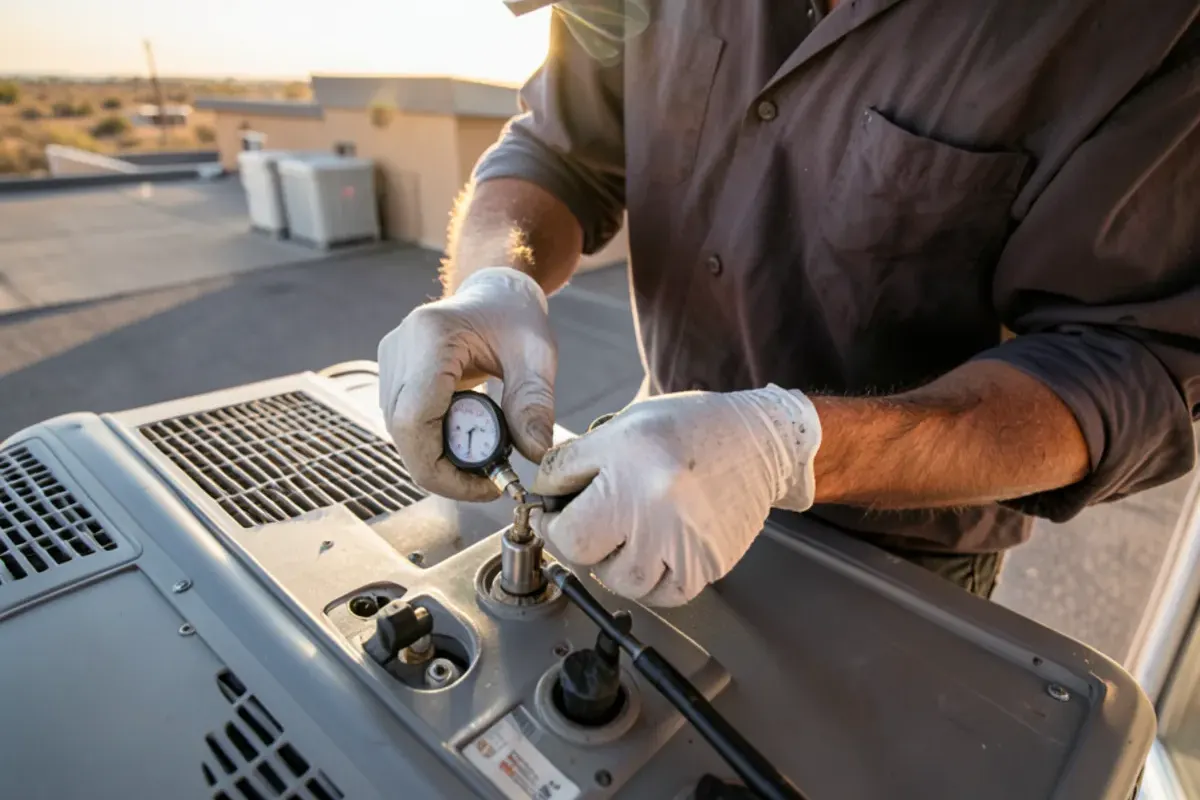
Expect a change if your old unit runs R-410A. EPA's Technology Transitions rule caps residential and light commercial AC and heat pumps at a global warming potential of 700 from January 1, 2025, a limit R-410A cannot meet. EPA has said most major manufacturers have moved to R-454B.
Your existing unit is not stranded. EPA says components used to repair existing systems are not subject to these restrictions, so an R-410A RTU can still be repaired with R-410A. Refrigerants do not mix, and a new refrigerant cannot simply be added to an old unit.
The rules have shifted more than once. In May 2026, EPA finalized removing an installation deadline for certain older R-410A equipment. Treat any stock unit offered as a bargain with care, and ask what refrigerant it uses and how it will be supported. Confirm how the rule applies to your size of equipment before you commit.
What Changes the Cost of RTU Work?
We do not publish RTU prices, because tonnage and the roof decide most of it. Get a written local quote. These lines move it:
- Unit size, and gas heat versus electric
- Parts availability on older models
- Roof access, ladders or a lift
- Crane time and street or lot closures
- Curb adapters and roof repairs
- Electrical or gas changes
- After-hours work to keep tenants open
- Permit and any engineering requirements
Why Red Wrench on the Roof
- Whole-unit diagnosis. We look past the failed part, and we flag what we would watch next.
- Repair and replacement on one page. The estimate is free, in writing and comes with no pressure.
- Experienced leadership. Dominic Montoya leads the company and has spent over 20 years in plumbing, heating and cooling.
- A number you can verify. Building owners can confirm NM CID License #413436 through the state license lookup.
- Honest scope. We focus on light commercial package units, and we will tell you if a unit is beyond that.
We are showing general reviews of the company here. None mentions rooftop units or commercial work, so treat them as a view of how we deal with customers. New Mexico requires a Construction Industries Division license for HVAC work. MM98 is the state's mechanical classification, explained here as general background, so check any contractor's listing before a job this size.
We service rooftop units across Albuquerque and nearby communities, including Rio Rancho, Los Lunas and Bernalillo.
“Top notch service, professionalism and knowledge like none other. I highly recommend.”
“i’ve been meaning to post this for a while. The Red wrench company is an outstanding organization. The owner and employees completed my job to perfection and did a complete follow up to ensure I was completely satisfied. If you get the opportunity, use these guys. You won’t regret it.”
“Book them asap! Great professional service from people with integrity!!”
Related services
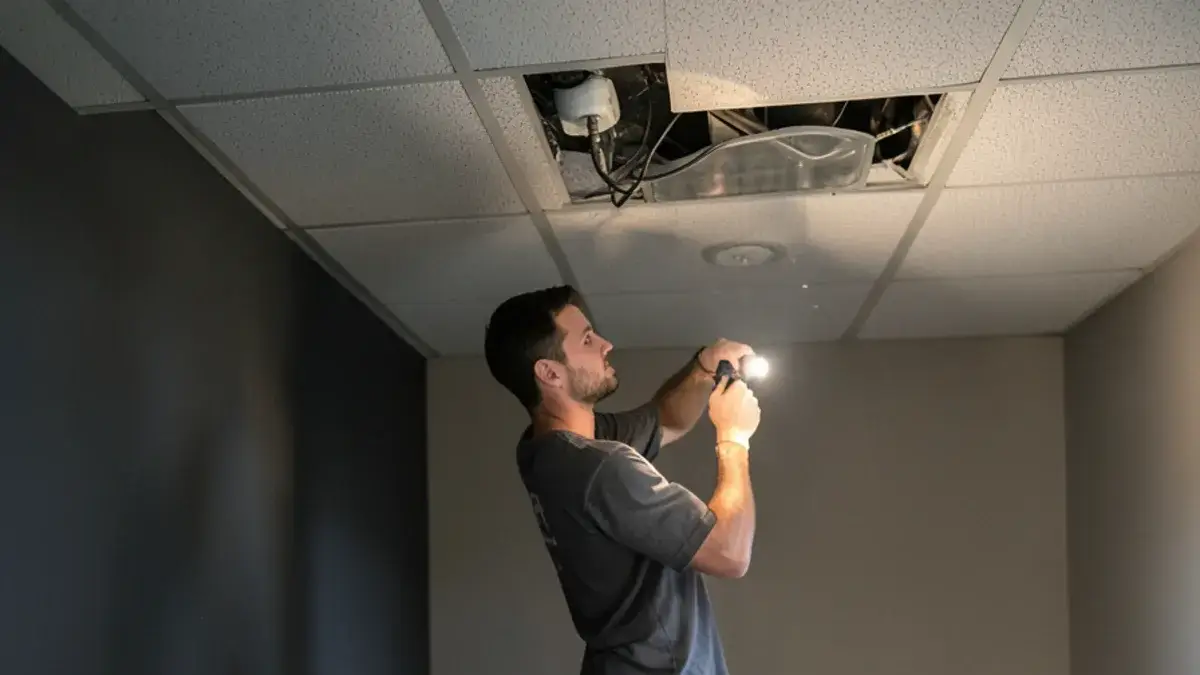
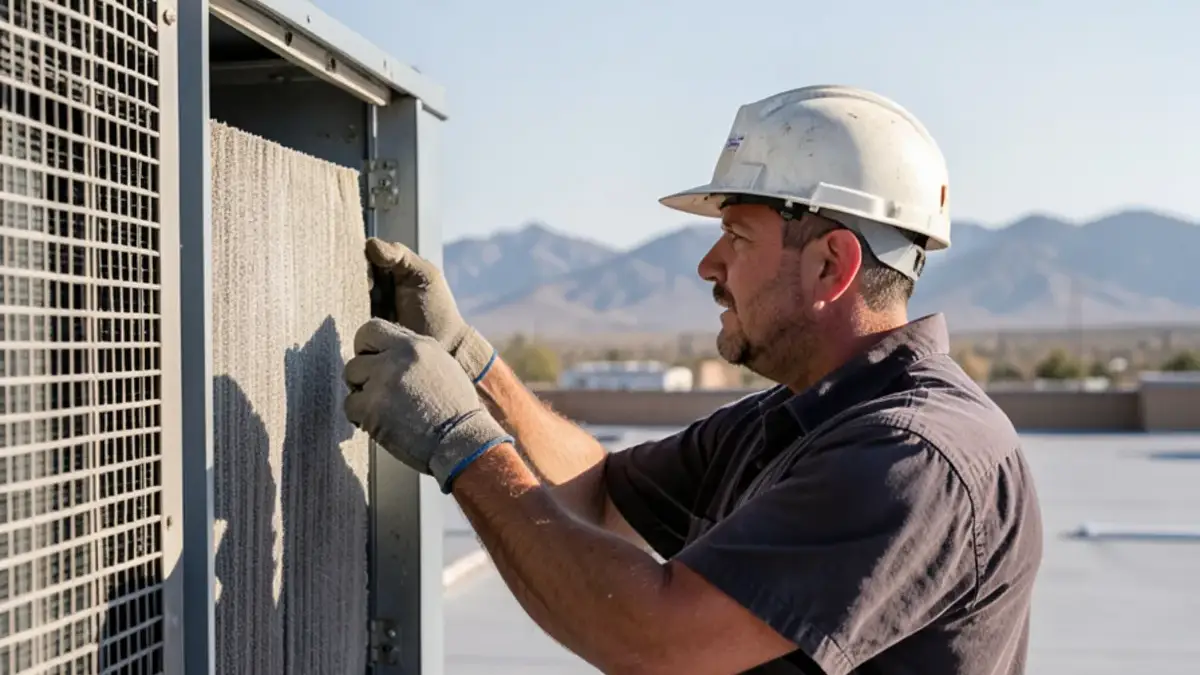
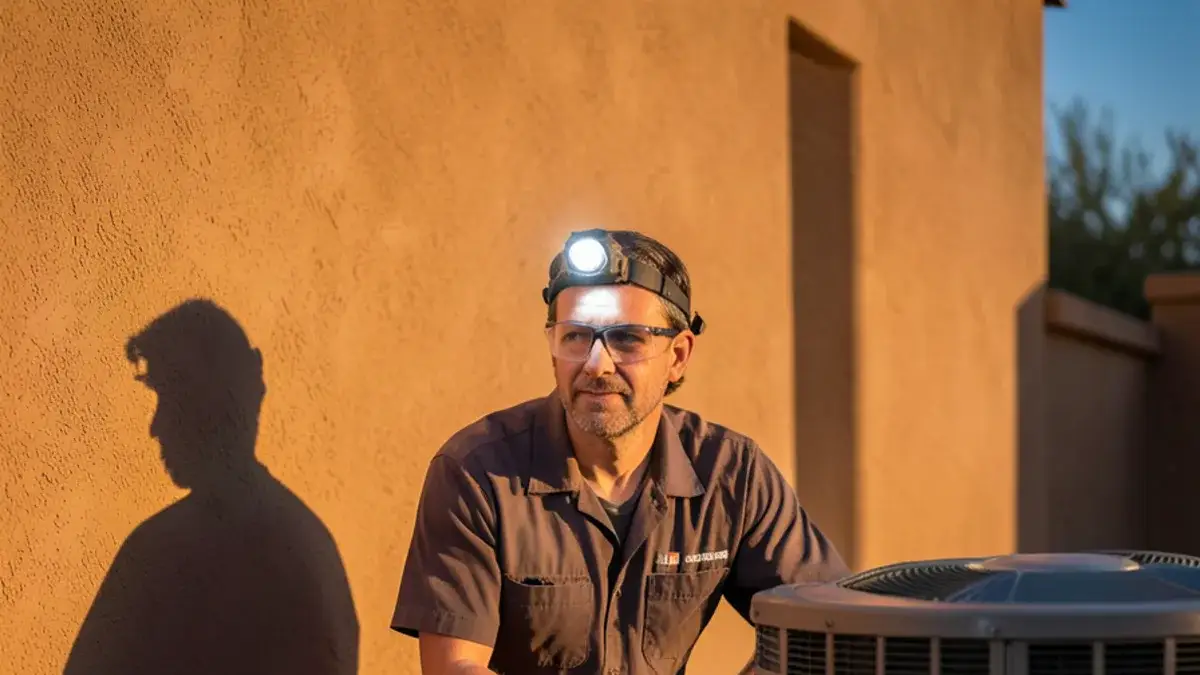
Areas we serve
- Rio RanchoReplacement needs a City mechanical permit through Development Services on Civic Center Circle.
- Los LunasCrane-day replacements need a CID mechanical permit, with Village review of site and zoning.
- BernalilloCamino del Pueblo storefronts need crane and street planning well before any lift.
- Santa FeVisible rooftop equipment on historic structures faces district rules, so check before replacing.
- BelenAbout 50 minutes from base, so planned replacements and scheduled upkeep suit this drive best.
- MoriartyTorrance County logged 46 high wind events, so check fasteners and curb seals each visit.
- EdgewoodNear 6,700 feet, gas sections must follow the manufacturer's high-altitude instructions.
- South ValleyCounty permit and floodplain determinations can apply on unincorporated commercial sites.
- Bernalillo CountySealed-plan thresholds apply inside City limits, so confirm which office governs your roof.
- All service areas
Rooftop Unit Service questions
How long does a rooftop unit last?
It varies widely with upkeep, size and exposure, so judge the unit and not the calendar. Rust at the base, a failing heat exchanger or repeated compressor trouble say more than age does. Albuquerque's dust and sun are hard on a neglected unit. Ask us to inspect it, then plan replacement before it fails.
Can you repair an RTU that runs R-22 or R-410A?
Yes, in many cases. Existing units can still be repaired with their original refrigerant, as long as it can be sourced. R-22 is scarce, so a large leak on an R-22 unit usually points toward replacement. We check the plate and tell you what supply looks like before you spend money.
Why does my rooftop unit freeze up in summer?
Low airflow or a low charge is the usual cause. A clogged filter, a loose belt or a dirty evaporator coil can drop the coil below freezing, and so can a refrigerant leak. Shut the cooling off so it can thaw. Dusty Albuquerque spring filters that nobody changed are a common place to start looking.
How often should an RTU be serviced?
Twice a year is the usual pattern, in spring for cooling and fall for gas heat. Filters may need changing more often after windy weeks or in a kitchen. Our commercial HVAC maintenance page covers what those visits include and what records you should get back.
Do you need to shut down the whole building to replace a unit?
Usually not, if the building has several units. One zone goes offline during the swap and the rest keep running. A single-unit building loses that air for the day of the change-out, so plan around it. We set the crane time with you, often early in the morning before the business opens.
Who handles roof leaks around the unit?
It depends on the source. We check drain pans, panels and curb seals, and we can fix what belongs to the unit. A failed membrane or flashing belongs to your roofer, and using one may be a condition of the roof warranty. We will show you what we found so the right trade gets called.
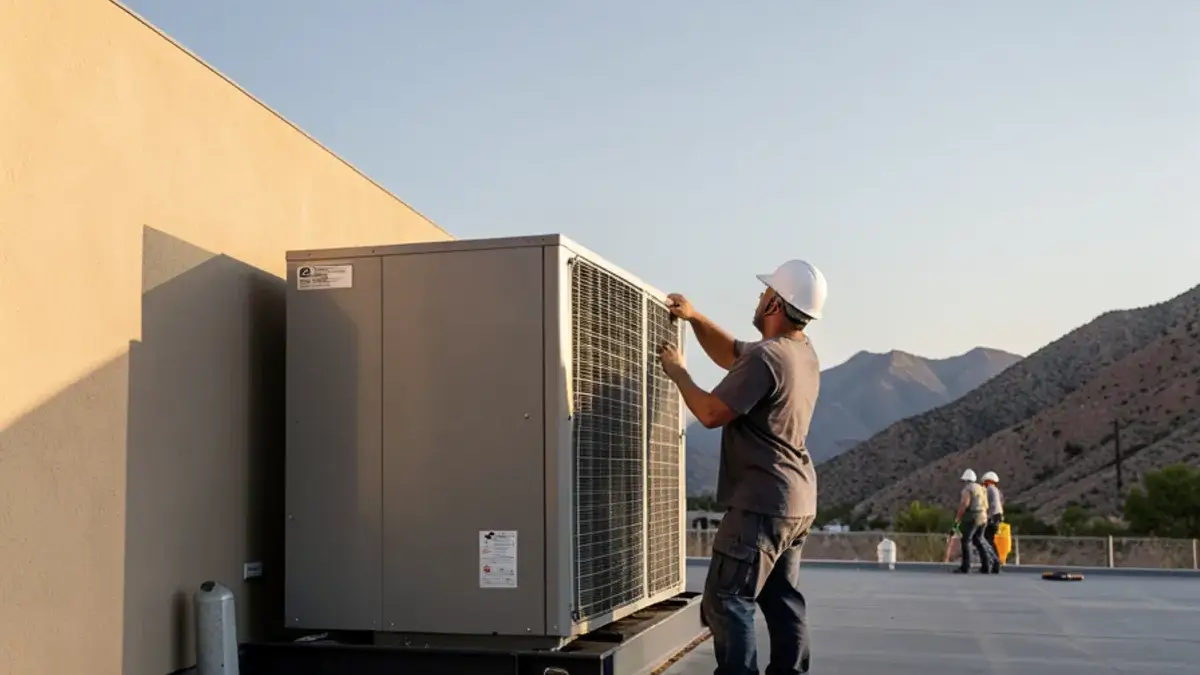
Talk to Red Wrench about rooftop unit service
Call any hour. You get a straight answer, a free written estimate and the price before the work starts.
- NM CID License #413436
- 24 Google reviews
- Led by Dominic Montoya, over 20 years in the trade
- Free written estimates
Red Wrench Company, 5635 Paradise Blvd NW, Albuquerque, NM 87114, (209) 563-1270