

Preventive HVAC Maintenance Checklist for Property Managers
An inventory, a task calendar and a logbook turn HVAC from a stream of tenant calls into a schedule you control.
- NM CID License #413436
- 24 Google reviews
- Led by Dominic Montoya, over 20 years in the trade
- Free written estimates
By Dominic Montoya, Owner of Red Wrench Company. Published , updated .
A commercial HVAC maintenance checklist for a property manager needs three things: a list of every unit, a task calendar tied to that list, and a written record of what got done. That combination cuts surprises and gives owners and tenants proof of the work. Start with the inventory, because nothing else can be scheduled without it.
Start With an Equipment Inventory
You cannot schedule what you have not listed. Walk every building once and record each unit.
- Building, suite and location, including roof access notes
- Make, model and serial number from the model plate
- Install date, fuel type and refrigerant
- Filter size and quantity
- Who the unit serves and whether any tenant has special needs, such as a server closet
- Last service date and open issues
Photograph each plate. A clean spreadsheet covers a small portfolio, and a maintenance software system makes sense once you are tracking many buildings. Either way, put warranty paperwork and permits in the same place.
ASHRAE/ACCA Standard 180, the national standard practice for inspecting and maintaining commercial building HVAC systems, gives the formal version of this approach if an owner wants a recognized framework.
The Commercial HVAC Maintenance Checklist by Interval
Pacific Northwest National Laboratory (PNNL) calls a preventive program critical to proper, efficient operation, and says it aims to reduce costly repairs and unexpected downtime. This calendar follows PNNL's best-practice table for packaged unitary equipment, trimmed to the items a manager should see on a service record. PNNL also says the actions should only be attempted by trained and certified personnel, so treat this as a list to schedule and verify rather than a staff to-do list.
| Interval | Task | Why it matters |
|---|---|---|
| Daily or walk-through | Listen for unusual noise and vibration; note obvious faults | Early warning, often from tenants |
| Weekly | Inspect outdoor air intakes and exterior openings; look for weather or vandal damage | Blocked intakes starve units |
| Quarterly | Check or replace filters per manufacturer guidance | Protects coils, fans and airflow |
| Quarterly | Check supply air temperature, thermostats and controllers | Finds drift before complaints |
| Quarterly | Inspect belts, fans, dampers, actuators and ductwork | Worn parts fail under load |
| Quarterly | Inspect and clean coils; check condensate drains and pans | Prevents ceiling leaks and capacity loss |
| Quarterly | On gas units, check flue, ignition, burner, heat exchanger and safety shutoff | Safety and reliable heat |
| Quarterly | Inspect roof and wall penetrations | Stops leaks at the source |
| Annually | Inspect compressors, amperage and refrigerant lines | Catches failing parts early |
| Annually | Verify electrical connections and three-phase balance | Protects motors and compressors |
| Every activity | Log the work | Reveals repeat problems |
Dust may push filter and coil work tighter than quarterly here. Spring wind fills coils quickly, so let the first year's records set your real interval.
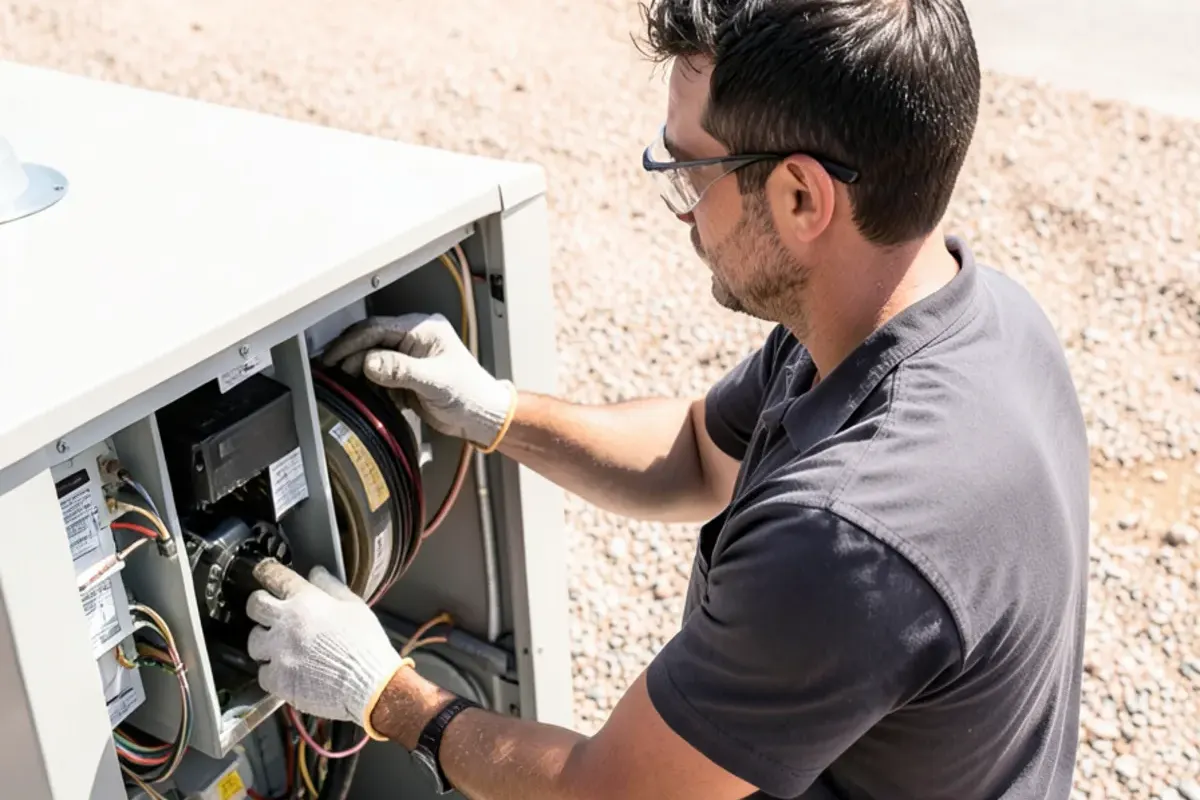
Don't Skip the Economizer
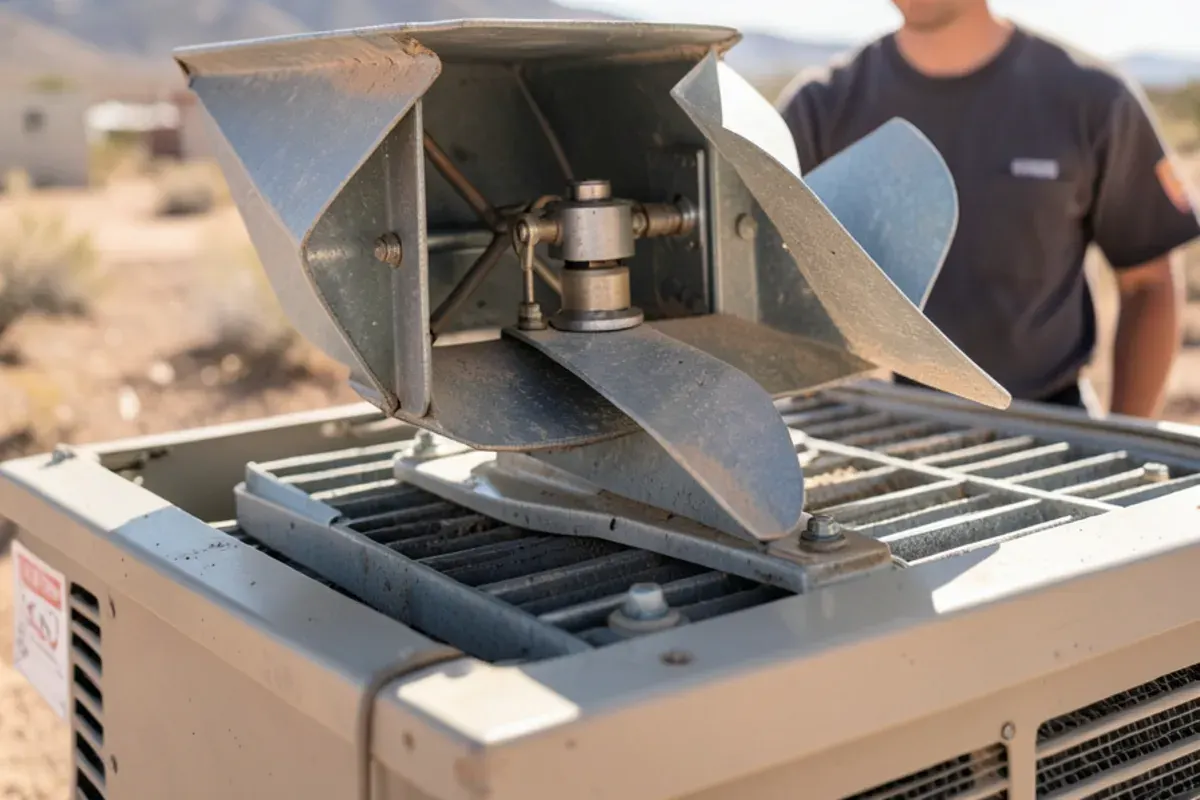
Economizers are the most neglected part of many rooftop units. They use outside air for free cooling, and a stuck damper quietly wastes energy for months. PNNL warns that without proper maintenance they may cause poor indoor air quality or significant energy waste, and those problems may go unnoticed for a long time.
Ask the service provider to confirm the following on the record:
- Sensors checked and calibrated
- Dampers fully close, with no air leakage
- Outdoor air dampers close when HVAC is off
- Minimum position is set correctly
What Records Should a Property Manager Keep?
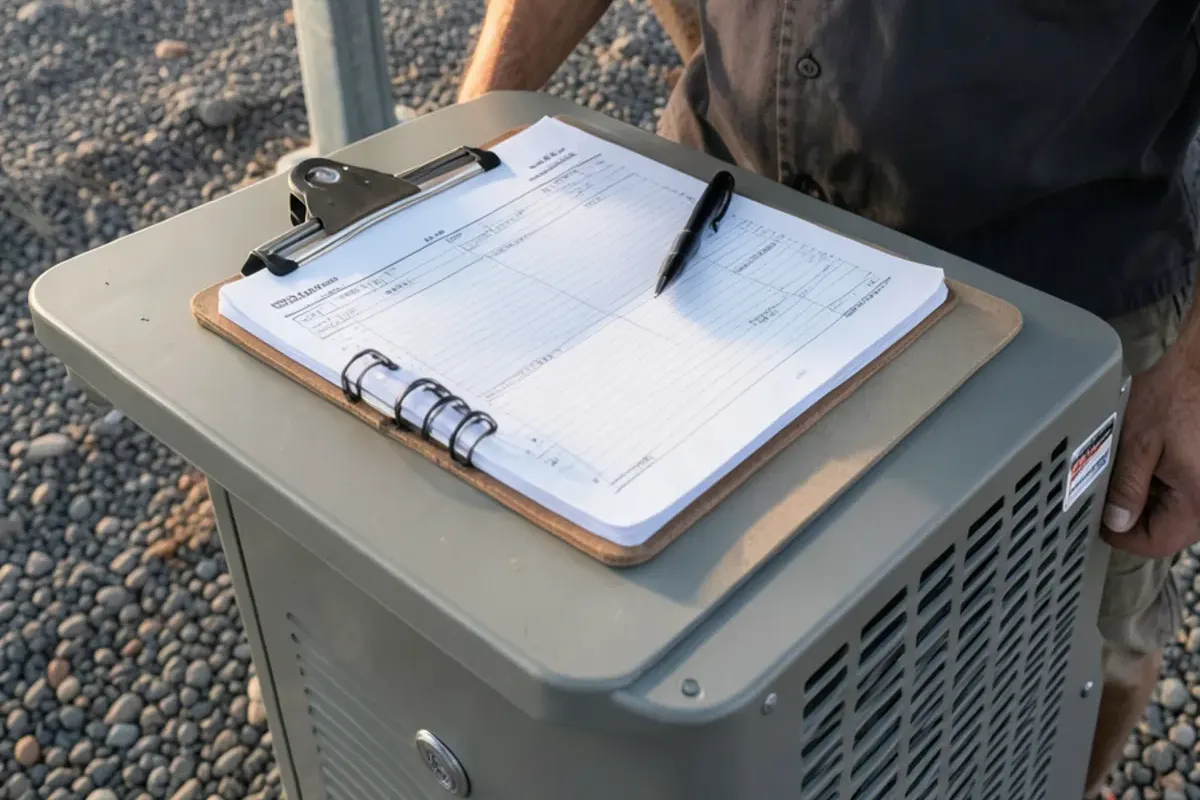
Good records settle disputes and support replacement planning. PNNL says to document every activity in a logbook or computerized maintenance system, which is also how repeat problems surface.
For each visit, keep the date, units serviced, readings, parts replaced, follow-up needed and photos of any damage. Add tenant complaints to the same record. Three no-cool calls on the same unit in one summer is a pattern, and it belongs in the owner's capital plan.
Keep the invoice and AHRI documentation for new equipment, too, since rebate programs may ask for them.
Refrigerant Records on Larger Systems
Note the refrigerant charge from each model plate, because federal leak rules turn on it. Since January 1, 2026, EPA's leak repair requirements reach certain appliances holding 15 pounds or more of HFC refrigerant, with a 10 percent leak-rate trigger for comfort cooling and a 30-day repair window after refrigerant is added. Residential and light commercial air conditioning and heat pump equipment is excluded, but chillers and certain variable refrigerant flow systems sit outside that exclusion. Owners must keep certain records for three years. EPA labels its fact sheet as informational, so confirm how 40 CFR 84.106 applies to each system.
How Does This Change for Residential Rentals?
Mixed portfolios bring in furnaces, swamp coolers and split systems, each with a different seasonal job. Add these to the calendar:
- Spring: swamp cooler startup, or AC checks, unit by unit
- Fall: furnace checks, CO alarm tests and swamp cooler shutdowns
- Turnover: filter change, thermostat test and a condensate drain check
The CPSC says to install CO alarms on every level of a home and outside sleeping areas, which makes alarm tests a sensible line on a fall list for fuel-burning units.
Know which rules apply where. Albuquerque's December 2024 ordinance added a cooling requirement to the Uniform Housing Code. Reports differ on whether it reaches all housing or mainly rentals, so confirm current status and enforcement with the City of Albuquerque. It applies only within the City. Parts of the South Valley sit in unincorporated Bernalillo County, so confirm jurisdiction by address before you assume a City rule or permit office applies.
What We Tell Property Managers
- Keep filters on hand by size. A shelf of the right filters beats a delayed visit.
- Control roof access. Keep keys, ladder locations and safety notes in the inventory.
- Schedule before peaks. Cooling in spring and heating in fall leaves time to fix what you find.
- Separate repair from maintenance on the record. Owners need to see which is which.
- Ask for readings. A checked box shows less than a recorded supply temperature.
A planned commercial HVAC maintenance calendar should sit alongside rooftop unit service records, so that you can see which units are costing you the most.
Trade-Offs a Manager Should Decide on Purpose
A maintenance program is a budget choice, so make each call deliberately.
- Quarterly or twice a year. PNNL's table leans quarterly. Two visits a year cost less and cover the seasonal changeovers, but they leave spring dust and summer filter loading to chance. Sites with demanding tenants or hard-running equipment earn the extra visits.
- Staff or contractor. PNNL says on-site staff can handle visual inspections and designated routine tasks, while repairs belong with a trained, authorized HVAC provider. Staff filter changes trim the invoice, and they also put your people on roofs and make the log your job.
- Readings or a fast visit. Recording amperage and supply temperature takes time on every unit, so expect to pay for it. Those numbers are also what turns a stack of service tickets into a replacement plan.
- Run to failure. A small unit over a storage room may not justify a full schedule, and accepting that risk can be a sound call. Never apply that logic to gas-fired equipment or a unit serving a tenant with critical needs.
- One provider or several. A single provider gives you one record format across buildings. Bidding each site may lower the price, at the cost of scattered history.
Bottom Line for Managers
List every unit, tie each to a schedule, and keep readings on file. Once you have a year of records, you will know which equipment deserves more attention, which units are near replacement, and what to tell owners before something fails in July.
Related services
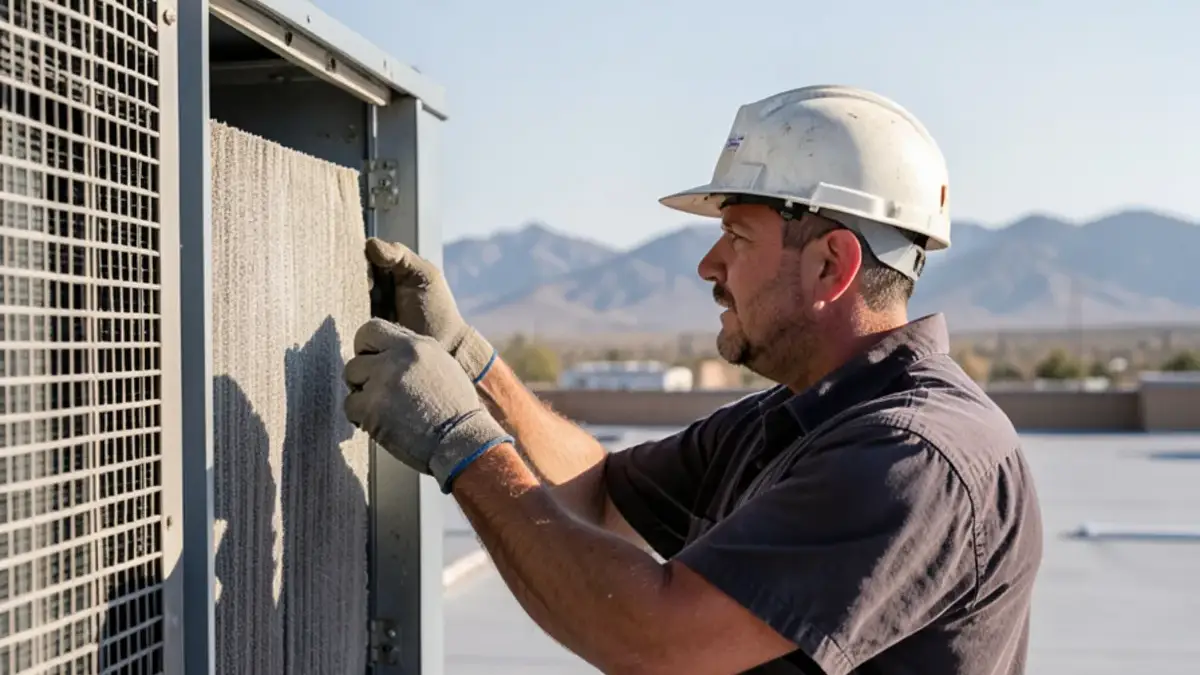
Commercial HVAC Maintenance
Scheduled visits and clear records for property and facility managers.
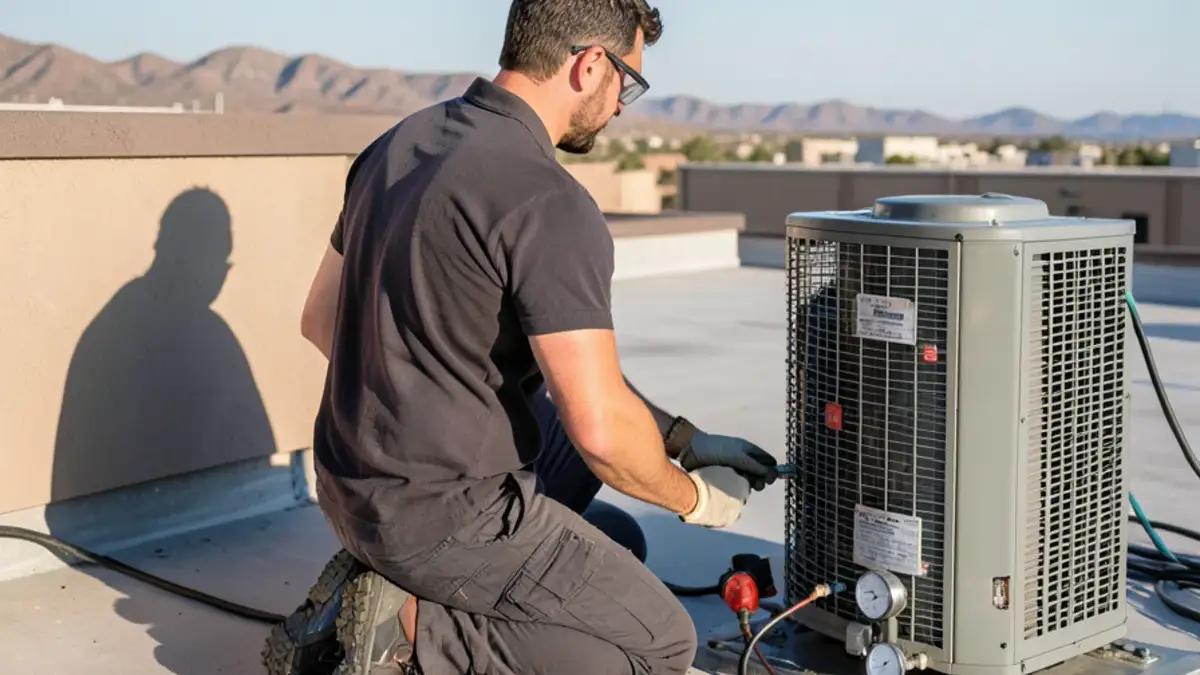
Rooftop Unit Service
RTU repair, upkeep and replacement planning for flat-roof commercial buildings.
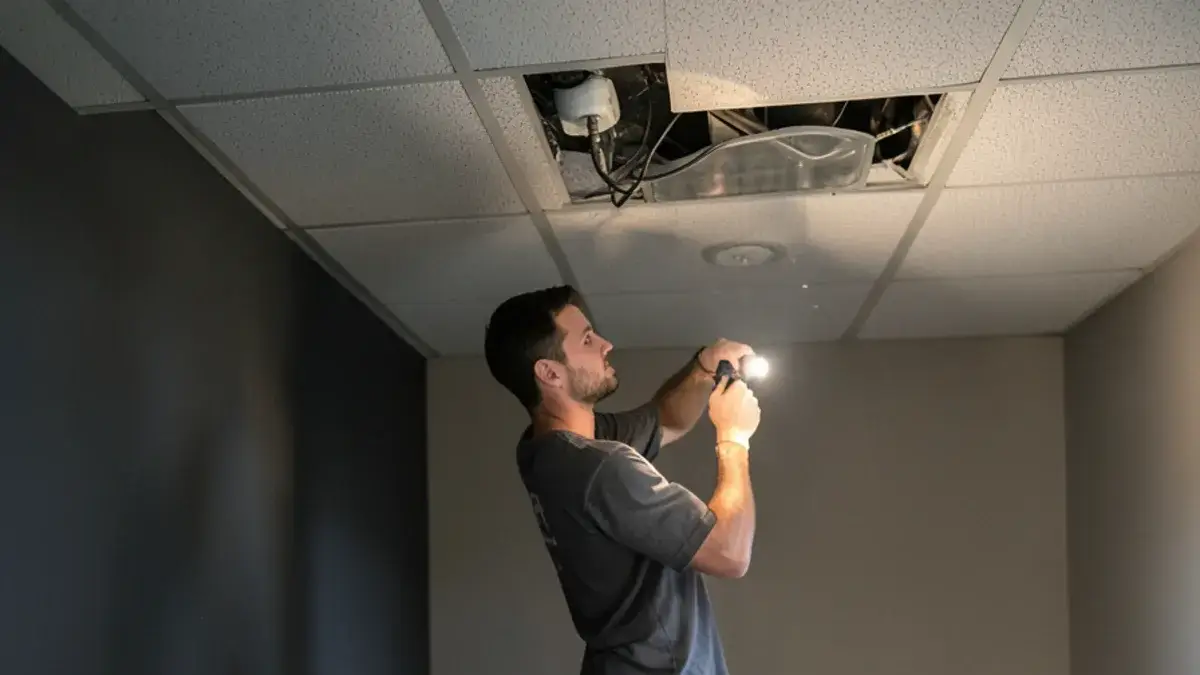
Commercial HVAC Repair
Diagnosis and repairs for offices, shops, restaurants and light commercial buildings.
Areas we serve
Common questions
How often should commercial HVAC filters be changed?
PNNL's table lists filters in its quarterly checks, following manufacturer guidance, but dust and occupancy can demand sooner. Restaurants, retail near busy roads and units exposed to spring wind can load a filter faster. Use the first year's filter condition to set a schedule for each building, and record the size and date on every visit.
Where should a property manager start with an older portfolio?
Start with an inventory and a simple condition rating for each unit. Note age, repeat calls and visible corrosion, then schedule a first full service on the worst units before the next peak season. Spring wind and summer heat here are hard on neglected rooftop equipment. That first pass gives you a baseline and shows owners which units need capital planning.
Can on-site maintenance staff handle part of this checklist?
Yes, for the visual work. PNNL says facility staff can do visual inspections and that a designated staff member or contractor can take on routine tasks, while repairs stay with a trained and authorized provider. Walk-throughs, intake checks and noise logs suit on-site people. Keep roof access rules in the inventory, and leave gas sections, electrical panels and refrigerant to licensed trades.
Sources
- Pacific Northwest National Laboratory, O&M Best Practices: Unitary HVAC Equipment
- Pacific Northwest National Laboratory, O&M Best Practices: Air-Side Economizers
- ASHRAE/ACCA Standard 180 and Standard 211
- U.S. EPA, Guide to Air Cleaners in the Home
- U.S. Consumer Product Safety Commission, Carbon Monoxide Information Center
- U.S. EPA, Leak Repair Requirements fact sheet, January 2026
Rather have someone look at it?
Call any hour. You get a straight answer, a free written estimate and the price before the work starts.
- NM CID License #413436
- 24 Google reviews
- Led by Dominic Montoya, over 20 years in the trade
- Free written estimates
Red Wrench Company, 5635 Paradise Blvd NW, Albuquerque, NM 87114, (209) 563-1270