

Rooftop Unit Replacement: Planning Guide for Building Owners
Replace on your schedule, before a July failure sets the terms. Here is what to line up first.
- NM CID License #413436
- 24 Google reviews
- Led by Dominic Montoya, over 20 years in the trade
- Free written estimates
By Dominic Montoya, Owner of Red Wrench Company. Published , updated .
Rooftop unit replacement goes best when the building owner picks the date rather than the failed compressor. Start planning once a unit passes its middle teens, or sooner if repairs are stacking up. Line up the survey, curb fit, crane, permit and tenant schedule well before cooling season, because a July failure leaves you few choices.
When Should a Rooftop Unit Go on the Replacement List?
Age is the first flag, not the verdict. A U.S. Department of Energy Better Buildings business case puts typical rooftop unit life at 15 to 20 years, and closer to 10 in highly corrosive environments. ASHRAE's public service life database lists a median of about 16 years for rooftop packaged units still in service.
Use the records alongside age. These signs push a unit up the list:
- Repeated compressor, coil or heat exchanger trouble
- Refrigerant leaks that return after repair
- Corrosion on the cabinet, base pan or coils
- A cracked heat exchanger on a gas unit
- Tenant complaints that track one zone
- Parts that are hard to source
Good rooftop unit service records make this list easy to build. If you have no records, start with a condition survey of every unit, then rank them worst first.
Why Plan Ahead Rather Than Wait for Failure?
An emergency swap takes whatever equipment is available and whatever crew and crane can get there. A planned one lets you compare options, schedule around tenants and fix the roof while the unit is off.
The planning also spreads capital cost. If six units are all near the same age, staging two a year may be easier on the budget than replacing all six after a bad summer. We leave prices out of this guide because tonnage, roof and access decide them, so get a written quote for your building.
What Should the Pre-Replacement Survey Cover?
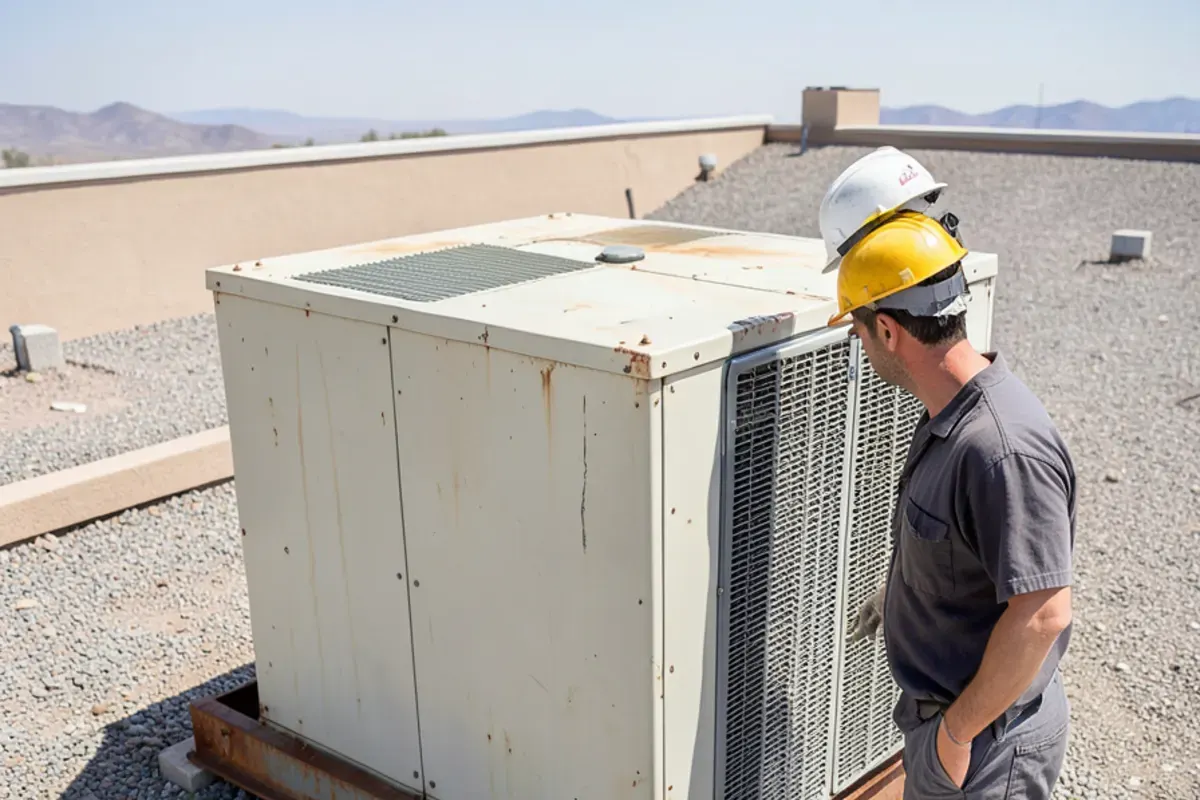
Do not copy the old nameplate and order the same thing. Survey the job first.
| Item | What to confirm | Why it matters |
|---|---|---|
| Load | Current use, occupancy and ventilation | The space may have changed since the first install |
| Curb | Size, height, condition and level | A new footprint may need an adapter curb |
| Structure | Weight of the new unit and any adapter | Have an engineer review changes where needed |
| Roof | Age of roofing, flashing and warranty | Coordinate with your roofer before the lift |
| Power | Voltage, phase, breaker and disconnect | New equipment may differ |
| Gas | Line size, pressure and altitude setup | Heating output depends on it |
| Controls | Thermostats, economizer and building controls | Old wiring may not match |
| Ducts | Roof-level connections and leaks | A new unit cannot fix a torn plenum |
A curb adapter can avoid reroofing around a new curb, but it adds height and can affect drainage and service access. Get the fit confirmed from the manufacturer's data before ordering.
Altitude and Access in the East Mountains
Location changes the plan. A building in Tijeras sits around 6,400 feet, about 1,100 feet above Albuquerque, so gas-fired sections need attention. Manufacturers state how much a unit's heat is derated at elevation and what kit, if any, the unit requires. One major manufacturer's gas furnace instructions, for comparison, call for 4 percent per thousand feet above 2,000 feet. Follow the instructions for the specific rooftop model, then check that derated output still meets the heating load.
Canyon sites bring practical problems too. Check wind forecasts for the lift, crane setup space on narrow lots, and snow if the work falls in winter. Tijeras is about 35 minutes from our Paradise Blvd base, so plan site visits well ahead rather than leaving them to the week of the lift.
Permits, Energy Code and Refrigerant
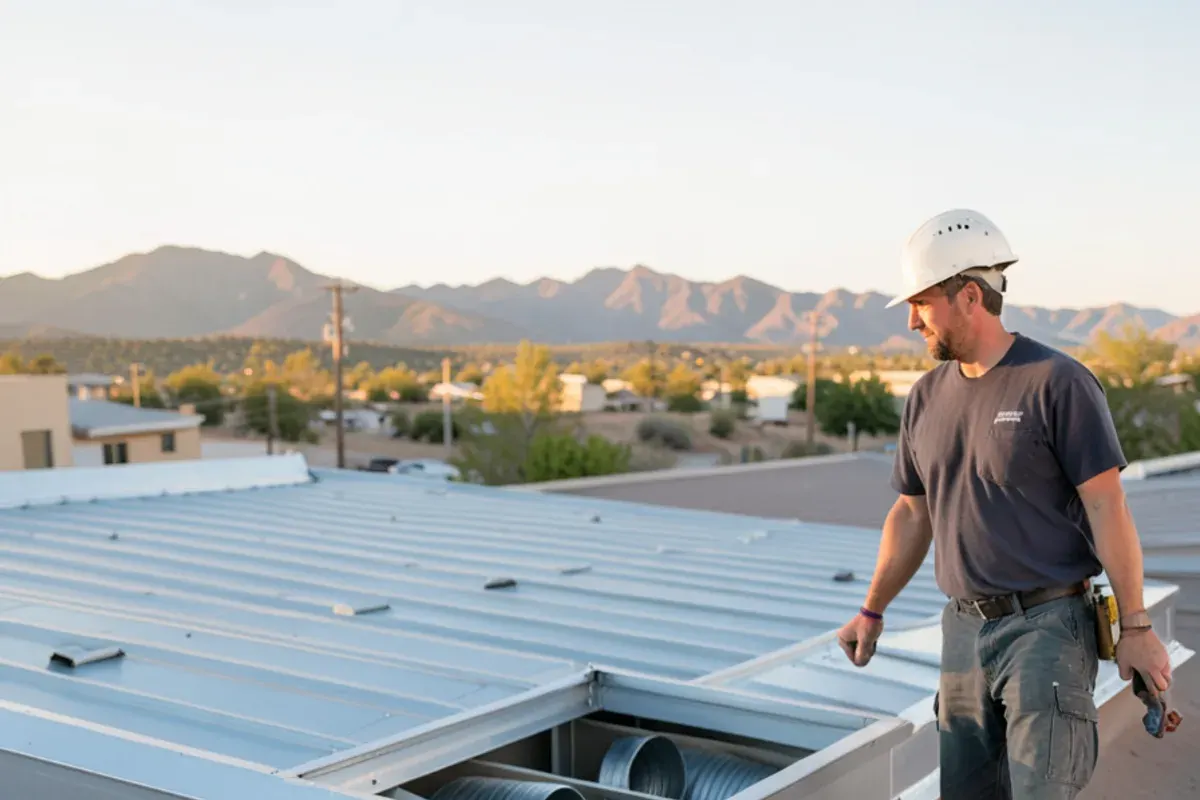
A mechanical permit is required for installs and replacements. A good quote should state who pulls the permit, and ours does. Inside City limits, the 2024 Uniform Administrative Code governs. Statewide, permits have been issued only under the 2021 IECC since July 30, 2024, per 14.7.6 NMAC, so ask how the energy code affects controls and economizers on your project. Verify requirements with the agency that has jurisdiction, including CID for work outside the City.
Refrigerant rules have also changed. EPA's Technology Transitions rules restrict higher-global-warming refrigerants in new residential and light commercial air conditioning and heat pump systems, and the agency issued a further final rule in May 2026. Check EPA's sector table for current dates and limits before you order. EPA's fact sheet on the 2023 rule says existing systems may be serviced and repaired throughout their useful life.
The sector table sets a global warming potential limit of 700 for this equipment, with a January 1, 2025 installation date and a footnote covering systems built entirely from earlier components. Variable refrigerant flow systems carry a separate January 1, 2027 date. Confirm which row applies before a purchase order goes out.
How Does Rooftop Unit Replacement Day Work?
- Set the date. Pick a low-occupancy window and tell tenants early.
- Stage temporary measures, if a critical space cannot lose cooling.
- Disconnect and recover. Refrigerant is recovered, and gas and power are safely isolated.
- Lift out and lift in. The crane sets the unit on the curb or adapter.
- Reconnect and seal. Ducts, gas, power, drain and roof flashing come next.
- Start up and test. Confirm airflow, temperatures, gas pressure, economizer action and drains.
- Hand over records. Keep the start-up readings, manuals, permit and AHRI documents with the inventory.
What We Tell Building Owners
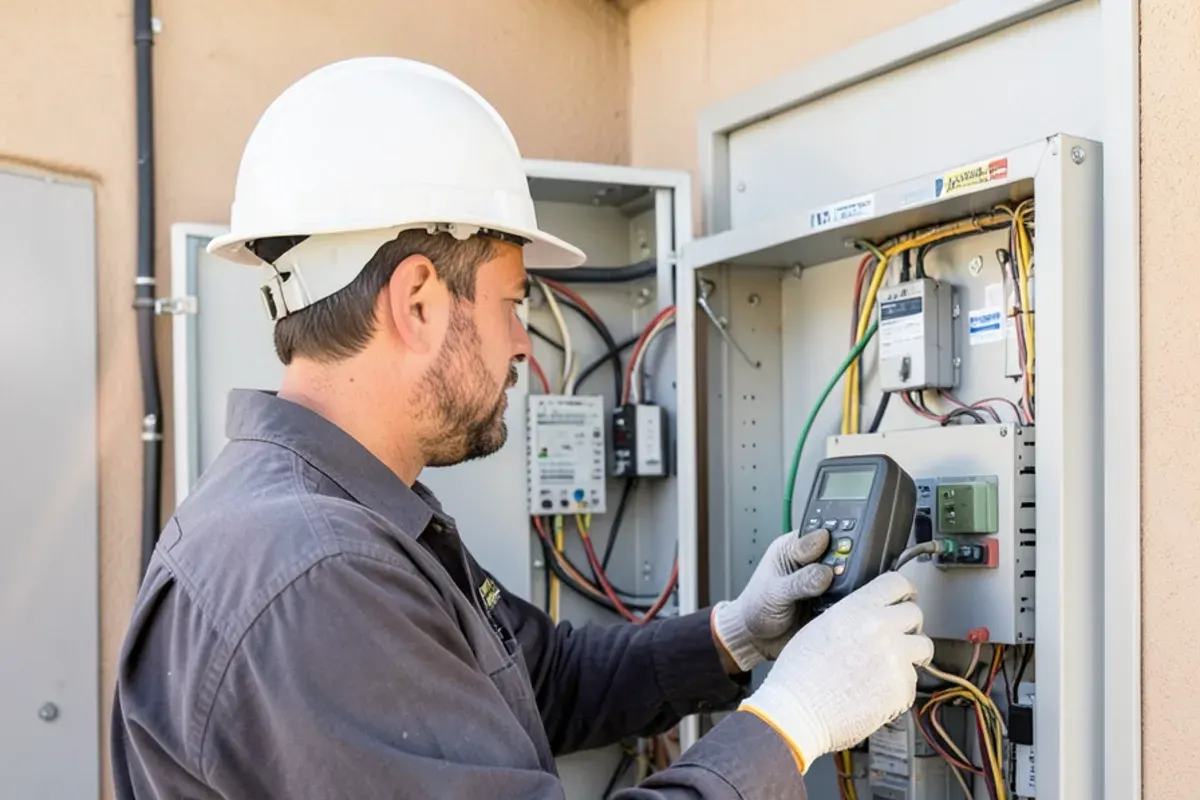
- Rank every unit once a year. One simple list prevents most panicked decisions.
- Buy the fit, not the tonnage on the old label. Load and ventilation may have changed.
- Bring the roofer in early. Flashing mistakes outlast the equipment.
- Replace before summer. Book the work for cooler months where you can, since commercial HVAC repair calls climb in the heat.
- Budget for maintenance afterward. A new unit still needs a commercial HVAC maintenance schedule from day one.
Honest Trade-Offs in a Rooftop Plan
Every planning choice moves cost or risk somewhere else.
- Stage the work or bundle it. Staging spreads capital over several budgets, but each round repeats the crane, permit and tenant notices. Bundling saves mobilizations and puts matching equipment on the roof, and all of it will then age out together.
- Like-for-like or resized. The same tonnage on the same curb is the fastest swap. A load calculation may show a different size fits better, which can mean an adapter curb, duct changes and a longer schedule.
- Bridge repair or early replacement. A costly repair in June can still be the right move if it carries a unit to a fall changeover. It is the wrong move on a unit with a cracked heat exchanger or a repeat compressor failure.
- Standard or higher efficiency. Higher-efficiency units tend to cost more and can add controls that need more careful service. Payback depends on run hours, so work the numbers for each building.
- Gas heat or electric. Staying on gas reuses the line. Moving to a heat pump rooftop unit changes power needs and may call for a panel review, and cold mornings at altitude deserve a capacity check.
Pulling the Plan Together
Survey the units, rank them, confirm curbs and roof, and pick a replacement date that works for tenants. Then get written quotes that name the permit, the altitude setup and the start-up tests. The building owner who plans in winter usually spends summer dealing with something other than a dead rooftop unit.
Related services
Rooftop Unit Service
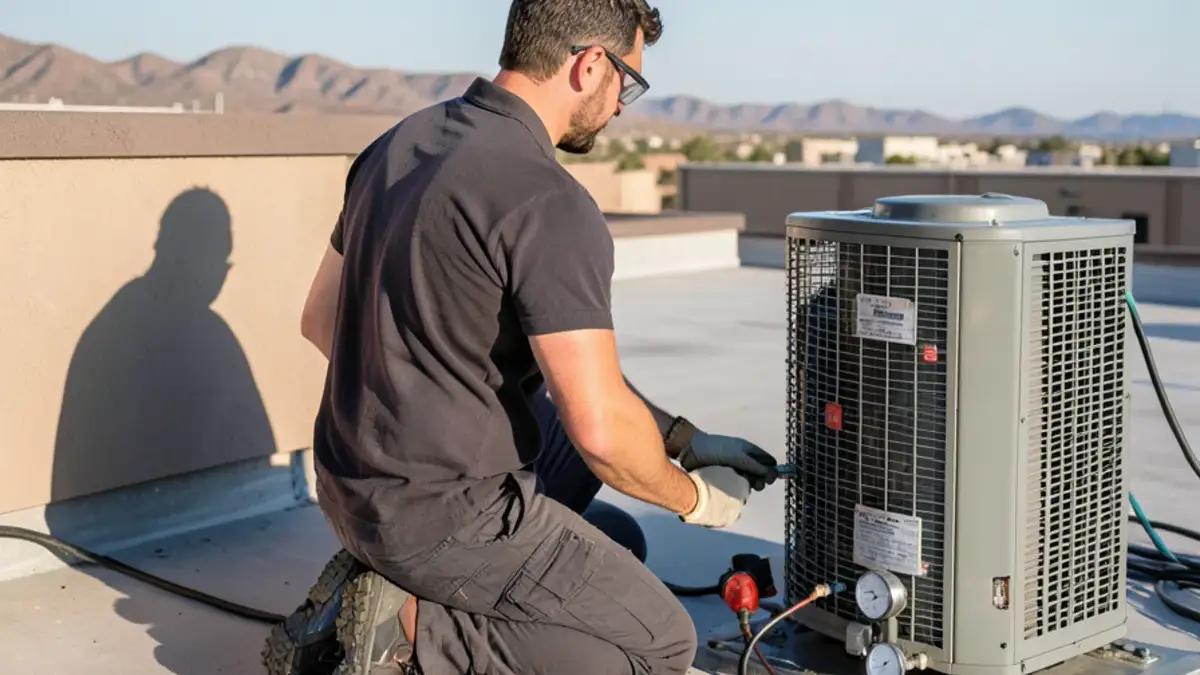
RTU repair, upkeep and replacement planning for flat-roof commercial buildings.
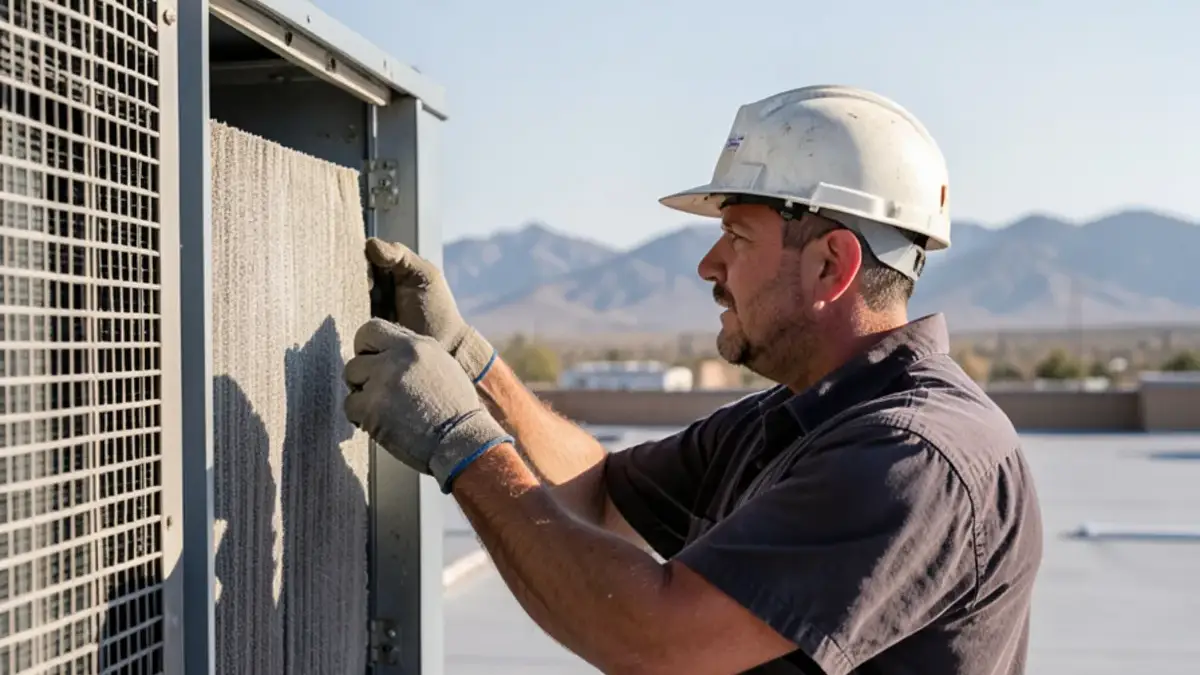
Commercial HVAC Maintenance
Scheduled visits and clear records for property and facility managers.
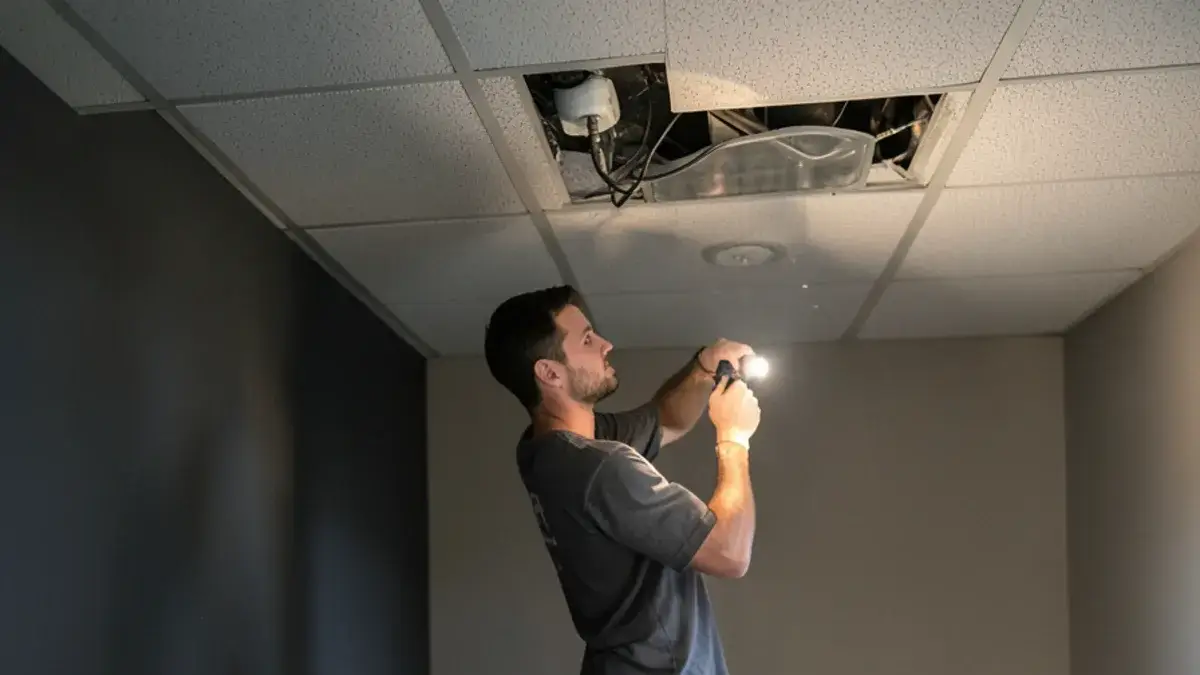
Commercial HVAC Repair
Diagnosis and repairs for offices, shops, restaurants and light commercial buildings.
Areas we serve
Common questions
Can a new rooftop unit sit on the old curb?
Sometimes. Older curbs may not match the footprint of a new unit, and in that case an adapter curb bridges the gap. Check the curb's condition first, because a rotted or out-of-level curb is a poor base for new equipment. Confirm fit with manufacturer data, and consider height, drainage and service clearance before ordering.
How long does a rooftop unit replacement take?
The lift itself is often the short part, and a straightforward swap may be scheduled within a single workday. Planning takes far longer, since ordering, permits, crane booking and tenant notices all come first. Curb changes, roof repairs or new controls add time. Get a written schedule that covers lead times, not only the installation day.
What time of year is best for a rooftop unit replacement?
Mild months, when tenants can tolerate a day without conditioning. National Weather Service normals put the Sunport's last spring freeze around April 6 and its first fall freeze around November 3, so spring and fall both work in Albuquerque. Sandia Park averages May 9 and October 9, which narrows the window at East Mountain sites. Book the crane and equipment well ahead, since lead times set the real calendar.
Sources
- U.S. DOE Better Buildings, Business Case for Proactive Rooftop Unit Replacement (2015)
- ASHRAE, Public Database of HVAC Service Life
- Pacific Northwest National Laboratory, O&M Best Practices: Unitary HVAC Equipment
- U.S. EPA, Technology Transitions HFC Restrictions by Sector
- U.S. EPA, Technology Transitions Program fact sheet (2023 rule; EPA notes it predates the May 2026 rule)
- New Mexico RLD, Apply for a Permit
- Rheem, gas furnace high-altitude kit instructions (manufacturer document hosted by a distributor)
- USGS Elevation Point Query Service
- National Weather Service Albuquerque: Spring Freeze Table
- National Weather Service Albuquerque: Fall Freeze Table
Rather have someone look at it?
Call any hour. You get a straight answer, a free written estimate and the price before the work starts.
- NM CID License #413436
- 24 Google reviews
- Led by Dominic Montoya, over 20 years in the trade
- Free written estimates
Red Wrench Company, 5635 Paradise Blvd NW, Albuquerque, NM 87114, (209) 563-1270