

Spring Swamp Cooler Startup Checklist for New Mexico Homes
Pads, pump, float, belt and water line, in the order that keeps you off the roof twice.
- NM CID License #413436
- 24 Google reviews
- Led by Dominic Montoya, over 20 years in the trade
- Free written estimates
By Dominic Montoya, Owner of Red Wrench Company. Published , updated .
A proper swamp cooler startup in Albuquerque takes one trip to the roof if you do it in order: power off, clean the pan, fit new pads, check the belt and float, then reconnect water and test the pump. Wait until freezing nights are behind you, because one late freeze can split the water line.
Before You Climb: Timing and Safety
Pick a calm, dry morning, and allow an hour or two for a cooler in decent shape. Roofs here get slick with dust, and a side panel catches wind like a sail.
Shut off the cooler's power at the breaker and the disconnect before you open anything. Turn off the water supply too, if it has been left on. Use a ladder that extends above the roof edge, and have someone on the ground if you can. OSHA's construction rule is a good yardstick: side rails at least 3 feet above the landing, with the base set out about a quarter of the ladder's working length.
Timing depends on your elevation. A Rio Grande valley home may be ready weeks before one in Edgewood, which sits around 6,600 feet and tends to hold onto cold nights longer. Go by your own forecast rather than a date on the calendar.
National Weather Service Albuquerque averages for 1991 to 2020 show how wide that gap is. The last spring freeze lands around April 6 at the Sunport, April 21 in the Foothills, May 9 at Sandia Park and May 14 at Moriarty, and records run weeks later. Edgewood is not on that table, so use its higher neighbors as a guide.
You also do not need the cooler the first warm afternoon. University of Arizona Extension advises waiting until the outdoor temperature reaches 85 degrees rather than starting at 79, and says that habit can use 50 percent less water.
Your Swamp Cooler Startup in Albuquerque, Step by Step
Work through these steps in order. The first six happen with the power and water off.
- Remove the winter cover and the side panels. Set the panels flat so they cannot blow off the roof.
- Clear the pan. Scoop out leaves, nests and silt, then scrape loose scale. Vinegar dissolves mineral buildup.
- Inspect the tray. Look for rust, split seams and pinholes. Small rusted spots can be cleaned and sealed. A tray that is rusted through is a replacement.
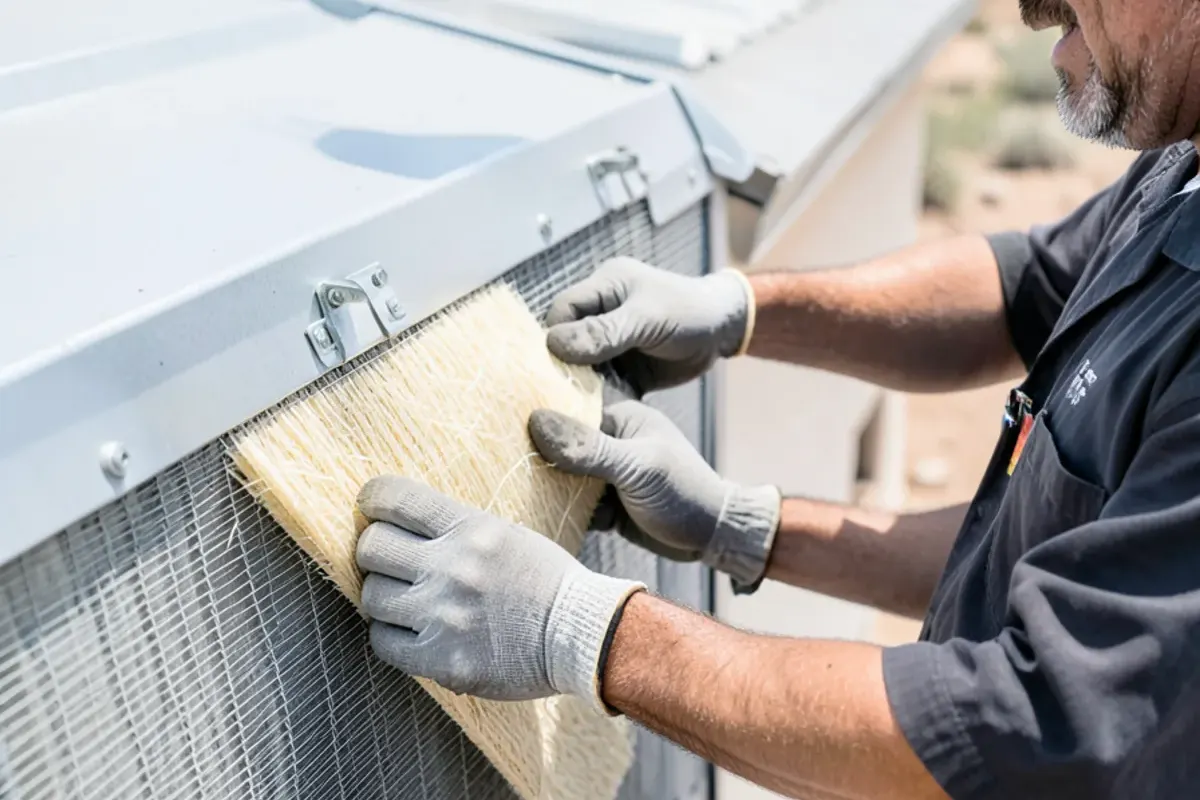
- Fit new pads. Aspen fiber pads are the common choice unless your manufacturer calls for something else. Seat them flat so air cannot slip past the edges.
- Check the belt. Pressed with a finger, it should give about half an inch, per Arizona Extension. Replace it if it is cracked or glazed.
- Oil the bearings lightly on the blower and motor, if they have oil ports. Sealed bearings need none.
- Reconnect the water and check the fittings for drips.
- Set the float. The water level should sit about one inch below the top of the tray. Bend the float arm to adjust it.
- Restore power and run the pump. Confirm that every pad wets evenly from top to bottom.
- Run the blower and listen for rattles. Then replace the panels.
Run the pump a few minutes before the fan on hot days, so the pads are saturated when air starts moving. That is the same advice from Extension, and it is worth keeping all summer.
Why Do Pads and Scale Matter So Much?
Scale is the slow killer of a swamp cooler. The U.S. Department of Energy's Federal Energy Management Program explains that evaporation leaves minerals behind on the pads, and that buildup cuts the air moving through them.
Local water speeds that along. The Water Authority describes its water as moderately hard to hard depending on the source blend, and one 2023 zone report averaged 8.44 grains per gallon. Results vary by zone, and a private well needs its own test.
A bleed-off line helps by draining a small amount of mineral-heavy water from the pan. Set it to drain only what is needed. FEMP says that for most small coolers, bleed-off should be less than a few gallons per hour for each 1,000 cubic feet per minute of airflow. If your cooler has no bleed-off, plan to clean the pan and change pads more often.
Check the pads again at midsummer. Arizona Extension recommends replacing them when mineral deposits are heavy. Crusty pads cool poorly no matter how well the rest of the machine runs.
Fixes That Should Stop You on the Roof
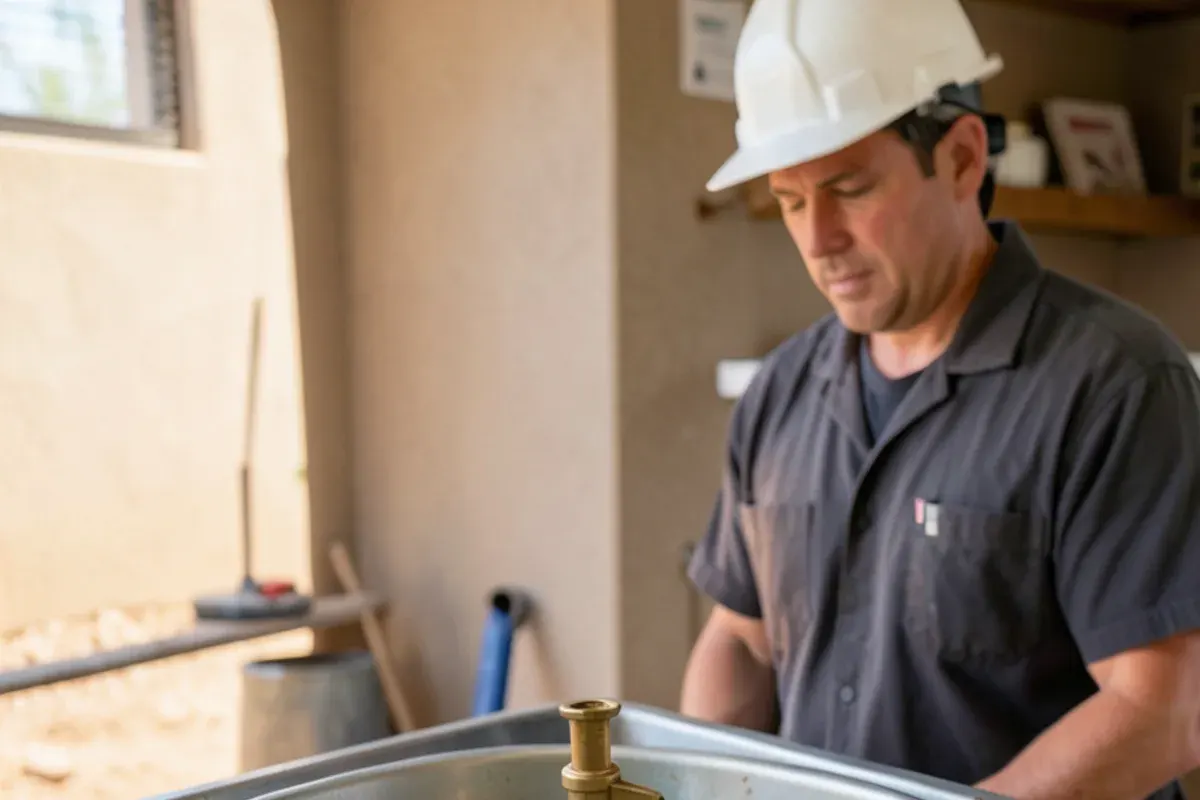
Some findings are repair calls, not checklist items.
| What you find | What it usually means | Next step |
|---|---|---|
| Pump hums, no water reaches the pads | Clogged water tubes or pump screen | Clean it. Replace the pump if it stays dry |
| Blower will not start | Motor, belt, switch or wiring | Keep the power off and call |
| Water on the ceiling or running down a wall | Tray leak, overflow or roof flashing | Shut off water and investigate today |
| Motor trips the breaker | Electrical fault or seized bearing | Do not reset it repeatedly |
| Pan is rusted through | End of life for the tray | Compare repair against replacement |
We handle these on a swamp cooler repair visit. The estimate is free and in writing, and you see the price before work starts.
What We Tell Customers Each Spring
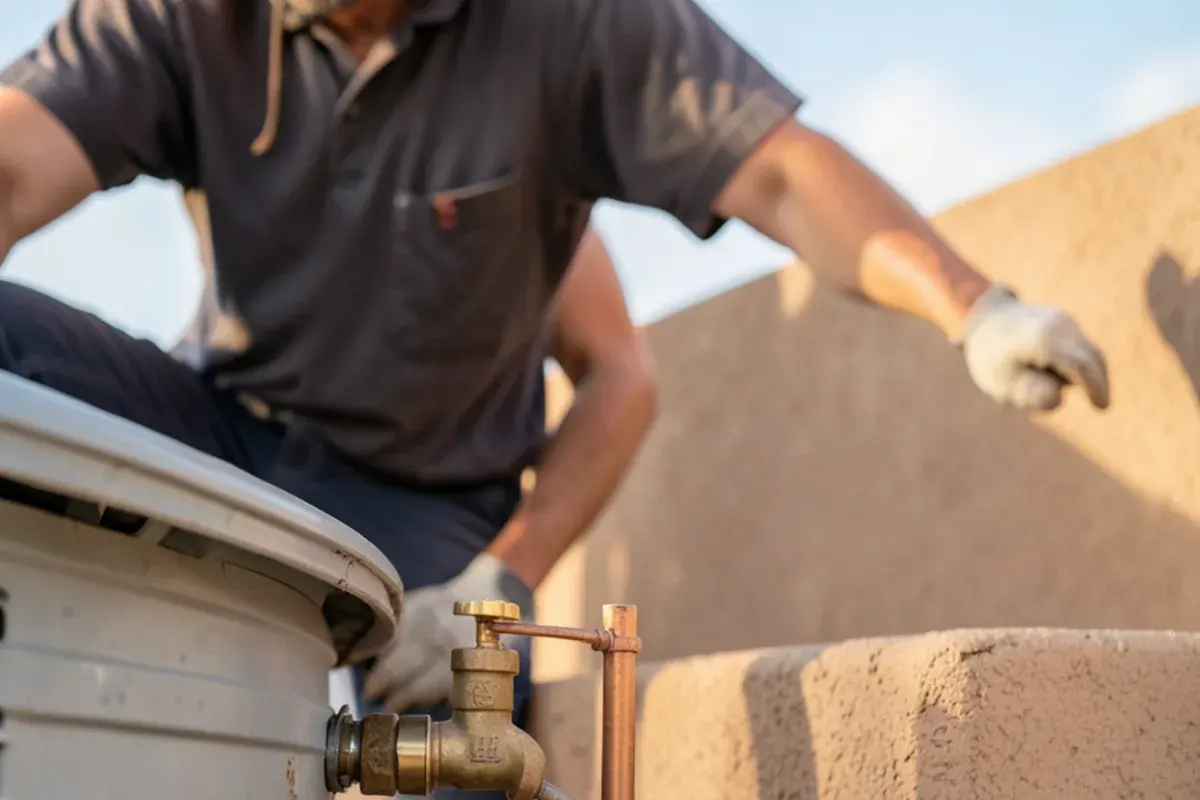
These rules come up on nearly every cooler conversation.
- Change pads every season unless they still look clean and soft. They are the cheapest performance you can buy.
- Never run the blower with a dry pump for long. You are just pulling hot, dusty air into the house.
- Open a relief window. A swamp cooler needs somewhere to push air. Crack windows on the side of the house you want cooled, or use up-ducts if you have them.
- Look at the ceiling after the first run. Slow leaks show up as a faint stain before they show up anywhere else.
- Book the fall shutdown now, in your head. A line left charged into winter is how a spring startup turns into a plumbing repair.
If the cooler has become more work than it is worth, it may be time to price a swamp cooler to refrigerated air conversion alongside the repair.
Cooler Trade-Offs Nobody Puts on the Checklist
Each cooler decision trades money, water or effort against something else.
- More bleed-off or less. More bleed-off flushes minerals and slows scale, and it sends more water down the drain. Less saves water, and you pay for it in earlier pad and pan work.
- Aspen pads or rigid media. Aspen is cheap and easy to swap each year. Thick rigid media costs more and has to fit the cabinet, but the Southwest Energy Efficiency Project report cites effectiveness near 93 percent, against 50 to 80 percent for 2-inch pads.
- Seal the tray or replace it. A sealed rust spot can buy another season at low cost. It will not stop corrosion underneath, so expect to revisit it.
- Your own startup or a paid one. Doing it yourself saves the visit fee and teaches you the machine. The price is time on a roof, which gets harder to justify with a tall wall, a bad knee or a two-story climb.
Close It Out and Keep the Notes
Finish by writing down the pad size, belt number and pump model on a strip of tape inside a panel. Next spring's parts run gets much easier. A careful startup, a midsummer pad check and a clean fall shutdown cover most of what a swamp cooler needs, and DOE's own advice comes down to the same thing: clean it and drain it regularly so it keeps running efficiently.
Areas we serve
Common questions
When should I start my swamp cooler in New Mexico?
Start it after the risk of freezing has passed, and once days are reaching the mid 80s. There is no single date, because elevation changes everything. A valley home may be ready well before one in the East Mountains. Charging the water line too early is the mistake to avoid, since a hard freeze can split the line or the fittings.
Why does my swamp cooler smell musty after startup?
Stale water or old pads are the usual cause. Drain and rinse the pan, fit fresh pads, and run the pump before the fan so the pads wet fully. A bleed-off line or regular pan cleaning helps keep the water from going sour. If the smell stays, check the pan for standing debris and look for mold inside the cabinet.
Do I need to oil a swamp cooler motor every year?
Only if it has oil ports. Many newer motors and blower bearings are sealed and need no oil at all. Where ports exist, a few drops at spring startup is plenty, and too much just collects dust. Check the model plate or manual if you are unsure which kind you have before you add anything.
Sources
- University of Arizona Cooperative Extension, Cochise County Water Wise: water saving tips
- U.S. Department of Energy FEMP, Best Management Practice 13: Other Water-Intensive Processes
- U.S. Department of Energy, Energy Saver 101: Home Cooling
- Southwest Energy Efficiency Project, New Evaporative Cooling Systems, prepared for the DOE Building America Program
- USGS Elevation Point Query Service
- National Weather Service Albuquerque: Spring Freeze Table
- OSHA Fact Sheet: Safe Use of Extension Ladders
- Albuquerque Bernalillo County Water Authority: Water Quality by Distribution Zone
Rather have someone look at it?
Call any hour. You get a straight answer, a free written estimate and the price before the work starts.
- NM CID License #413436
- 24 Google reviews
- Led by Dominic Montoya, over 20 years in the trade
- Free written estimates
Red Wrench Company, 5635 Paradise Blvd NW, Albuquerque, NM 87114, (209) 563-1270