

Smell Gas Near Your Furnace? What to Do First
Get out first and call from outside. This is the order that matters, and what happens once the utility clears the house.
- NM CID License #413436
- 24 Google reviews
- Led by Dominic Montoya, over 20 years in the trade
- Free written estimates
By Dominic Montoya, Owner of Red Wrench Company. Published , updated .
If you smell gas near your furnace, leave the house now. Get everyone out, touch no light switches, and call New Mexico Gas Company at 1-888-664-2726 or 911 once you are outside and well away. Do not call us first. An HVAC company comes after the utility or emergency responders have said the building is safe.
Smell Gas Near the Furnace? Follow These Steps in Order
New Mexico Gas Company and the federal pipeline safety agency, PHMSA, give the same basic order. Speed matters more than certainty, so act on the smell and sort out the cause later.
- Get everyone out now. Take people and pets. Leave by the nearest door and do not stop to gather belongings or search for the source.
- Leave every switch alone. Do not turn lights, the thermostat, appliances or a garage door opener on or off. Any of them can make a spark.
- Use no flame. No matches, lighters or cigarettes. Do not start a car parked close to the house.
- Keep your phone in your pocket until you are clear. NMGC warns against using electronic devices, cell phones included, in the area.
- Call from a safe distance. Call 1-888-664-2726 or 911. PHMSA says to stay upwind if you can. NMGC's line runs 24 hours a day.
- Stay out. Do not go back in until NMGC or emergency responders give the all-clear.
Do not try to find the leak, tighten a fitting or close a valve inside. NMGC tells customers not to try to find or stop a leak themselves.
How Do You Know It Is Gas?
You do not need to be sure. NMGC lists a rotten egg odor and an unusual hissing noise among the warning signs. If you notice either, treat it as a leak. Other things can smell odd around a furnace, but a sniff test in a closed utility closet is exactly the wrong way to settle it.
Do not trust a smell that fades. NMGC notes that continued exposure can dull your sense of smell, so a leak can seem to go away while it is still there. The company also recommends residential methane detectors, installed according to the manufacturer's instructions. A detector is a backup. It does not replace leaving when you smell gas.
Propane Homes Follow the Same First Move
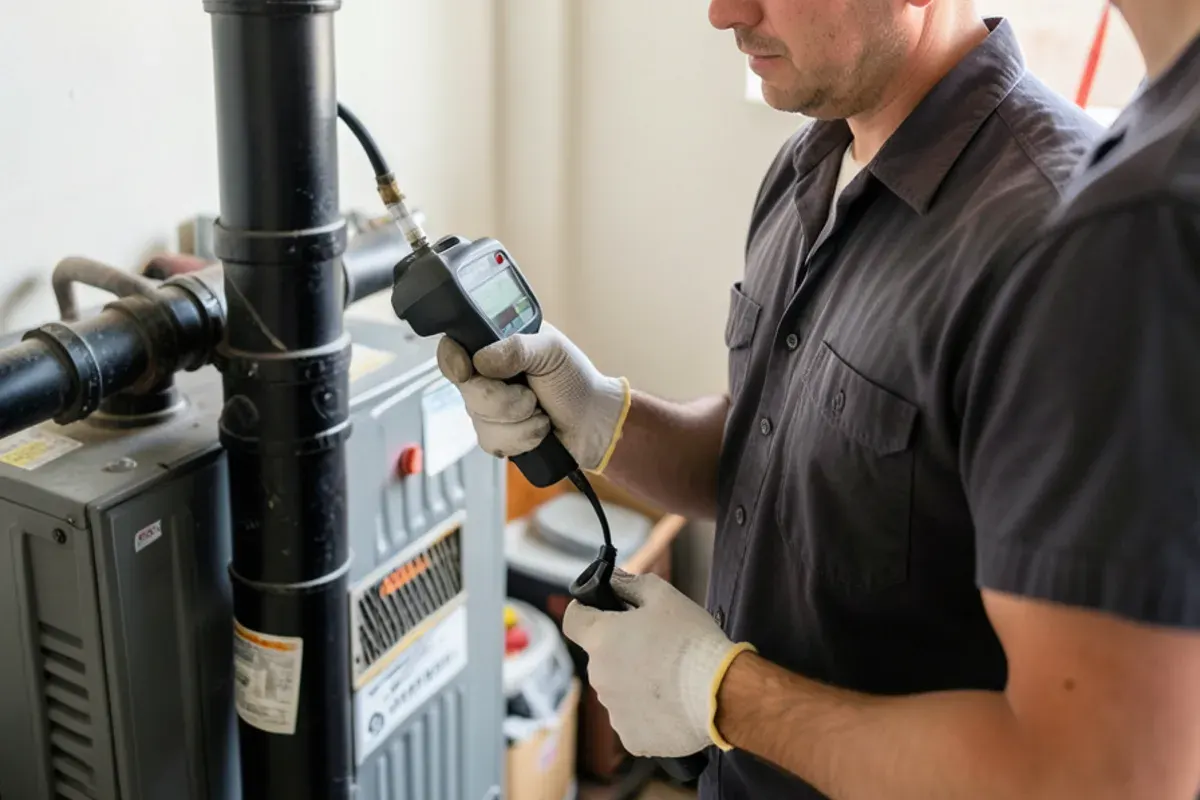
Leave first here too. Many East Mountain, Estancia Valley and rural homes run on propane, which is heavier than air and can settle in low spots.
The Propane Education and Research Council gives the same opening steps: put out flames, touch no switches, get everyone out. It says to close the tank valve only if that is safe to do. Once you are away from the house, call 911 or your propane supplier, and stay out until a responder or qualified technician confirms it is safe.
A Gas Smell and a CO Alarm Are Two Different Problems
Carbon monoxide has no smell, so your nose will not warn you and an alarm has to. CDC lists headache, dizziness, weakness, nausea and confusion as common symptoms, often mistaken for flu. If anyone has symptoms, EPA says to get them out right away and seek medical attention. Call 911 from outside.
| Warning | What it may mean | What to do first |
|---|---|---|
| Rotten egg smell or hissing | Possible gas leak | Leave, then call NMGC or 911 from outside |
| CO alarm, anyone with symptoms | Possible carbon monoxide poisoning | Get out, then call 911 |
| CO alarm, no symptoms | Possible carbon monoxide | Follow EPA's steps, stop fuel appliances, get them inspected |
| Propane odor | Possible propane leak | Leave, then call 911 or your supplier from outside |
What Happens After the All-Clear?
Follow whatever the responder tells you about the gas supply. If the utility shuts off the gas or marks an appliance unsafe, leave it off. Do not relight it or restart it yourself.
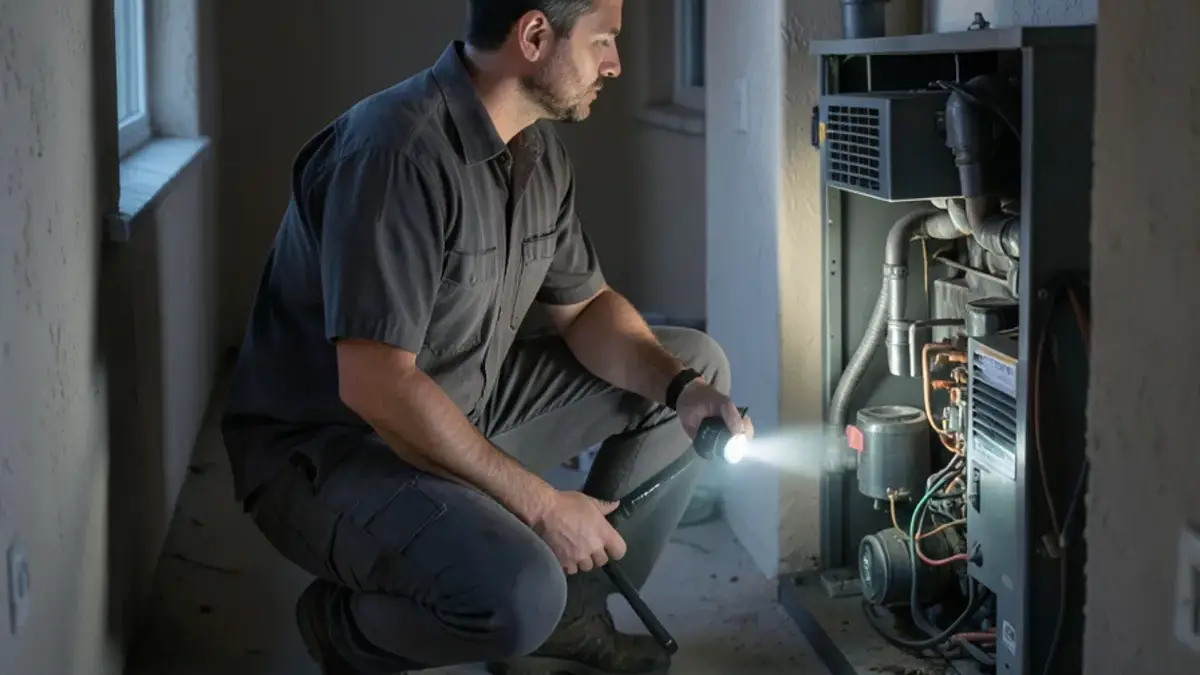
Call us once the house is safe. On a furnace visit we find the source, explain it plainly and write up the repair and price before work starts. When the repair is done, we test the system and confirm it runs correctly before we leave. Depending on what the utility found, the job may be a furnace repair or a larger conversation about the unit's age and condition.
Ask About the Gas Connector
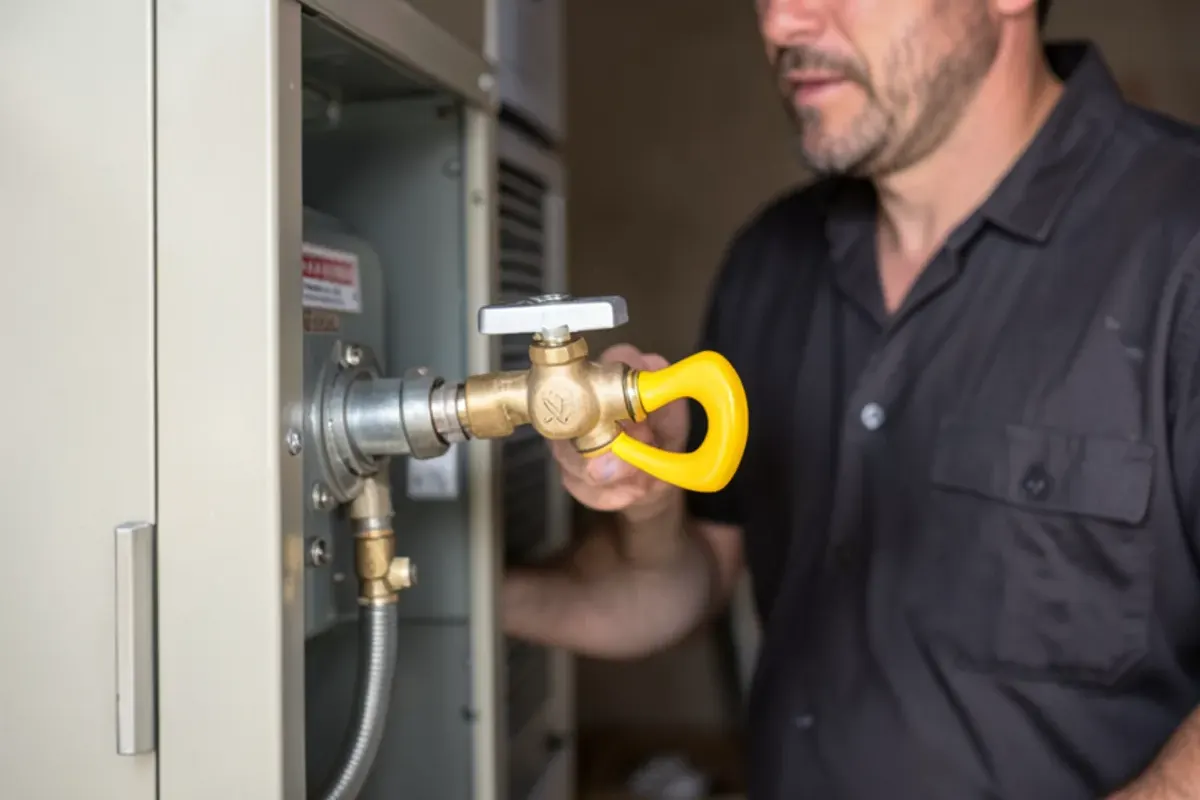
Have the technician look at the connector while the panel is open. The Consumer Product Safety Commission warns that some older uncoated brass connectors, the corrugated tubes between an appliance and its gas pipe, can separate at the end pieces and cause a serious leak. A CPSC notice says they have not been made for more than 30 years, that many remain in use, and that it is very hard to tell which ones carry the flaw.
CPSC says any uncoated brass connector should be replaced with a plastic-coated brass or stainless steel one, and that only a qualified professional should check it. Do not move the appliance to look. CPSC warns that even a slight shift can break a weakened connector.
Gas piping is licensed work. As general information, 14.6.6 NMAC lists natural gas fitting as its own classification, MM-2. Ask any contractor touching a gas line for a CID number and read the classification on the state lookup.
What We Tell Customers About Gas Odors
These rules exist because the safe choice and the instinctive choice are often opposites.
- Doubt counts as a yes. A false alarm costs a few minutes. Waiting to be certain can cost far more.
- Do not call us from the kitchen. The first call belongs to NMGC or 911, and it happens outside.
- Skip the soapy water test. Hunting for a leak keeps you in the building.
- Book a yearly check. CPSC says to have a professional inspect fuel-burning heating systems every year. Our furnace maintenance visit covers that.
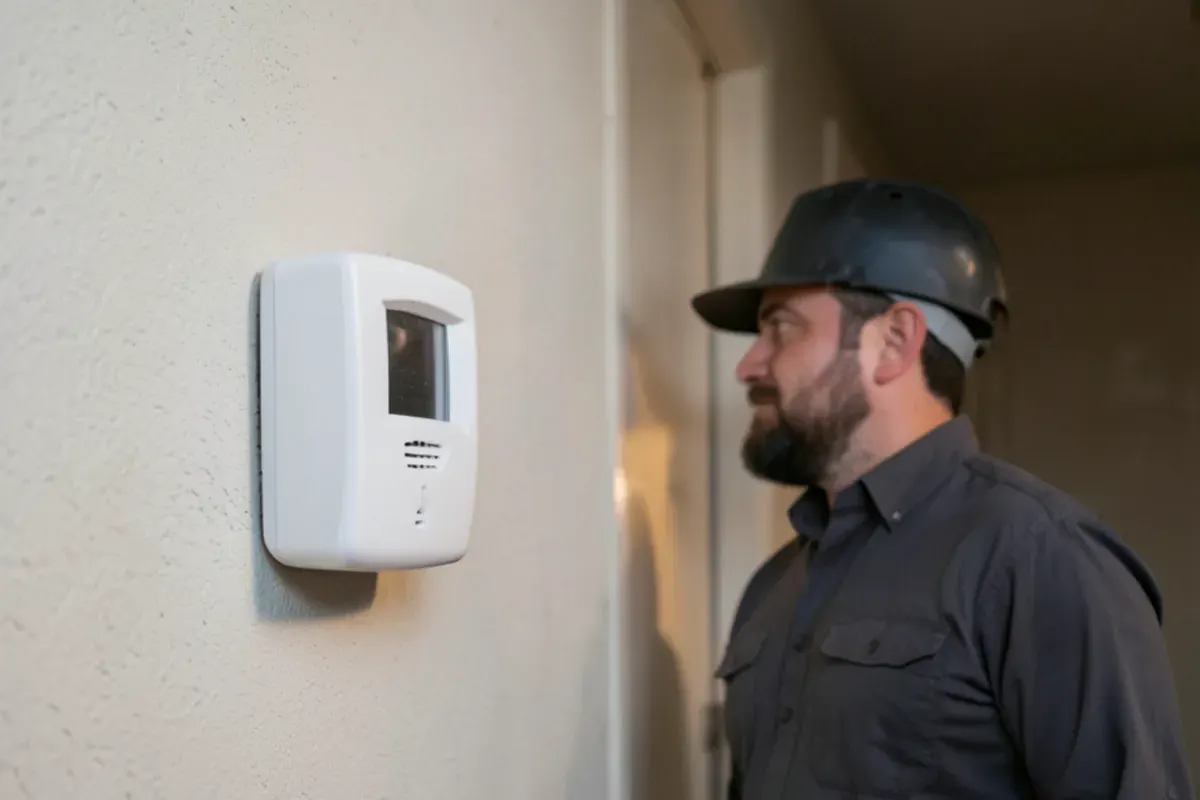
- Put CO alarms where CPSC says. That means every level of the home and outside sleeping areas.
Trade-Offs After a Gas Scare
The emergency steps leave no room for debate. The decisions afterward do.
- A false alarm still counts as a good call. The utility may find nothing, and you may feel you overreacted. That small embarrassment is a fair price for leaving a house that might have been unsafe.
- Detector or no detector. A residential methane detector adds a warning when nobody is awake to smell anything. It also adds a purchase, a replacement date and the chance of nuisance alarms. Natural gas rises and propane sinks, so mount it as the instructions say for your fuel.
- Repair or replace a tagged furnace. A failed valve or fitting on a newer unit is usually a repair. On an older furnace, a safety finding is a fair moment to price both options, and you may need a day or two to compare them.
- Waiting without heat. Taking that time may mean a cold house if the gas stays off. Our no-heat guide covers safe ways to bridge the gap, so the cold does not rush a big decision.
- Doing your own gas fitting. A wrench and a new connector look like an easy saving. The risk is a joint that leaks behind a closed panel, so leave gas work to a licensed professional who tests it.
Leave First, Repair Second
The order never changes. Get out, call from outside, wait for the all-clear, and only then think about the furnace.
Homes in Los Ranchos de Albuquerque and across the metro can use the same steps, and your gas bill confirms who your utility is. Keep 1-888-664-2726 saved in your phone under New Mexico Gas Company. When the home is cleared and you need a technician, our emergency furnace repair line is (209) 563-1270, open 24 hours a day.
Areas we serve
Common questions
Should I open the windows if I smell gas?
Do not stop to do it. Getting out comes first. The goal is to leave the building fast and avoid anything that could make a spark. Responders will handle the rest once you have called NMGC or 911 from a safe distance outside.
Can I call a furnace company instead of the gas company?
Not first. A gas odor is a job for New Mexico Gas Company or 911, and both can respond before anyone looks at the equipment. Call a heating company after the building has been cleared, since the furnace may need repair or inspection before it runs again.
Why does natural gas smell like rotten eggs?
An odorant does that. Natural gas has almost no smell of its own, so federal pipeline rules at 49 CFR 192.625 require gas in distribution lines to be detectable by smell at one-fifth of its lower explosive limit. The odor is a warning and tells you nothing about the amount. A strong smell and a faint one call for the same response in any Albuquerque home: leave, then call from outside.
Sources
- New Mexico Gas Company: If You Smell Gas
- New Mexico Public Regulation Commission: New Mexico Gas Company contacts
- U.S. PHMSA: Pipeline Leak Recognition and What to Do
- Propane Education and Research Council: What To Do If You Smell Gas
- EPA: Protect Your Family and Yourself from Carbon Monoxide Poisoning
- CDC: Carbon Monoxide Poisoning Basics
- CPSC: Keep Warm and Safe This Winter, January 23, 2026
- CPSC: Certain Older Gas Connectors May Be Dangerous
- 49 CFR 192.625: Odorization of gas
- 14.6.6 NMAC: Construction License Classifications
Rather have someone look at it?
Call any hour. You get a straight answer, a free written estimate and the price before the work starts.
- NM CID License #413436
- 24 Google reviews
- Led by Dominic Montoya, over 20 years in the trade
- Free written estimates
Red Wrench Company, 5635 Paradise Blvd NW, Albuquerque, NM 87114, (209) 563-1270