

No Heat at Night: Safe Steps Before You Call a Technician
What to rule out first, what you can safely check with a flashlight, and how to stay warm until the furnace is fixed.
- NM CID License #413436
- 24 Google reviews
- Led by Dominic Montoya, over 20 years in the trade
- Free written estimates
By Dominic Montoya, Owner of Red Wrench Company. Published , updated .
No heat? What to do first depends on one question: do you smell gas or hear a CO alarm? If so, leave the house and call from outside. If not, run a few safe checks, keep everyone warm and protect the pipes. When the checks run out, call Red Wrench Company at (209) 563-1270, day or night.
Stop Here If You Smell Gas or a CO Alarm Sounds
Gas odor comes first, ahead of every step below. Get everyone out now. Do not touch light switches, the thermostat or anything electrical on the way. From outside, at a safe distance, call New Mexico Gas Company at 1-888-664-2726 or 911, and stay out until they say it is safe. On propane, call 911 or your propane supplier from outside. Our gas smell guide has the full steps.
A CO alarm is different. EPA says to get anyone with symptoms out of the house right away and seek medical attention. Headache, dizziness, confusion and nausea are the common signs, and they are easy to mistake for flu. Do not run any fuel-burning appliance again until a qualified technician has inspected it.
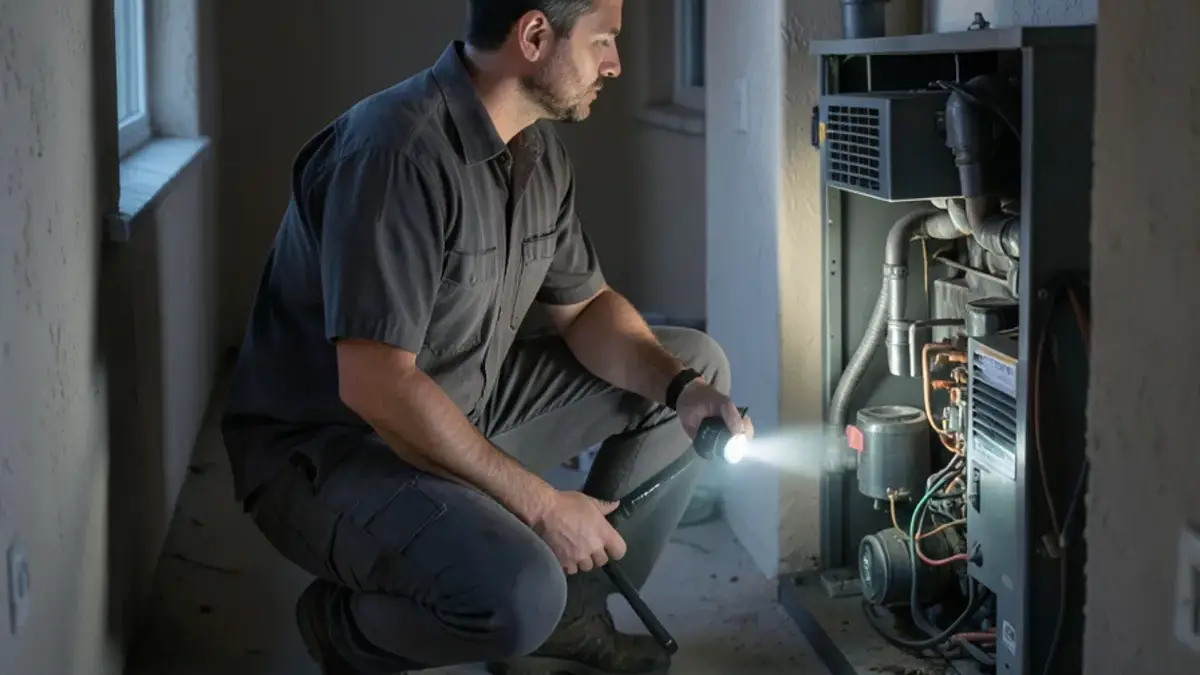
No Heat? What to Do With a Flashlight
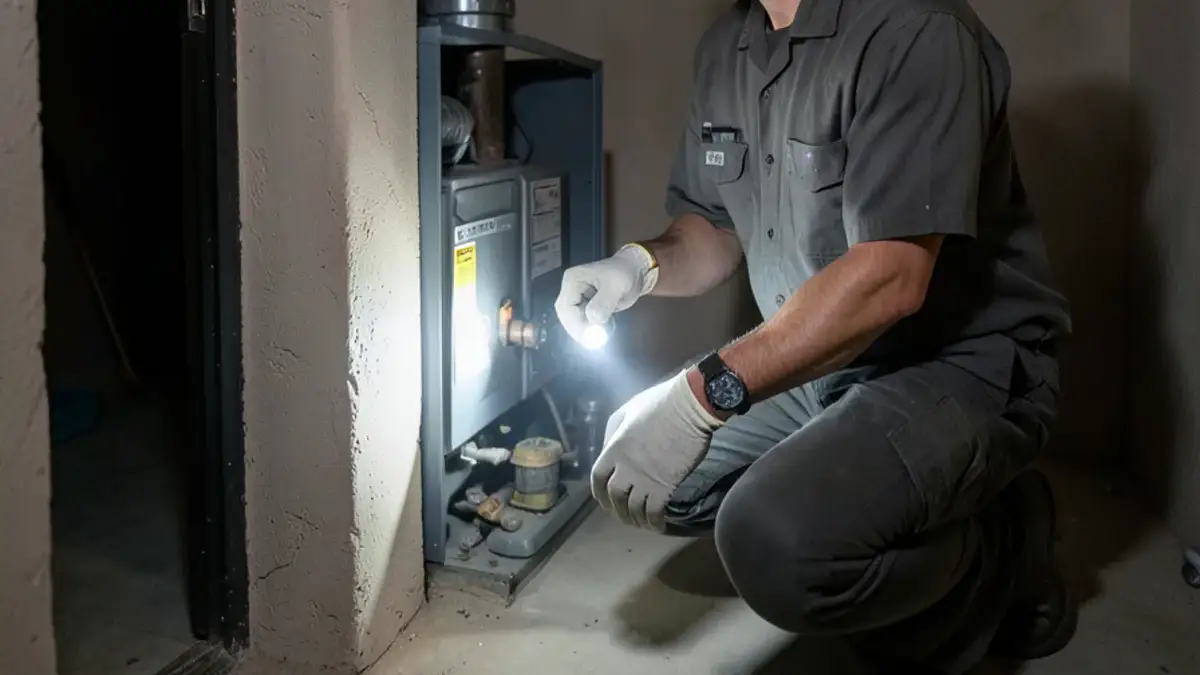
These checks cover the common causes that do not need tools. Skip any step that means opening the burner compartment.
- Thermostat. Set it to Heat and raise the setpoint a few degrees above room temperature. Replace the batteries if the screen is dim or blank.
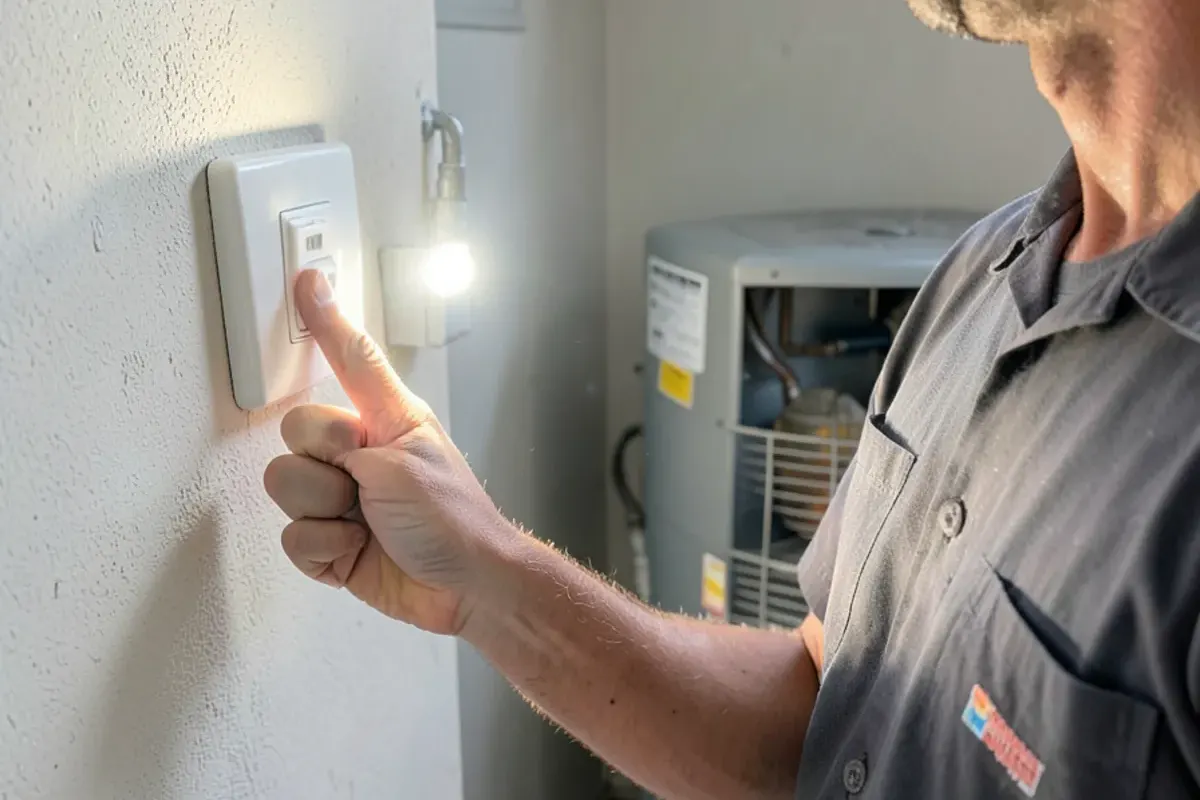
- Breaker and furnace switch. Check the breaker panel, then the switch on or near the furnace. It looks like a normal light switch and gets turned off by accident.
- Filter. A clogged filter can overheat the furnace until a safety switch shuts it down. Change it if it looks gray and matted.
- Furnace door. Make sure the lower panel is fully seated. Many furnaces will not run if a door safety switch stays open.
- Outdoor vent pipes. On high-efficiency furnaces, look for snow or ice blocking the plastic pipes outside.
- Fuel. On propane, check the tank gauge. Running empty is easy to miss on a rural or East Mountain home.
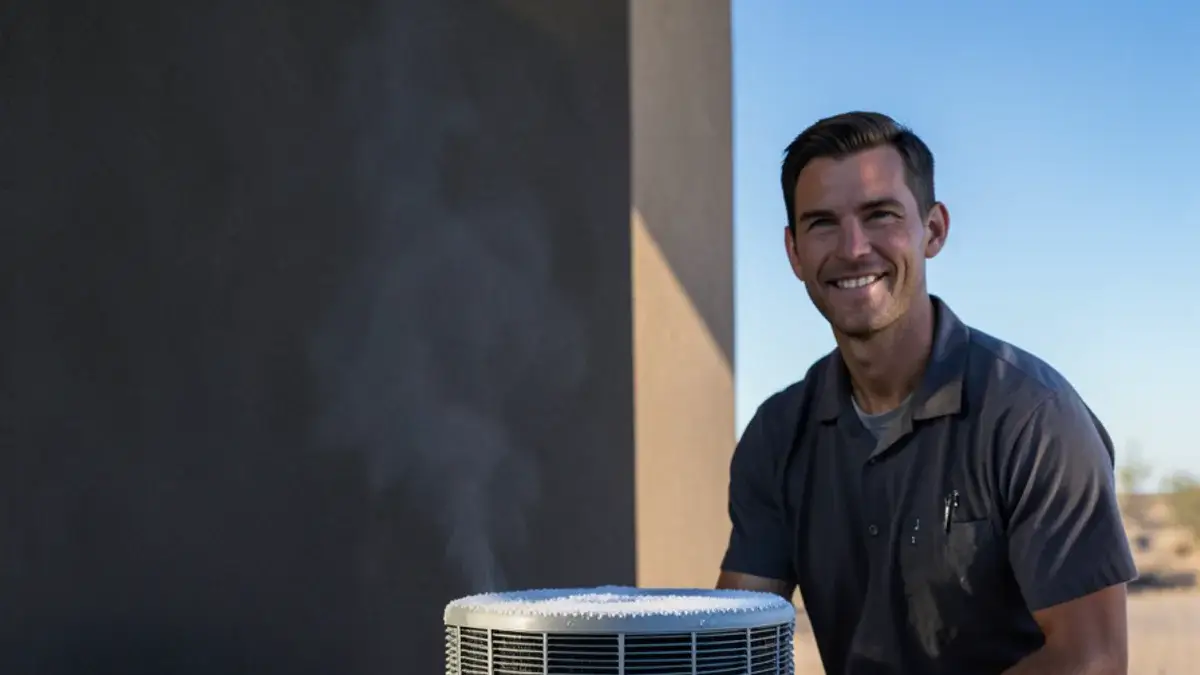
Reset the system only once. Then stop. If a heat pump is running but weak, or the outdoor unit is covered in ice, see our heat pump repair page.
How Do You Stay Warm Without Creating a Bigger Problem?
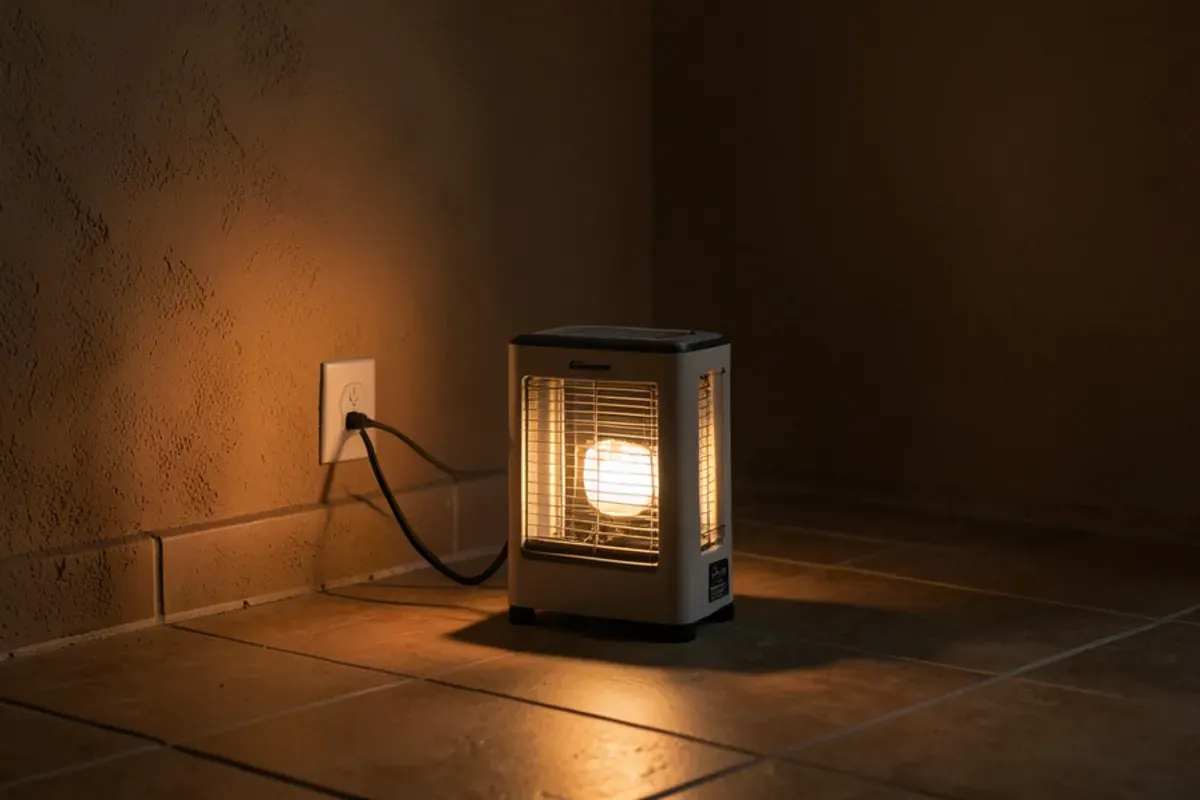
Pick one room, close its door and put everyone in it. Add layers and blankets before you add any heater. The dangerous choices are the ones that feel resourceful at 2 a.m.
| Option | Safe to use? | Why |
|---|---|---|
| Electric space heater | Yes, with care | CPSC and NFPA say to plug it directly into a wall outlet and keep it three feet from anything that burns |
| Gas oven or range | No | EPA says never to heat a home with a gas oven, even briefly |
| Charcoal grill or camp stove indoors | No | Both put carbon monoxide into the house |
| Portable generator | Outdoors only | CPSC says at least 20 feet from the home, exhaust pointed away |
| Unvented gas or kerosene heater | Avoid | EPA warns against sleeping near one, and Albuquerque code bars unvented fuel-burning heaters |
If a baby, an older adult or someone ill is in the house and it keeps getting colder, go somewhere warm. Albuquerque opens warming centers during dangerous weather, and 311 can tell you what is open.
How Cold Is Too Cold Inside the House?
Watch the indoor thermometer rather than the clock. The National Institute on Aging says older adults should keep indoor heat at 68°F or warmer, and warns that even a mildly cool home at 60 to 65°F can bring on hypothermia for them. Aging can blunt the sense of cold, so the person most at risk may not notice the room dropping.
The warning signs NIA lists include slowed or slurred speech, sleepiness or confusion, and shivering or stiff arms and legs. Hypothermia means a body temperature below 95°F. Treat those signs as a medical emergency and call 911 before you call anyone about the furnace.
Protect the Pipes on a Freezing Night
Albuquerque averages about 113 freezing nights a year, per BestPlaces, so a dead furnace in winter can become a plumbing problem by morning. The American Red Cross and the National Weather Service recommend the first two moves below.
- Let a faucet trickle on the coldest run of pipe in the house.
- Open the cabinet doors under sinks on outside walls.
- Know where the main water shutoff is before you need it.
Never use an open flame on a frozen pipe. If the house will sit empty, shut the water off at the main.
Valley homes stay exposed later into spring than the airport numbers suggest. National Weather Service Albuquerque averages for 1991 to 2020 put the last spring freeze at April 25 in Corrales, against April 6 at the Sunport.
What We Tell Customers at 2 a.m.
The same few habits make an overnight call shorter and safer.
- One reset, not five. A furnace that locks itself out has stopped for a reason. Repeated restarts only put the same fault back under load.
- Never jumper a safety switch. Limit and rollout switches are the parts that keep a fault from becoming a fire.
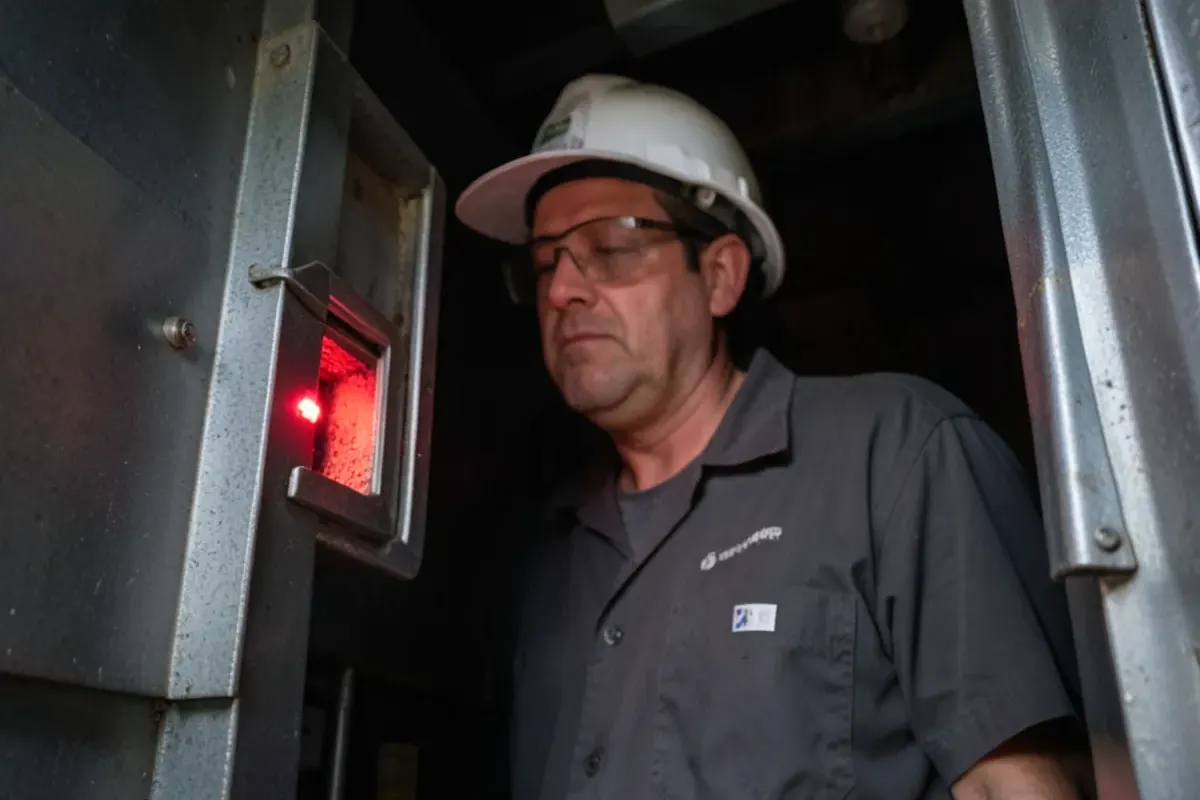
- Count the blinks. Many furnace control boards flash a fault code through a small window in the panel. Note the pattern or take a phone video.
- Tell us who is in the house. Infants, older adults and medical equipment all matter when we talk through what to do next.
- Ask for the number first. After-hours pricing is stated before work starts, so nothing arrives as a surprise.
Honest Trade-Offs on a Cold-Night Call
Every choice at 2 a.m. gives something up. Here is how we weigh the common ones.
- Tonight or tomorrow morning. An after-hours visit can bring heat back sooner, and it may cost more than a daytime slot. Ask for the price first, then compare it against the risk to the pipes and the people in the house.
- A diagnosis is not always a finished repair. Suppliers close overnight, and an older furnace can need a part nobody carries on a truck. A night visit may end with a safe shutdown and a written plan rather than heat.
- One space heater or a night elsewhere. A typical 1,500-watt heater pulls about 12.5 amps, so two on one 15-amp circuit will trip it. That limits how much of the house you can keep warm, and a relative's spare room may be the better choice.
- Emergency heat on a heat pump. It keeps the house warm, and it runs up the electric bill. Use it as a bridge until the fault is found.
- Patch or replace. A repair on a very old furnace buys the night. Decide on replacement in daylight, with written prices in front of you, instead of in a cold house.
Renters and the 68-Degree Rule
Albuquerque City Code § 14-3-3-2 requires heating that holds 68°F three feet above the floor in habitable rooms. Tell your landlord in writing as soon as the heat fails and keep a copy. This is City of Albuquerque code, so it does not reach other towns. Confirm with the City or your own town how it is enforced.
When to Stop Troubleshooting and Call
Call once the checks are done and the house is still cold, or right away if anyone in the home is vulnerable. Our emergency furnace repair line is open around the clock across the metro, including Corrales. Daytime problems go on a standard furnace repair visit.
We diagnose first, tell you what failed in plain English and give you a written price. Once the repair is finished, we run the system through a heating cycle and confirm it works before we leave.
Areas we serve
Common questions
Can I run my gas oven with the door open for heat?
No. EPA says not to heat a home with a gas oven, even for a short time, because it can put carbon monoxide into the house. Use an electric space heater in one closed room instead, plugged straight into a wall outlet, and keep three feet of clearance.
How cold is too cold to wait until morning for a furnace repair?
Call tonight if pipes are at risk or someone vulnerable is in the home. A forecast below freezing with a fading indoor temperature is reason enough. If the house is holding steady, everyone is healthy and the night is mild, a first-thing-in-the-morning visit may be fine.
What should I do if a pipe bursts while the heat is out?
Close the main shutoff first, then open a low faucet to drain the line. Water Authority customers can call dispatch at (505) 842-9287, Option 1, around the clock for an emergency turn-off. On a private well, switch off the pump breaker as well. Stay away from wet electrical gear, and take photos for your insurer before cleanup starts.
Sources
- New Mexico Public Regulation Commission: New Mexico Gas Company contacts
- New Mexico Gas Company: If You Smell Gas
- EPA: Protect Your Family and Yourself from Carbon Monoxide Poisoning
- CPSC: Keep Warm and Safe This Winter, January 23, 2026
- NFPA: Portable Space Heater Safety Tips
- American Red Cross: Preventing and Thawing Frozen Pipes
- City of Albuquerque: City activates warming centers, November 2024
- National Institute on Aging: Cold Weather Safety for Older Adults
- National Weather Service Albuquerque: Spring Freeze Table
- Albuquerque Bernalillo County Water Authority: Water Emergency
Rather have someone look at it?
Call any hour. You get a straight answer, a free written estimate and the price before the work starts.
- NM CID License #413436
- 24 Google reviews
- Led by Dominic Montoya, over 20 years in the trade
- Free written estimates
Red Wrench Company, 5635 Paradise Blvd NW, Albuquerque, NM 87114, (209) 563-1270