
Furnace Blowing Cold Air: Causes and Fixes
Most of the time, the burners never lit or shut off early. Here is how to tell, and which checks are safe to do.
- NM CID License #413436
- 24 Google reviews
- Led by Dominic Montoya, over 20 years in the trade
- Free written estimates
By Dominic Montoya, Owner of Red Wrench Company. Published , updated .
A furnace blowing cold air usually means the blower is running but the burners are not, or they lit and shut down early. Check the fan setting and filter first. If neither helps, suspect the igniter, flame sensor or a safety switch, and let Red Wrench Company test them. Smell gas and you leave, then call from outside.
Why Is My Furnace Blowing Cold Air?
Match what you are seeing to the likely cause. Timing tells you a lot.
| What you notice | Likely cause | Who fixes it |
|---|---|---|
| Cool air all the time, burners never run | Thermostat fan set to On | You |
| Cool air for a minute, then warm | Normal start of the cycle, or the heat exchanger still warming | Nobody, if it warms up |
| Warm air, then cold, then warm | Filter clog tripping the limit switch | You first, then a technician |
| Burners light, then quit in seconds | Dirty flame sensor | Technician |
| Clicks or tries to start, no flame | Failed igniter or gas valve | Technician |
| No flame on a propane system | Empty tank | Your supplier |
| Warm at the furnace, cool at far rooms | Leaky or disconnected ducts | Technician |
| Water near a high-efficiency unit | Blocked condensate drain | Technician |
Heat pumps are a different case. Cool air during a defrost cycle is normal, and our heat pump freezing guide explains what to watch for.
The Fixes You Can Try Yourself
Keep to these four. All of them are safe, and none means opening the burner compartment.
- Set the fan to Auto. On keeps the blower running between heat cycles, which feels like cold air.
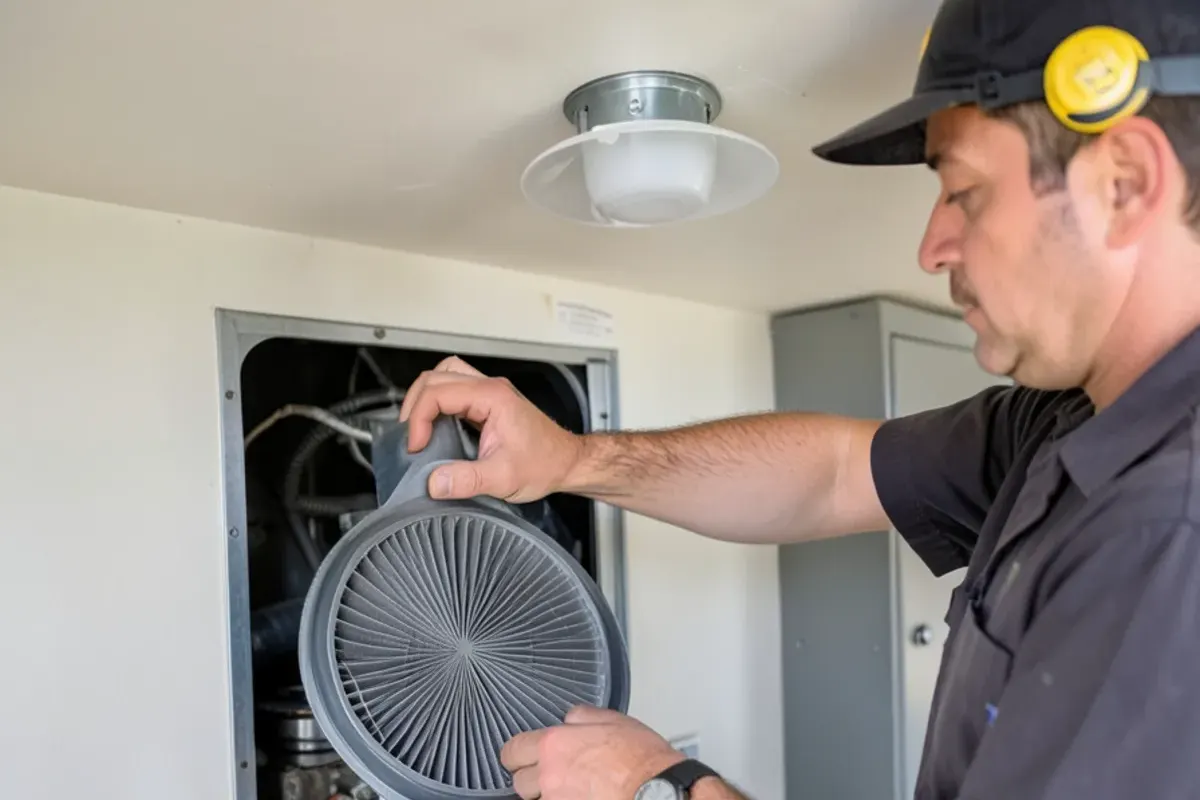
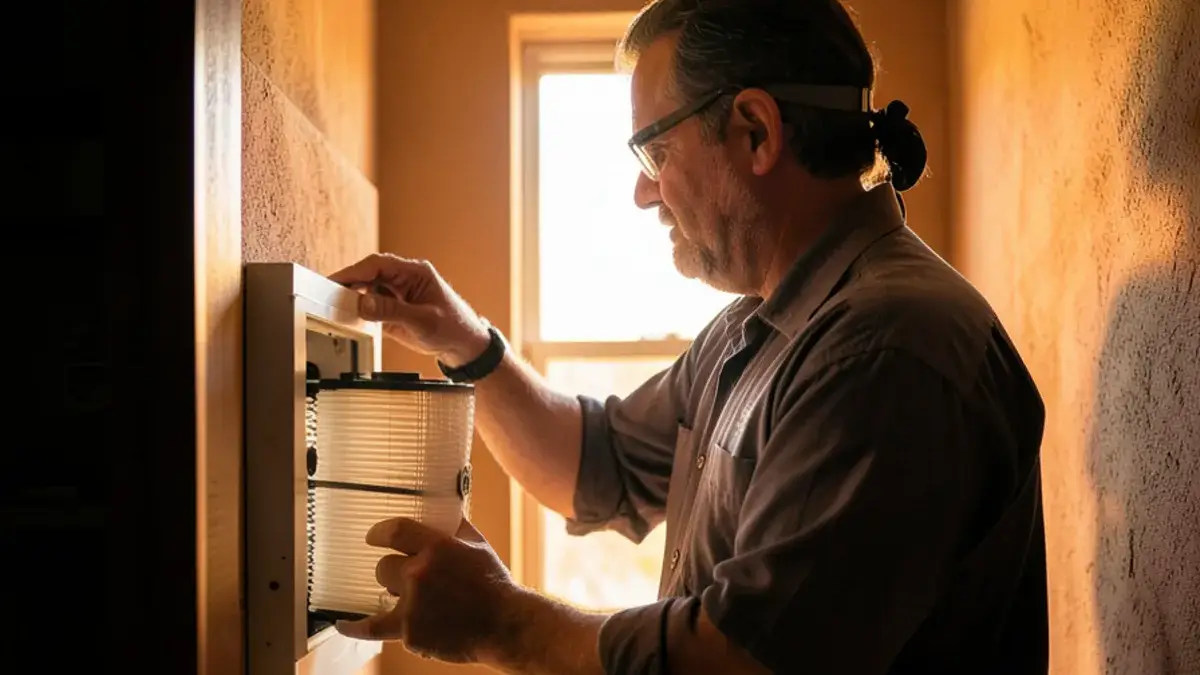
- Change the filter. ENERGY STAR says to check filters monthly. A blocked filter overheats the furnace until the limit switch shuts off the burners, and the blower keeps running to cool it down.
- Check power and the door. Make sure the service switch is on and the panel is fully seated. Many furnaces will not fire with the door switch open.
- Check the fuel. On propane, read the tank gauge. On natural gas, ask whether other gas appliances are working.
Give it one full heat call after each change. If the system locks out a second time, leave it off.
Read the fault code before you call, if your furnace has one. Most control boards blink a status light you can see through a small window in the blower door, and a chart inside the panel translates the count. Write down the number of blinks and how long the burners ran before they quit. That note tells a technician where to start.
What the Technician Is Testing
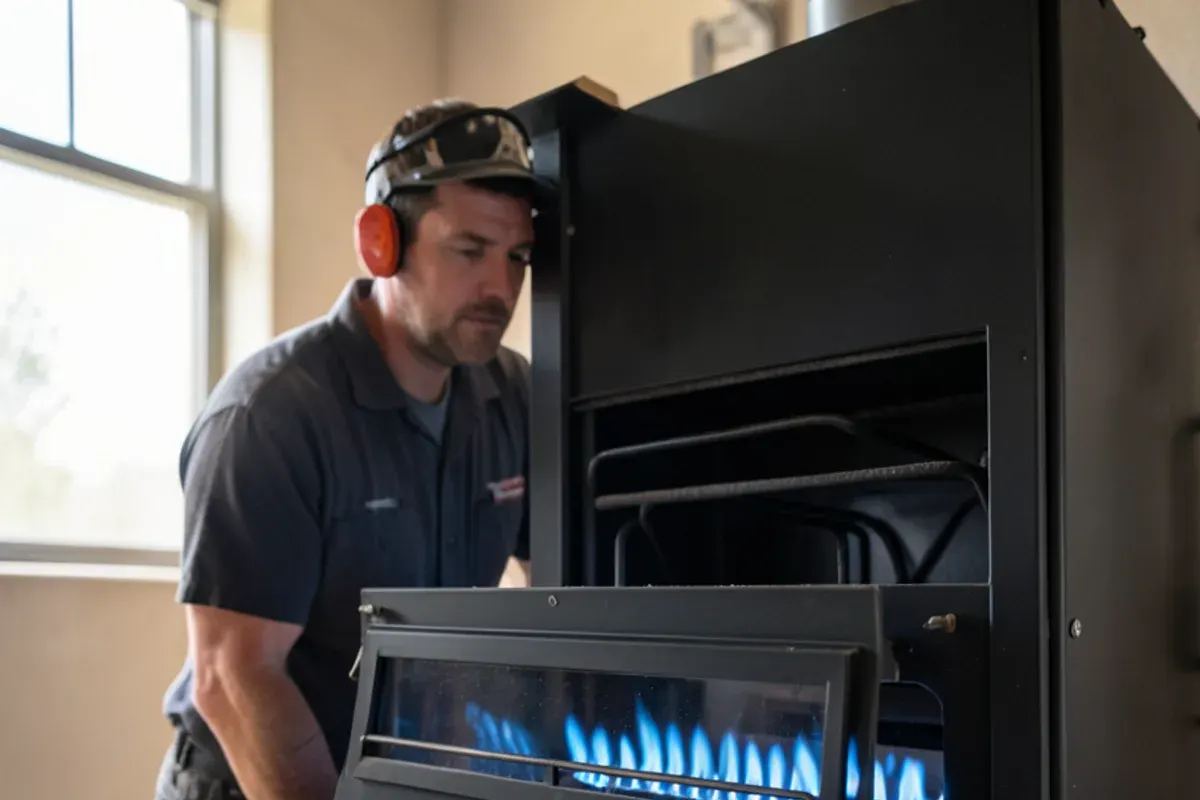
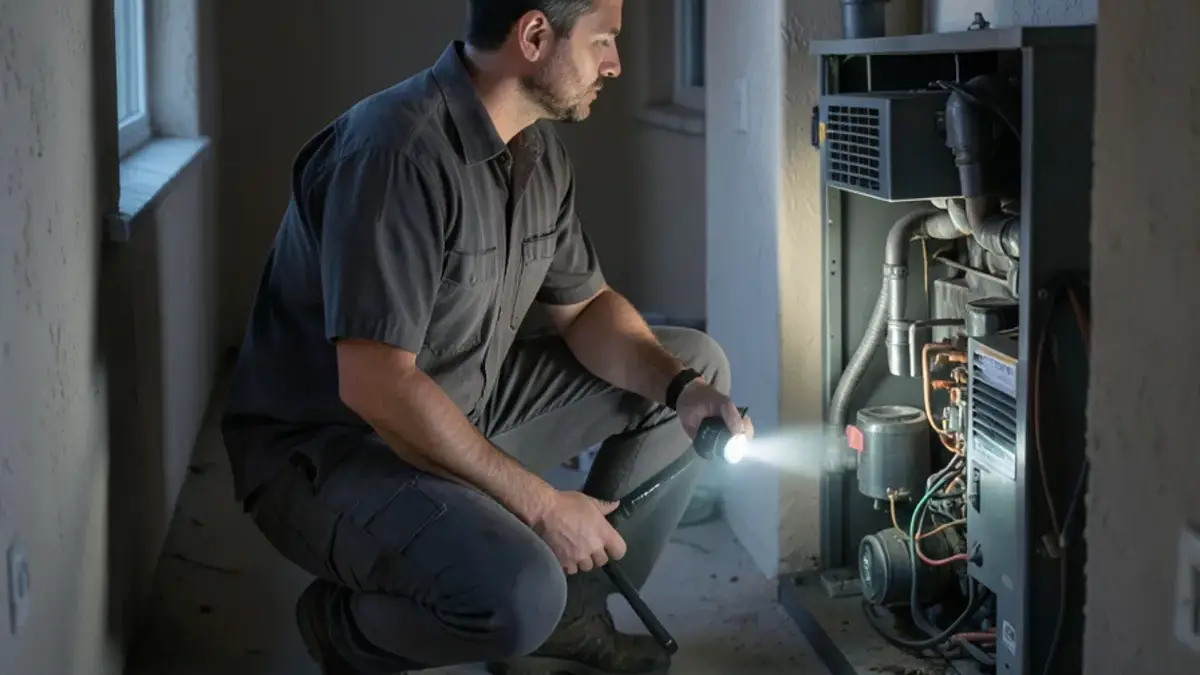
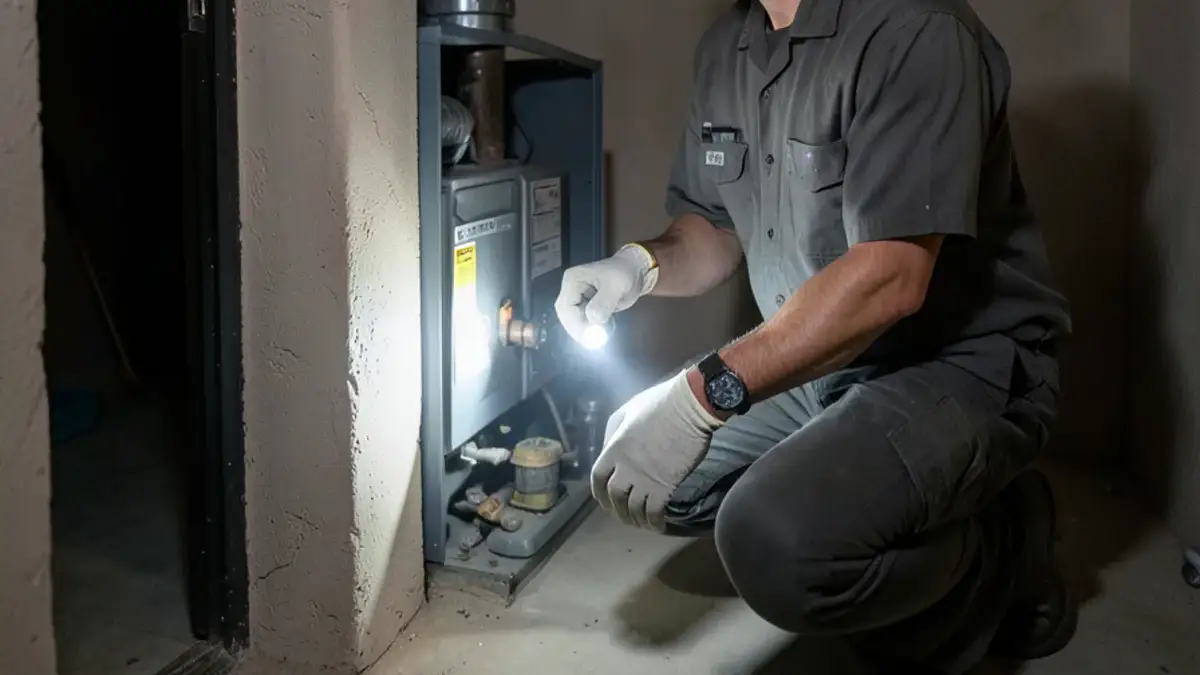
Most no-flame faults come down to the ignition sequence. We watch the furnace run through its steps, because the step where it stops points at the part.
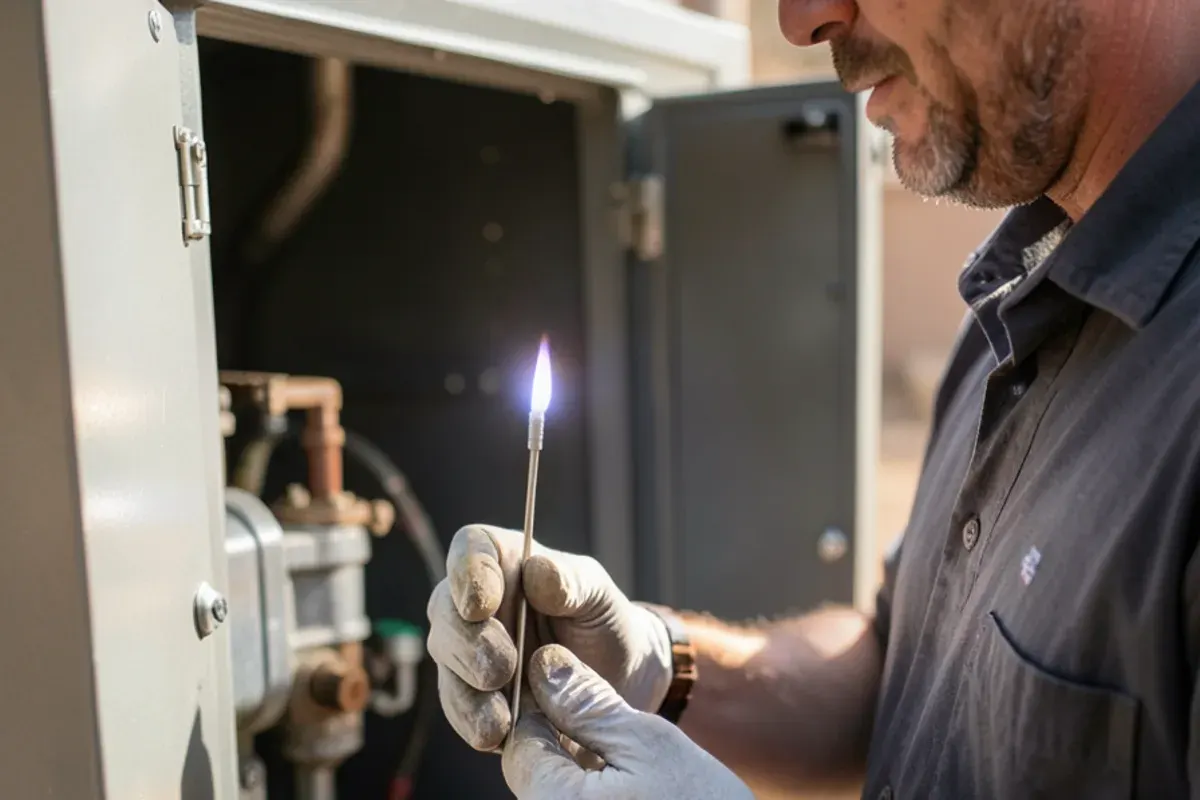
Flame sensor. This thin metal rod proves the burners are lit. A coating of residue can make it miss the flame, so the board shuts the gas off within seconds.
Hot surface igniter. This fragile part glows to light the gas and eventually cracks. A cracked one fails a resistance test.
Pressure switch and inducer. These confirm the flue is drawing. A blocked vent or failed motor stops the furnace before it lights.
Limit switch. This shuts down the burners when the furnace overheats, and a repeat trip means an airflow problem needs fixing. ENERGY STAR lists gas pressure, burner combustion and the heat exchanger among the items a technician should check.
High-altitude setup can matter too. Albuquerque sits near 5,300 feet, and combustion air is thinner here, so a furnace should follow the manufacturer's high-altitude instructions. Poor burner setup can show up as hard starts or nuisance lockouts.
When Cold Air Is a Safety Problem
Stop troubleshooting if any of these show up. A safe call beats a fast one.
- Gas smell. Leave the house now and touch no switches. From outside, call New Mexico Gas Company at 1-888-664-2726 or 911.
- CO alarm. If anyone has symptoms, EPA says to get them out and seek medical attention right away. Do not use fuel-burning appliances until a qualified technician has inspected them.
- Scorch marks, soot or rollout. Flame or heat where it does not belong can mean a blocked flue or heat exchanger trouble. Shut the system off.
- Repeat lockouts. The furnace is protecting itself. Forcing it on removes that protection.
What We Tell Customers Before They Reset Again
These are the rules we give on the phone, with the reasons behind them.
- One reset is a test. Five is a gamble. A furnace that locks out has found a problem, and more restarts just repeat it.
- Do not sand a flame sensor or bend a burner. Fragile parts break easily, and an igniter can crack from a light tap.
- Replace filters before cold snaps. Heating season starts fast here, with about 113 freezing nights a year in Albuquerque, per BestPlaces.
- Book the fall check. CPSC says to have a professional inspect fuel-burning heating systems each year. Our furnace maintenance visit is built around that.
Clean, Repair or Replace: The Trade-Offs on Each Fix
Most cold-air repairs are small, which is good news. The cheapest answer is not always the lasting one, though.
- Cleaning a flame sensor or replacing it. Cleaning is quick and often works. If the coating comes back fast, something upstream is making it, so ask what.
- Swapping a limit switch or fixing the airflow. A limit that trips is usually telling the truth. Replace the switch without clearing a restricted return or a too-dense filter, and the new part trips too.
- Fan On or Auto. On gives steadier temperatures and more filtering, and EPA suggests running the blower nonstop during smoke. The price is cool drafts between heat cycles and more electricity.
- A new igniter on an older furnace. Usually still worth doing. An igniter is a small repair and says nothing about the rest of the unit. A cracked heat exchanger is the finding that changes the conversation.
- Duct repair or living with it. ENERGY STAR says about 20 to 30 percent of the air in a typical duct system is lost to leaks, holes and poor connections. A disconnected run can make one room blow cool while the furnace works fine. That repair costs more than a filter, and no filter will fix it.
When to Stop and Book the Repair
Book a visit once the fan setting, filter, power and fuel have all checked out. The fault at that point is likely in the ignition sequence, the airflow or the ducts, and a test will find it.
We take furnace repair calls across the metro, including the older homes of the North Valley, where varied heating setups can take extra diagnosis. If the house is cold and the weather is not waiting, our emergency furnace repair line is open 24 hours at (209) 563-1270. We diagnose first and give you a written price before work starts.
Areas we serve
Common questions
Why does my furnace blow cold air before it gets warm?
A short blast of cool air at startup is normal, because the air sitting in the ducts has cooled off and the exchanger is still warming up. It should turn warm within a few minutes. If it stays cold past that, or swings warm and cold, check the filter.
Is a furnace blowing cold air dangerous?
Usually it is a comfort problem. It can become a safety problem if you smell gas, see scorch marks or your CO alarm sounds. In any of those cases shut down and follow the safety steps. A cold-air call with a clean filter should get a proper diagnosis.
Why does my furnace blow cold air only on the coldest nights?
Long run times expose weak spots. A loaded filter can trip the limit during a long cycle, ducts in a crawlspace lose more heat, and a high-efficiency unit's condensate line can freeze where it runs outside, which shuts off the burners. Note the outdoor temperature and the time it happened, since that pattern helps a technician narrow the fault.
Can a bad thermostat make a furnace blow cold air?
Yes. A thermostat set to Cool or to fan On, dead batteries or a wiring fault can leave the blower running with no heat call. Check the mode and the batteries first. If the screen reads Heat and the furnace still never fires, a technician can test the signal at the control board to separate a thermostat fault from a furnace fault.
Should I leave the furnace on while I wait for a repair?
No, if it keeps cycling or locking out. Turn the thermostat to Off so the blower stops pushing cold air and the furnace stops retrying. In a cold snap, open cabinet doors on outside walls to protect pipes, and use space heaters only as the maker directs. Do not heat with an oven or run an unvented fuel-burning heater indoors.
Rather have someone look at it?
Call any hour. You get a straight answer, a free written estimate and the price before the work starts.
- NM CID License #413436
- 24 Google reviews
- Led by Dominic Montoya, over 20 years in the trade
- Free written estimates
Red Wrench Company, 5635 Paradise Blvd NW, Albuquerque, NM 87114, (209) 563-1270