

Spring AC Maintenance Checklist for Homeowners
Six jobs you can do in an afternoon, and the ones to leave for a technician before the first hot week.
- NM CID License #413436
- 24 Google reviews
- Led by Dominic Montoya, over 20 years in the trade
- Free written estimates
By Dominic Montoya, Owner of Red Wrench Company. Published , updated .
A good AC maintenance checklist has two halves: the jobs a homeowner can do safely in spring, and the checks that take a technician's tools. Handle the filter, the condenser, the drain and a test run yourself, then book the professional visit before contractors get busy. ENERGY STAR recommends a spring cooling check for exactly that reason.
Why Bother Before It Gets Hot?
Spring is when small faults are cheap. A dirty coil or a weak capacitor gives little trouble at 75 degrees and a lot at 100.
Summers here punish a marginal system. National Weather Service Albuquerque logged 30 days at or above 90°F in August 2026 against a normal of 16.5, and 551 cooling degree days against a normal of 367. Every one of those days is another long run for the compressor and fan.
The U.S. Department of Energy also says routine filter replacement can lower an air conditioner's energy use by 5 to 15 percent. The filter alone is the quickest return on this list.
The Homeowner's Spring AC Maintenance Checklist
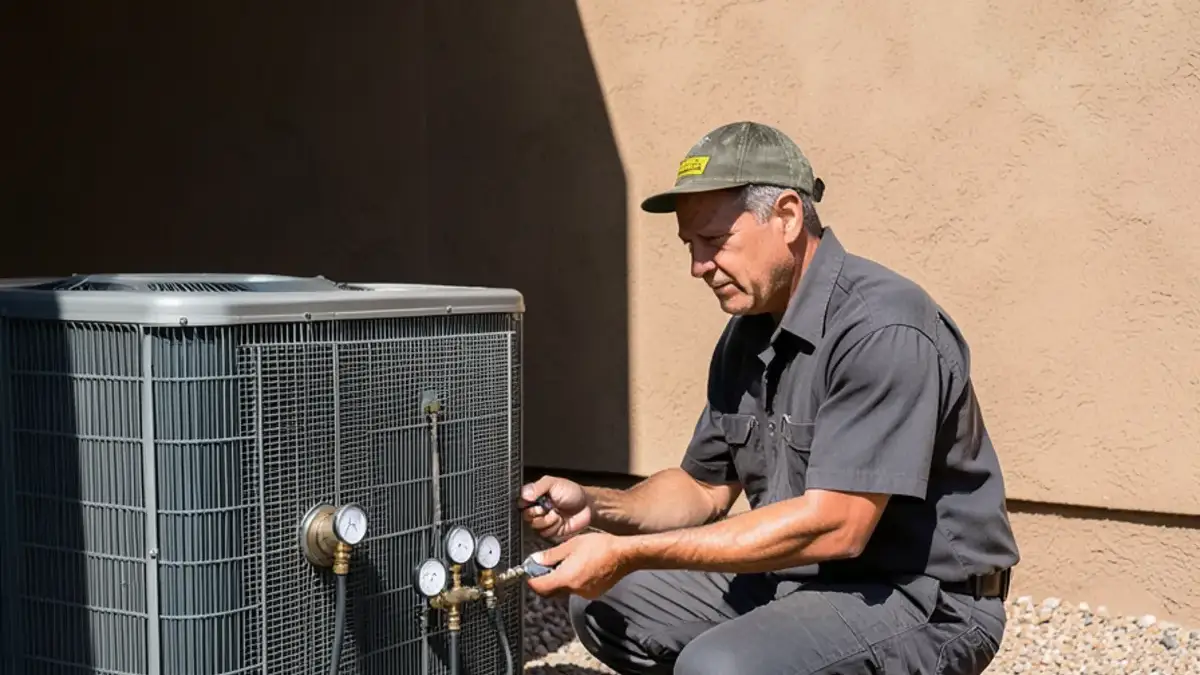
Turn off power at the breaker and at the outdoor disconnect before you touch the condenser.
- Replace the filter. ENERGY STAR says to check it monthly and change it at least every three months. Note the size and write the date on the frame.
- Clear the outdoor unit. Pull weeds, leaves and tumbleweed from around the cabinet. Keep about two feet clear on all sides, or whatever your manual calls for.
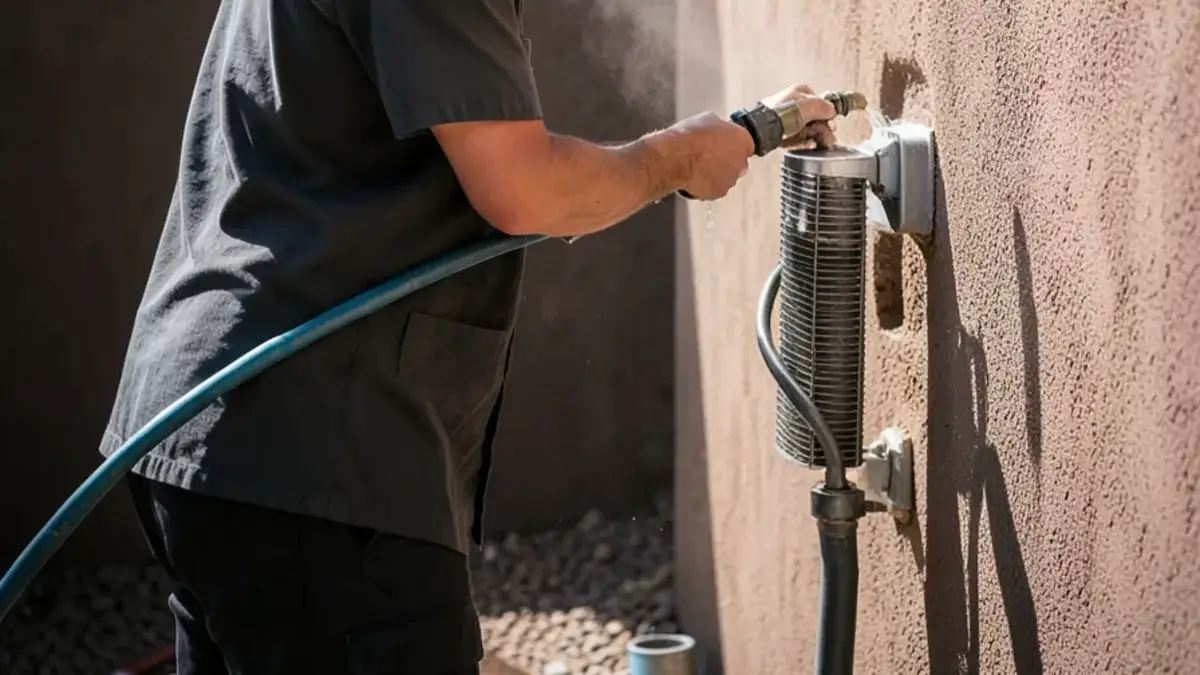
- Rinse the condenser coil. With the power off, use a garden hose at gentle pressure and spray from the inside out if you can reach. Skip the pressure washer, since it flattens fins.
- Straighten bent fins. DOE suggests a fin comb for this. Work slowly and leave badly crushed sections alone.
- Check the condensate drain. Find where the line ends outside and confirm it is clear. A slow drip during cooling is normal. A wet ceiling or a full pan is not. On attic units, shine a flashlight into the secondary pan. Water there means the main drain is already failing.
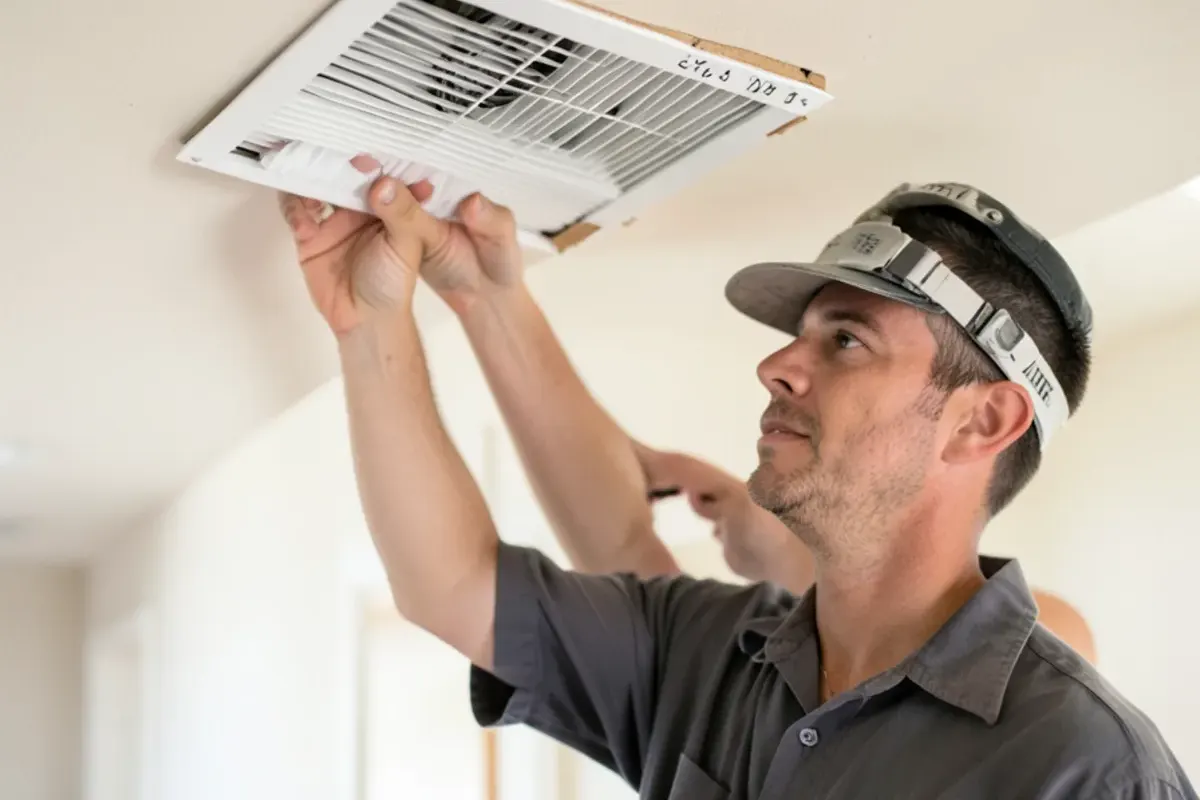
- Open every supply and return. Move furniture and rugs off vents so the blower is not working against them.
- Test the thermostat. On a warm day, restore power and set it several degrees below room temperature. Replace batteries if it has them. Confirm cool air within a few minutes and that the outdoor fan is spinning.
If the breaker stayed off all winter, restore power well ahead of the test and check your manual for a wait time. Many outdoor units use a crankcase heater to warm the compressor oil before a start, and a cold start is hard on it.
If you run a test on a chilly morning, stop. Many systems are not meant to run cooling in low outdoor temperatures, so wait for a warm day.
What Should a Technician Check on a Spring Visit?
This half needs meters, gauges and training. ENERGY STAR's list for cooling and all-system checks covers the core of a proper AC maintenance visit:
| Item | Why it matters |
|---|---|
| Thermostat settings and system controls | Confirms start, run and shutdown sequence |
| Electrical connections, voltage and current on motors | Loose connections and weak motors fail in heat |
| Lubrication of moving parts, where applicable | Reduces friction and motor strain |
| Evaporator and condenser coil cleaning | Dirty coils cost capacity and efficiency |
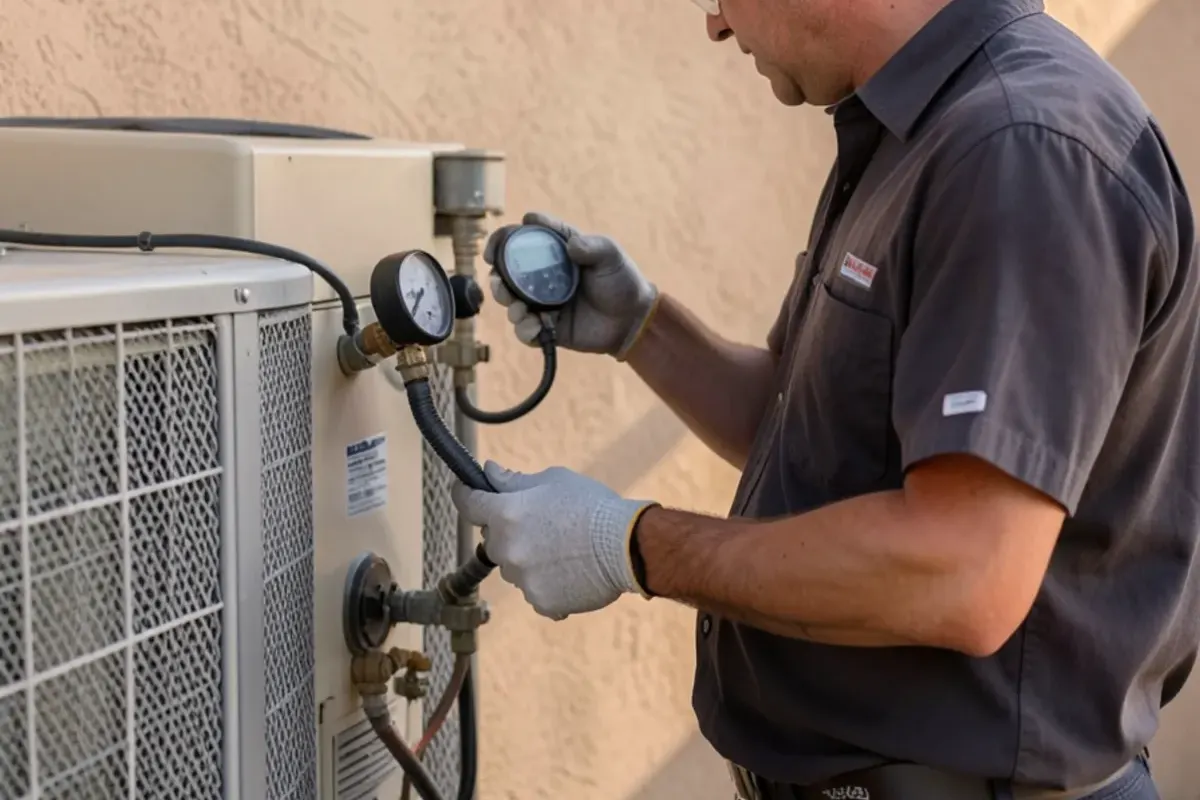
| Refrigerant level check | Low charge points to a leak |
| Blower cleaning and airflow adjustment | Airflow affects coil temperature and comfort |
| Condensate drain | Protects ceilings and walls from overflow |
Leave refrigerant to a professional. EPA Section 608 prohibits intentionally venting refrigerants, and a system that needs more charge has a leak that should be found and repaired first. Refrigerant is not used up in normal running.
Capacitors are also off the homeowner list. They hold a charge after the power is off, and we test them with a meter.
Ask for the numbers on the invoice. Motor amperage, the capacitor reading against its rating and the temperature drop across the coil give you a baseline for next spring. A service note that says only "system OK" leaves nothing to compare.
What Spring Conditions Do Around Here
Spring wind is a maintenance event in the Rio Grande valley. Blowing dust packs condenser coils in weeks, and a west-facing unit takes the worst of it. Rinse after the worst of the wind season rather than before it.
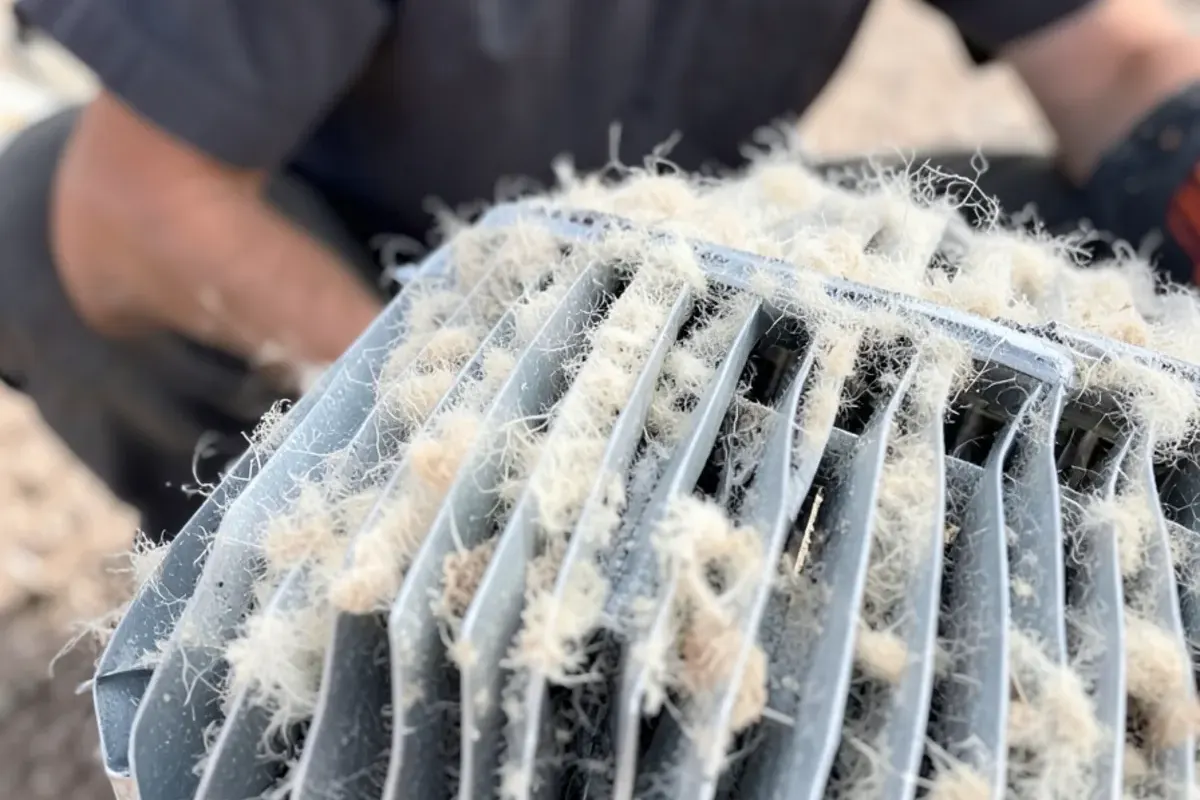
Valley homes get a second load. In Corrales, cottonwoods along the bosque shed fluff that mats onto coils and restricts airflow. It looks harmless, but a felted coil runs hot. Check again in late spring after the trees finish, and rinse if you see a pale layer on the fins.
Roof-mounted package units need the same attention with a harder approach. Unless you are comfortable on the roof, leave them for the technician.
What We Tell Customers About Spring Tune-Ups
- Schedule early. Spring openings fill up once the first hot week lands. ENERGY STAR makes the same point about contractors getting busy in summer.
- Keep your own log. A note with filter dates and repair history helps diagnose problems later.
- Note odd sounds now. Tell the technician about any squeal or rattle from last summer, even if it stopped.
- Do not cover the condenser. A tight cover traps moisture and invites nesting. Clear it instead.
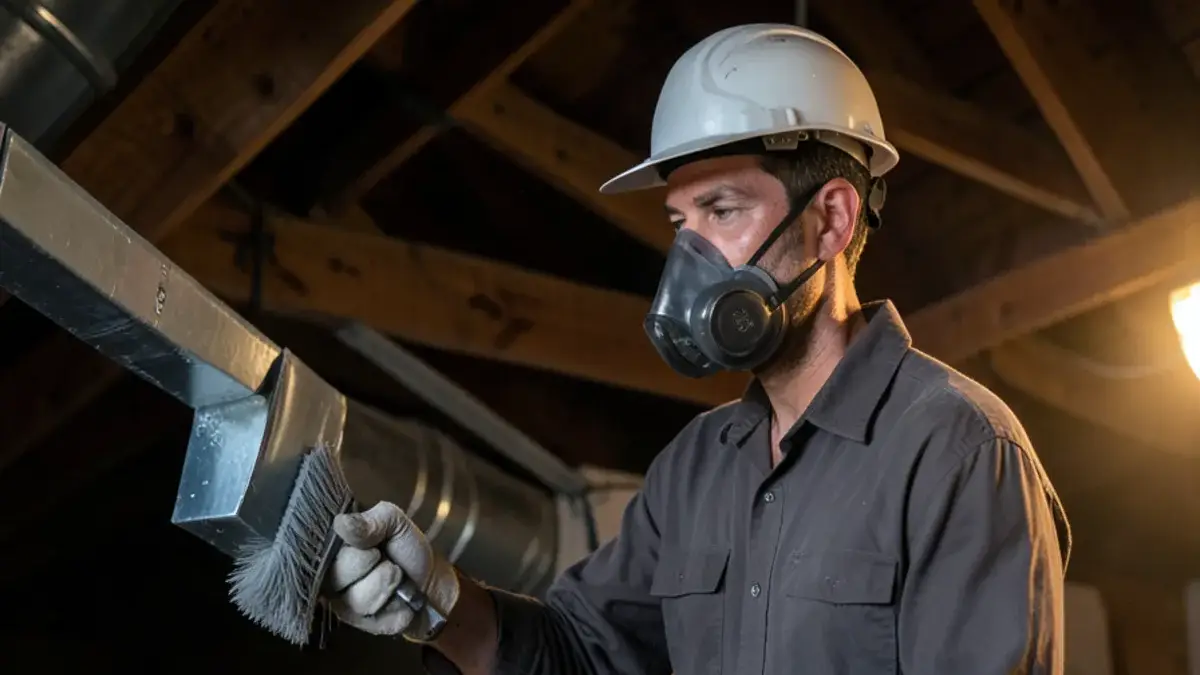
- Look at your ducts too. ENERGY STAR says sealing and insulating ducts can improve efficiency by as much as 20 percent, and a duct repair may do more than a tune-up in a hard-to-cool house.
If the test run turns up warm air, ice on the line or a humming condenser that will not spin, shut it down and book AC repair rather than running it harder.
Spring Maintenance Trade-Offs Worth Thinking Through
Maintenance has costs too, and every line item should earn its place.
- Hose rinse or coil cleaning. A rinse clears surface dust and costs nothing. It will not reach packed grime deep in a thick coil, which takes a cleaner and more time. Cleaner applied badly can also harm fins, so that job suits a technician.
- Every year or every other year. A newer system with clean filters can go longer between visits, and some owners accept that. The risk is a slow leak or weak motor that nobody catches. Some manufacturer warranties also ask for maintenance records, so read your paperwork before you skip one.
- April or June. An early visit beats the rush, but a cold day limits what anyone can verify about refrigerant charge. A warm afternoon gives better readings, so ask for one if your calendar allows it.
- Replace a weak part now or wait. A capacitor reading low is a small repair today and a no-cool call in July. A worn part that still tests fine can wait. Ask to see the reading behind any recommendation, so the decision rests on a number.
One Afternoon, One Service Call
An afternoon of homeowner work plus one professional check covers most of what a system needs each spring. Start with the filter, clear the condenser, test the system on a warm day, and book the technician before the first heat. That order finds problems while they are still small and a part is easy to get.
Areas we serve
Common questions
Does a central AC need a professional check every spring?
Yes, once a year ahead of cooling season. ENERGY STAR recommends a spring check for the cooling system and a fall check for heating. Heat pumps run both seasons and benefit from both visits. If your system lives through heavy dust or sits near cottonwoods, keep up with homeowner coil rinsing between professional visits.
Can I clean my AC condenser with a hose?
Yes, as long as the power is off and the pressure is gentle. Shut off the breaker and the outdoor disconnect, then rinse the fins until the water runs clear. Avoid pressure washers and do not spray into the electrical compartment. Give the unit time to dry before you restore power and run a cooling test.
When is the best time to test my AC in spring?
Pick a warm afternoon after the cold snaps end. National Weather Service normals put the last freeze near April 6 at the Sunport and April 25 in Corrales, so wait longer in valley spots that hold cold. Set the thermostat a few degrees below room temperature and confirm cool air within minutes. Book any repair you find right then, because openings shrink once the first hot week arrives.
Rather have someone look at it?
Call any hour. You get a straight answer, a free written estimate and the price before the work starts.
- NM CID License #413436
- 24 Google reviews
- Led by Dominic Montoya, over 20 years in the trade
- Free written estimates
Red Wrench Company, 5635 Paradise Blvd NW, Albuquerque, NM 87114, (209) 563-1270