

Signs Your Ductwork Is Leaking Conditioned Air
Rooms that never catch up and bills that keep climbing often start in the ducts. Here is what to look for and test.
- NM CID License #413436
- 24 Google reviews
- Led by Dominic Montoya, over 20 years in the trade
- Free written estimates
By Dominic Montoya, Owner of Red Wrench Company. Published , updated .
The clearest signs of leaky ducts are high heating and cooling bills, rooms that never catch up, and ducts running through attics, crawlspaces or garages. ENERGY STAR says a typical house loses about 20 to 30 percent of the air moving through its ducts. Red Wrench Company can inspect yours and say whether sealing is worth it.
Eight Signs of Leaky Ducts
No single sign proves a leak, but several together make a good case. ENERGY STAR names the first four.
- High bills in both summer and winter. The system pays for air that never reaches a room.
- Rooms that are hard to heat or cool. The far bedroom falls behind while the rest of the house is fine.
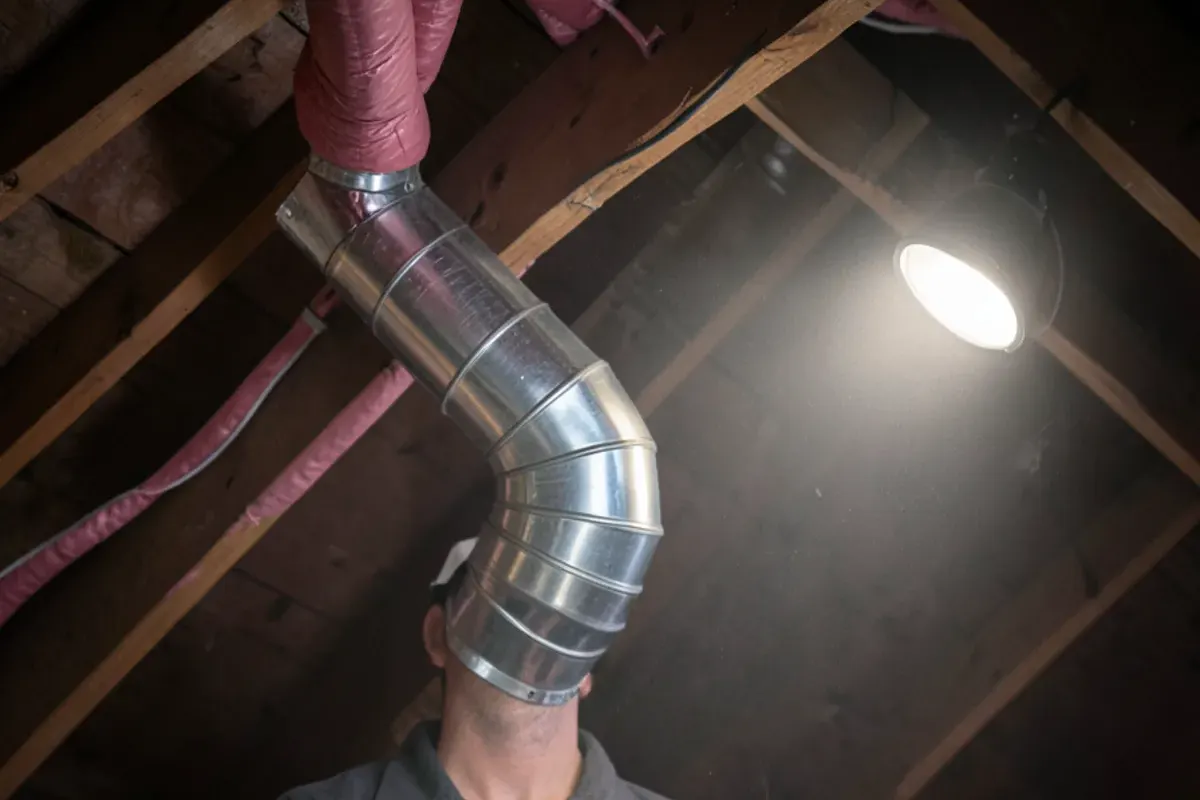
- Ducts in attics, crawlspaces or garages. A leak in unconditioned space sends paid-for air outside the home.
- Tangled or kinked flex duct. A kink chokes airflow even if the run is not leaking.
- Weak airflow at some vents. One slow register can point at a disconnected or crushed run.
- Dust that returns fast. Return leaks can pull dusty attic or crawlspace air into the system.
- A dirty line in the insulation. Darkened insulation around a duct joint often marks where air has been escaping.
- A system that runs long and never quite settles. Lost air stretches each cycle.
What Can You Check Without Special Tools?
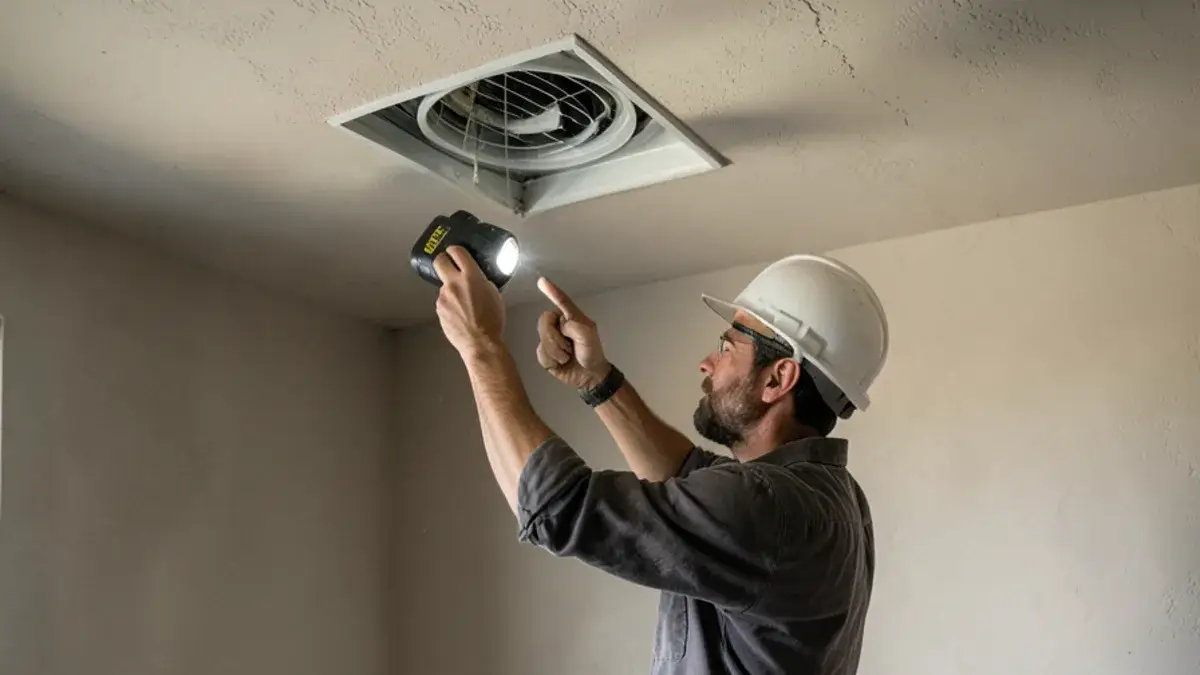
Start with the parts you can reach safely. A flashlight and ten minutes tell you a lot.
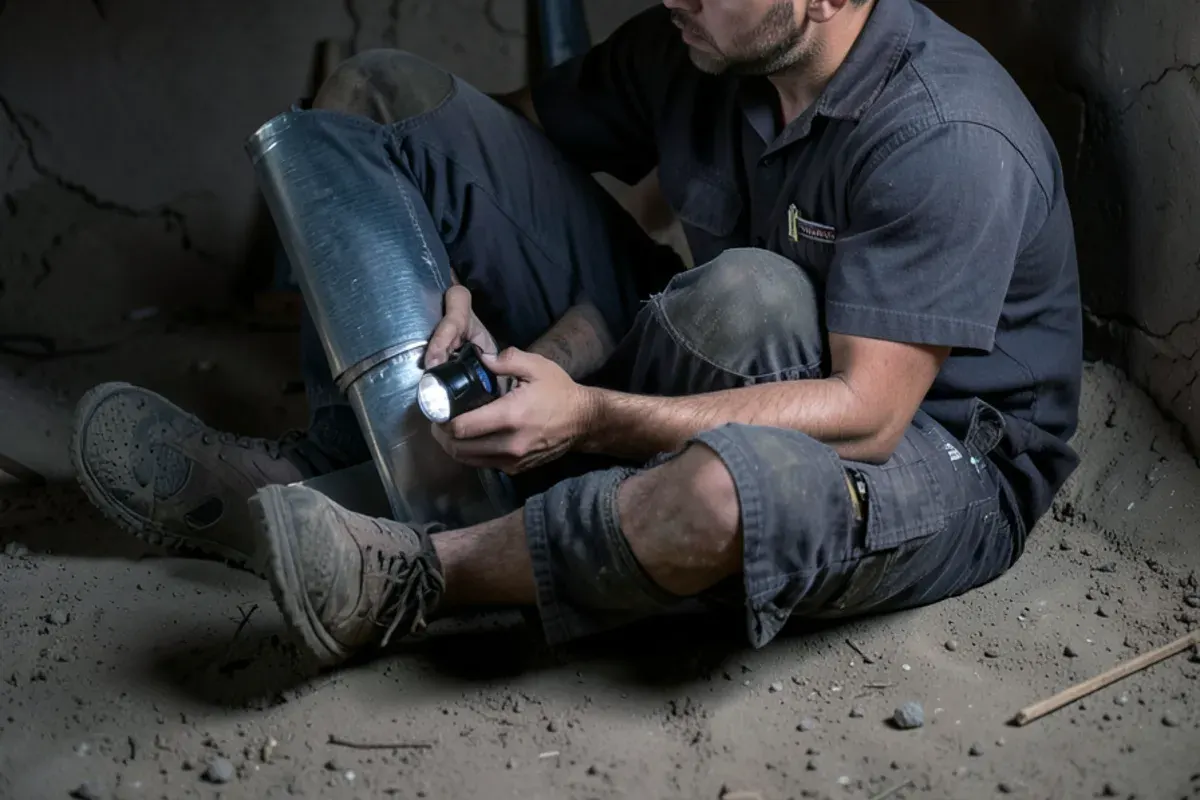
- Look at exposed ducts in the garage, closet or crawlspace for gaps, sagging runs and crushed sections.
- Look for old duct tape that has dried and let go. ENERGY STAR warns never to use duct tape on ducts, since it does not last.
- Feel for air at joints with the blower running.
- Check that the return is not undersized or blocked by furniture. ENERGY STAR notes that many systems have return ducts that are too small.
- Open all the registers, then compare airflow room by room.
Keep safe footing in an attic. Step only on framing, and stay out when it is hot. Skip the attic altogether if you are unsure, since a foot through a ceiling costs more than any duct repair.
Why Do Ducts Leak in New Mexico Homes?
Ducts are built with joints, and joints fail. Age, heat and movement do the slow work, and a few local conditions add to it.
Summer attics get brutally hot and dry, which is hard on old tape and flexible duct jackets. Homes that moved from swamp coolers to refrigerated air may carry ductwork that was designed for a cooler's much larger airflow, or a mix of old and new sections. Each conversion leaves a transition worth inspecting. Our refrigerated air conversion work starts with that inspection.
Cold climates make leaks cost more. Around Tijeras and the East Mountains, a supply leak in an unheated crawlspace dumps warm air at the coldest part of the house, and a return leak pulls in cold air. Mountain homes with long heating seasons see those losses for more months of the year.
How Are Duct Leaks Measured and Fixed?
A proper job has three parts: find the leaks, seal them, and prove the result. ENERGY STAR's guidance for hiring a contractor covers each one.
Inspection. The contractor should look at the full system, including attic and crawlspace runs. We inspect ducts before we quote the repair, so you pay for the problem you have.
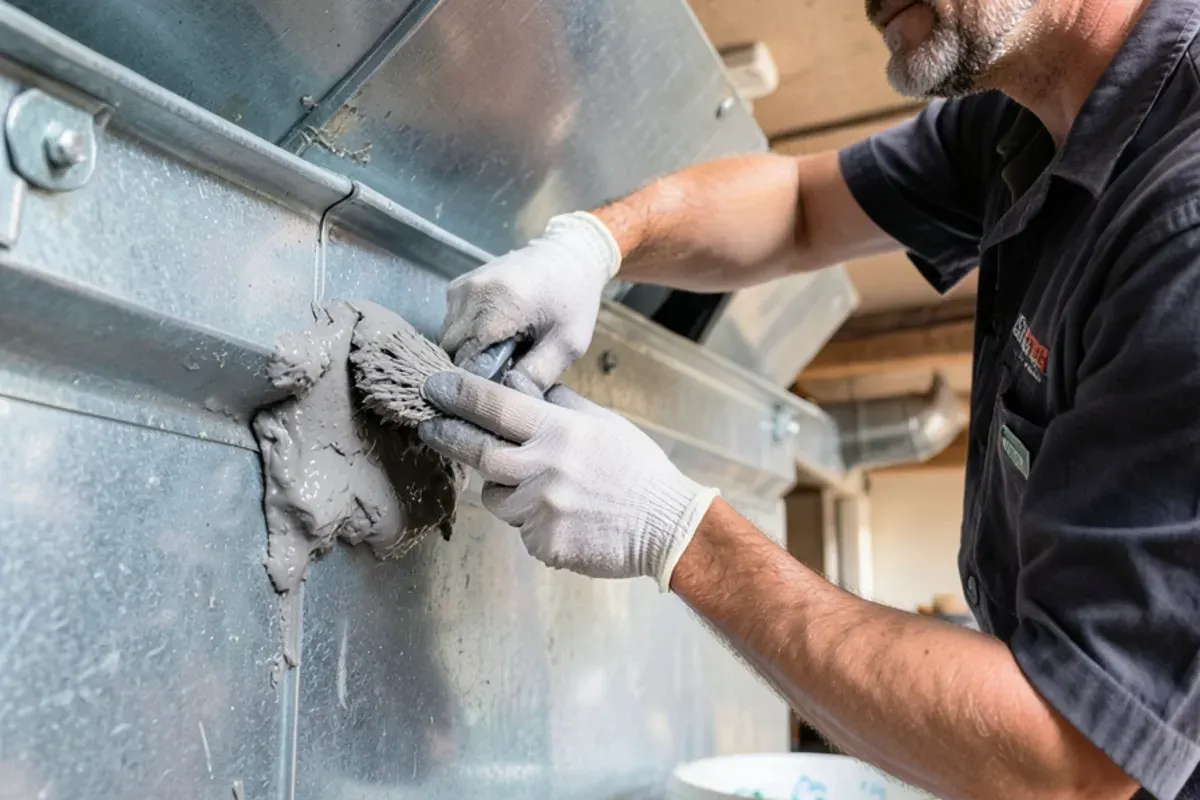
Sealing. Leaks and connections should be sealed with mastic, metal tape or an aerosol-based sealant. Mastic is a thick paste that hardens over joints. Runs in unconditioned space should be insulated to R-6 or higher.
Verification. ENERGY STAR says the contractor should evaluate airflow after repairs are finished and check the supply and return balance.
Safety is part of the verification. Sealing a duct system changes pressures in the house, so gas or oil appliances should be checked to confirm they are not backdrafting, which means exhaust flowing back into the home. ENERGY STAR calls for a combustion safety test after the ducts are sealed.
Testing. Numbers beat a hand held up to a seam. PNNL's Building America guide describes the duct leakage test: seal the registers, connect a calibrated fan and hold the ducts at 25 pascals. The airflow needed to hold that pressure is the leakage figure, written CFM25. A total leakage test counts every leak, while a leakage-to-outdoors test adds a blower door so it counts only air leaving the house. The same guide lists 4 CFM25 per 100 square feet of floor as the limit in the 2012 through 2021 IECC. That target is meant for new ducts and is no pass mark for a 1980s house, but it gives a before-and-after result some scale.
| Repair | Best for | Note |
|---|---|---|
| Reconnect and seal a joint | A run that came apart | Often the highest return |
| Mastic seal on accessible seams | Older sheet metal | Needs clean surfaces |
| Replace a damaged section | Crushed or torn flex duct | Reroute to remove kinks |
| Add insulation | Ducts in attics or crawlspaces | R-6 or higher, per ENERGY STAR |
| Full duct replacement | Failing or badly designed systems | Compare against repair |
What We Tell Customers About Duct Tape, Filters and Sealing
These rules cover the mistakes we see most in this kind of repair.
- Do not trust gray tape. Use mastic or metal tape on any duct work.
- Do not close vents to push air elsewhere. Closed registers raise duct pressure and can make leaks worse.
- Do not seal around a gas furnace and walk away. Ask for the combustion safety check.
- Do not buy cleaning to fix a leak. A duct cleaning job does not close a single gap.
- Change filters on schedule. ENERGY STAR says to check them monthly, and a clogged filter puts more pressure on the same weak joints.
Seal, Replace or Leave Them Alone?
Duct work has trade-offs, and the right answer depends on how much of the system anyone can reach.
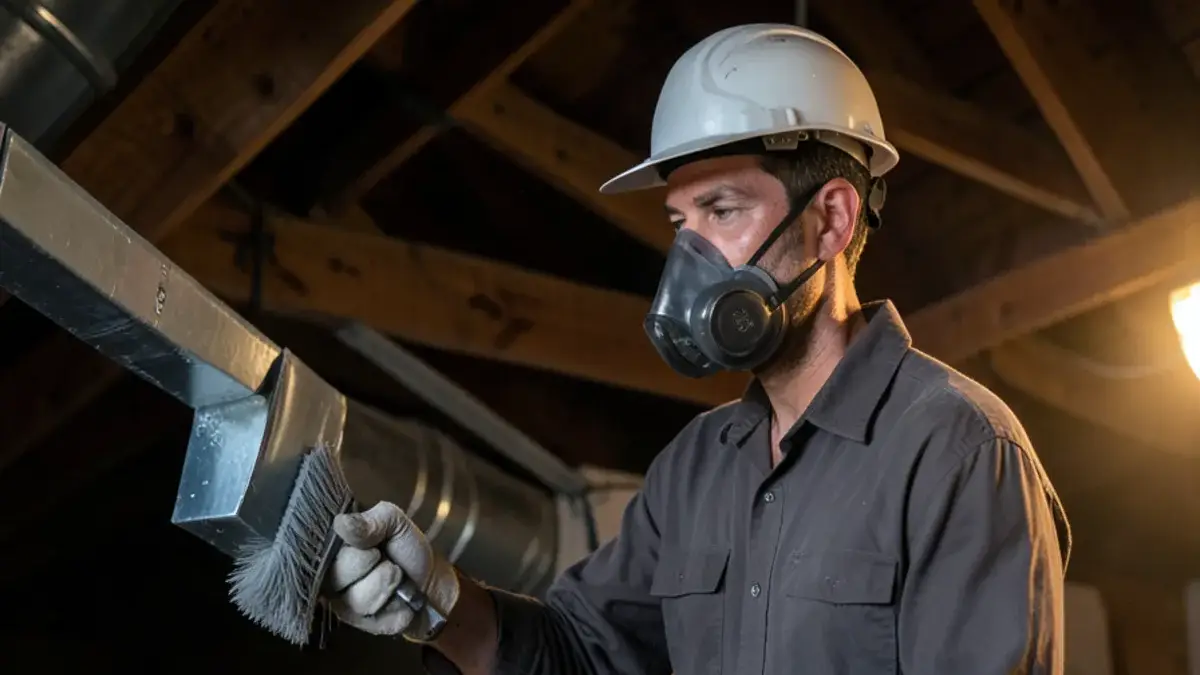
- Hand sealing or aerosol. Mastic is cheap and lasting, but it only goes where a hand can reach. Aerosol sealant, an option ENERGY STAR lists, reaches hidden joints from inside, and it will not close a disconnected run or fix a crushed one.
- Partial sealing. Flat-roof chases and slab runs often stay out of reach. Sealing the accessible half is still useful, so expect a partial result. ENERGY STAR's figure of up to 20 percent is a ceiling and no forecast for your house.
- Testing or skipping it. A leakage test adds cost to a small repair, and a reconnected run may not need one. On a whole-system sealing job, it is the best proof you got what you paid for.
- Tighter ducts can expose other problems. Closing return leaks can reveal a return that was always too small, and the blower may get louder. Ask about that fix before the work starts.
- Seal or replace. Sealing costs less and leaves walls alone. Replacement fixes a bad layout, at the price of access work in ceilings and closets.
Tight Ducts Make Everything Else Work Better
A new furnace or AC cannot deliver air that leaks out on the way. If the signs above sound familiar, sealing can be one of the most useful repairs in the house, and it often costs less than the equipment people replace instead.
Ask for a duct repair inspection before you buy anything new. The written estimate is free, and we will show you where the air is going. Call (209) 563-1270.
Related services
Areas we serve
Common questions
How much air can leaky ducts actually lose?
ENERGY STAR says about 20 to 30 percent of the air moving through a typical house's duct system is lost to leaks, holes and poor connections. Your house may be better or worse. A hot attic or a cold crawlspace makes each lost cubic foot more expensive.
Is duct sealing safe in a home with a gas furnace?
Yes, when it is done properly. Sealing changes pressures in the house, so appliances should be tested afterward to confirm they are not backdrafting. ENERGY STAR calls for a combustion safety test after sealing. Ask any contractor whether that test is part of the job.
Can I seal my own ducts?
Yes, for joints you can reach safely. Use mastic or metal tape on clean metal, and stay out of a hot attic in an Albuquerque summer. Large gaps, crushed flex and anything behind a ceiling are repair work. If a gas furnace or water heater shares the space, ask for a combustion safety check once sealing is done, because tighter ducts change the pressures around those appliances.
Rather have someone look at it?
Call any hour. You get a straight answer, a free written estimate and the price before the work starts.
- NM CID License #413436
- 24 Google reviews
- Led by Dominic Montoya, over 20 years in the trade
- Free written estimates
Red Wrench Company, 5635 Paradise Blvd NW, Albuquerque, NM 87114, (209) 563-1270