

How Often Should You Change Your HVAC Filter?
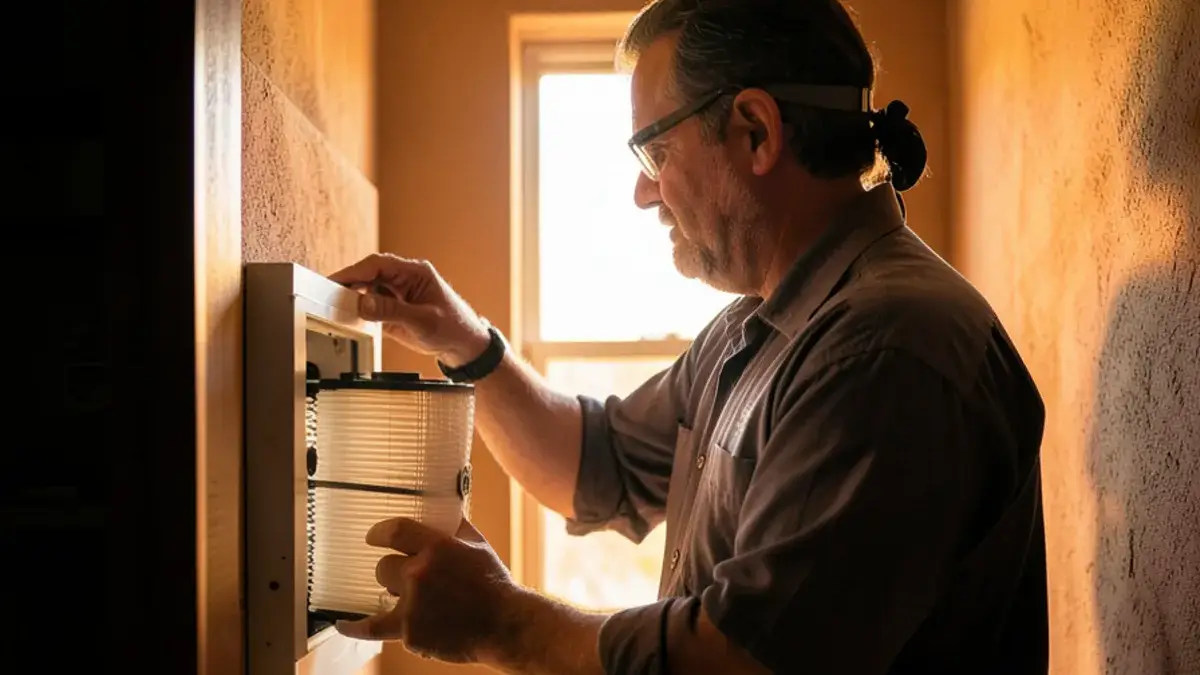
Check it monthly and change it at least every three months. Dust, pets and smoke shorten that schedule.
- NM CID License #413436
- 24 Google reviews
- Led by Dominic Montoya, over 20 years in the trade
- Free written estimates
By Dominic Montoya, Owner of Red Wrench Company. Published , updated .
How often to change an HVAC filter comes down to a simple rule: check it every month and replace it at least every three months. ENERGY STAR gives that schedule, and the EPA says manufacturers typically call for 60 to 90 days. A dusty New Mexico house with pets or smoke needs the short end or sooner.
Why Does a Dirty Filter Matter So Much?
A clogged filter starves the system of air. ENERGY STAR says a dirty filter forces the equipment to work harder and can lead to early system failure, and the U.S. Department of Energy says routine replacement can cut an air conditioner's energy use by 5 to 15 percent.
The damage often shows up somewhere else. Low airflow can freeze an AC coil in July. In winter it overheats the furnace, which then shuts off on its high-limit safety. Many no-heat and no-cool calls begin with a filter nobody looked at.
How Often to Change an HVAC Filter in Real Homes
Use these as starting points, then let your monthly check correct them. A filter's manufacturer always outranks a general chart.
| Your situation | Start by checking | Likely change |
|---|---|---|
| One-inch filter, typical home, no pets | Monthly | Within 60 to 90 days |
| Pets, or a busy household | Monthly | Closer to 30 to 60 days |
| Someone with allergies or asthma | Monthly | On the short end, and ask about filter rating |
| Dust storms, remodeling or sanding | After the event | As soon as it looks loaded |
| Wildfire smoke days | Weekly while smoky | When it looks dirty or smells of smoke |
| Thick media filter, 4 to 5 inches | Every few months | On the manufacturer's schedule |
| Vacant or lightly used home | Every few months | At least by the manufacturer's limit |
The EPA adds a useful test: if filters look heavily soiled when you pull them, change them more often. Run time matters too. The agency says HVAC systems usually run less than 25 percent of the time in heating and cooling seasons, so a system running long hours in a hot August loads its filter faster than the same one in a mild May.
Does Dust Here Really Shorten the Schedule?
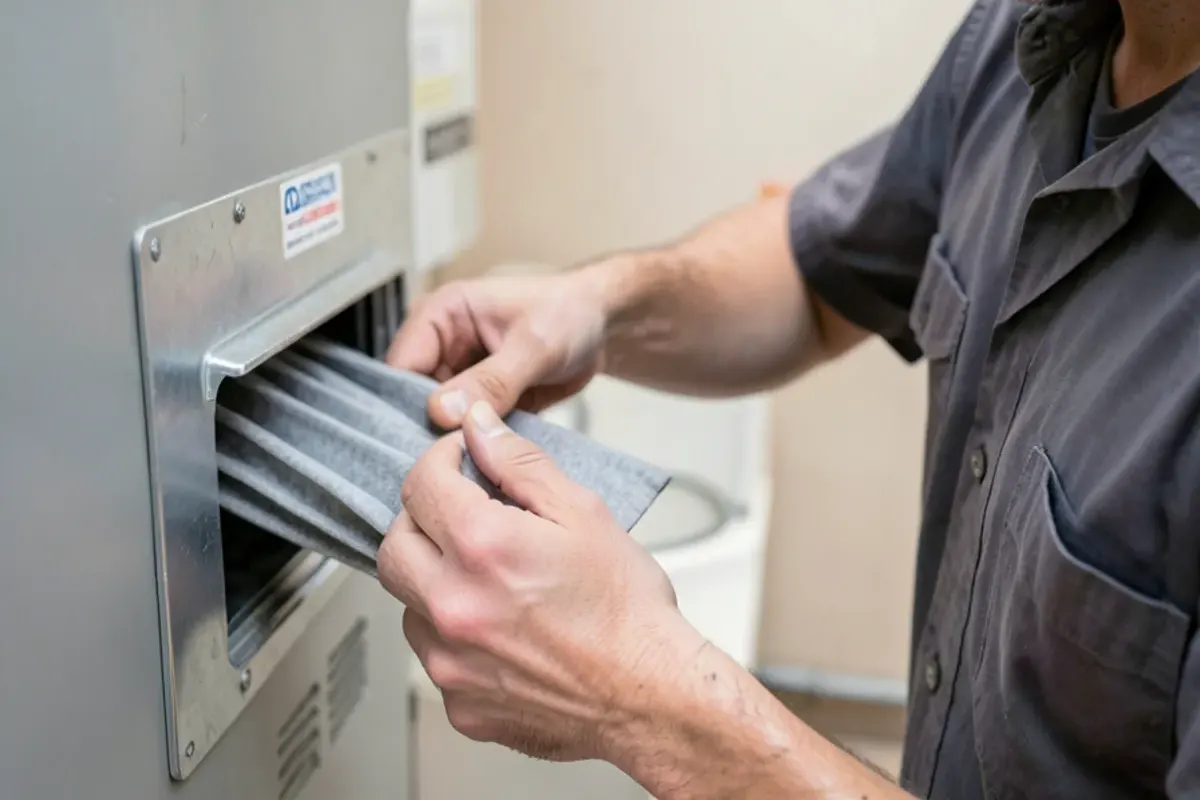
It does. New Mexico air is dry, and spring wind carries plenty of fine dust. Houses with older ducts pull in even more, since a leaky return duct can draw air from a crawlspace or attic and load the filter from the inside.
The North Valley adds its own seasons. Cottonwoods along the bosque release pollen and fluff in spring, and irrigated yards and older homes bring their own dust. If a filter there loads up in a month, treat that as your real schedule and stop going by the package.
A filter that clogs unusually fast can be a symptom. Heavy dust at the return grille or dust lines around registers may point to duct leaks, which is worth having checked.
Which MERV Rating Should You Buy?
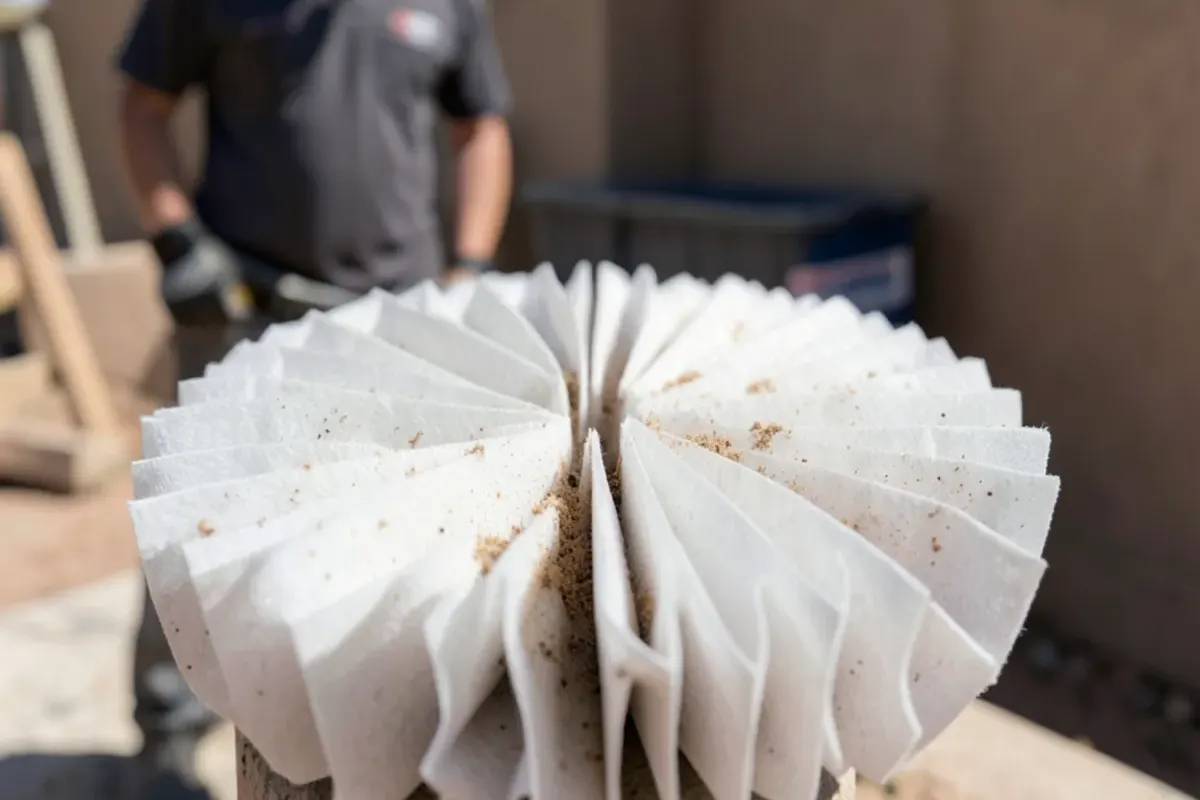
Buy the highest rating your system can actually handle. MERV is a scale from 1 to 16 that measures how well a filter captures particles between 0.3 and 10 microns, and the EPA suggests at least MERV 13 or as high as your system's fan and filter slot will accommodate.
Most systems can run a MERV 13 filter without equipment problems, the EPA says, provided it is replaced often. That condition is the catch. Denser media loads faster, and a tight one-inch filter in a small slot can restrict airflow on an older system. Keep these rules in mind:
- Check the filter size printed on the frame, and do not bend or crush it to fit.
- Make sure it fits snugly, since air slipping around the edge goes unfiltered.
- Point the airflow arrow toward the furnace or air handler.
- Ask a technician to measure airflow if a higher-rated filter makes rooms feel weaker.
If your slot is too small for good filtration, a thicker media cabinet gives more surface area. That is one of the first upgrades we look at in air purifier and filtration work.
The Trade-Offs Behind a Better Filter
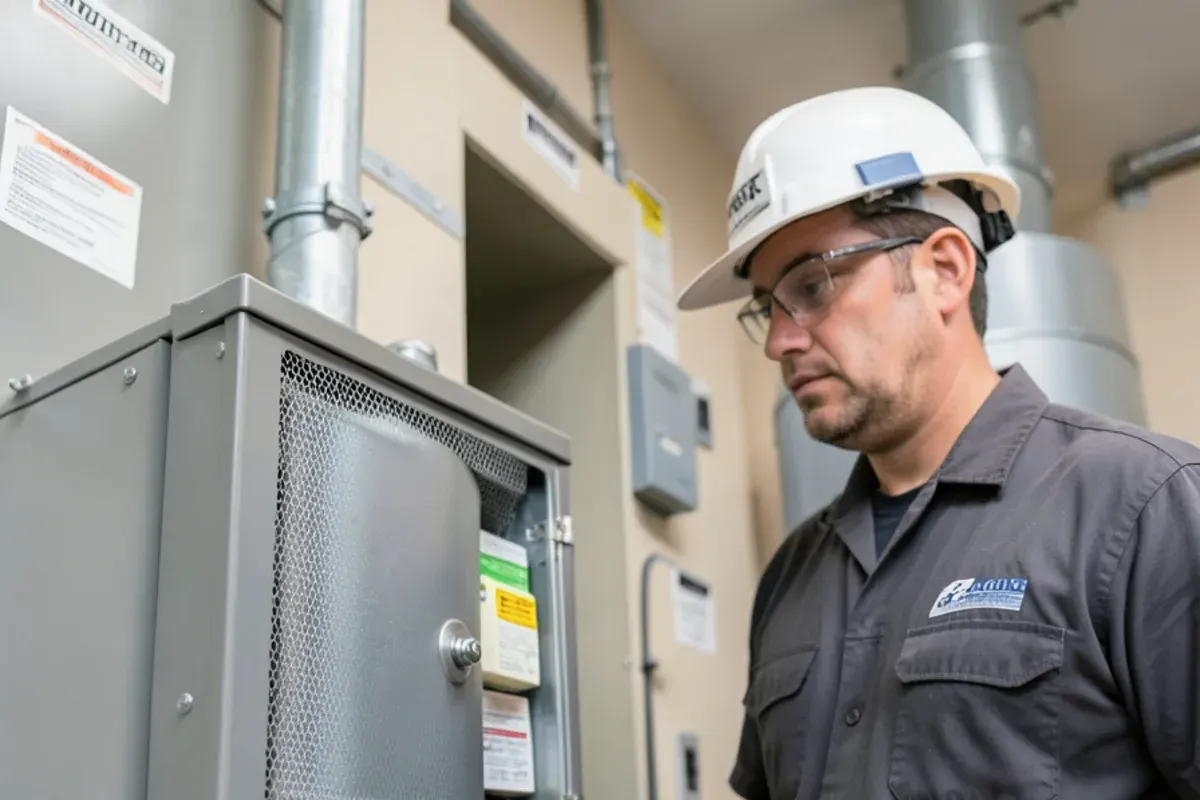
Better capture costs something every time, so pick the filter you will actually keep up with. A MERV 13 left in for six months does more harm than a mid-range filter changed on time.
| Filter type | What you gain | What you give up |
|---|---|---|
| Basic fiberglass | Lowest price, easy airflow | Little capture of small particles |
| One-inch pleated, mid-range | A fair balance for most homes | Less capture of fine smoke and dust |
| One-inch MERV 13 | Fine particle capture in a standard slot | Loads fastest, so it needs the shortest schedule |
| Four- to five-inch media | More surface area and longer life | Needs a cabinet, and each filter costs more |
| Washable | No filters to buy | Regular washing, and it must dry fully before going back |
Changing a filter early wastes a few dollars. Changing it late can cost a coil cleaning or a no-heat call, so err toward early.
What Changes During Wildfire Smoke?
EPA's smoke guidance goes further than the everyday schedule. It recommends a MERV 13 filter or the highest your system can handle, keeping the blower on nonstop so it catches small particles, and closing any fresh-air intake.
Each of those has a price. A nonstop blower loads the filter faster and uses more electricity, which is why the chart moves to a weekly check. Return the fan to Auto when the air clears.
Swamp coolers are the hard case, since they run on outside air and can pull more smoke indoors. EPA's wildfire guidance says that if you can safely reach the cooler, fully cover its intakes with 4-inch MERV 13 furnace filters, though wind or rain may damage them. If you cannot, run the cooler sparingly and lean on fans or a window air conditioner. Leave the roof work to someone comfortable up there.
What About Swamp Coolers and Mini Splits?
Swamp coolers have no standard furnace-style filter. Their pads do that job and need seasonal replacement, along with attention during the season.
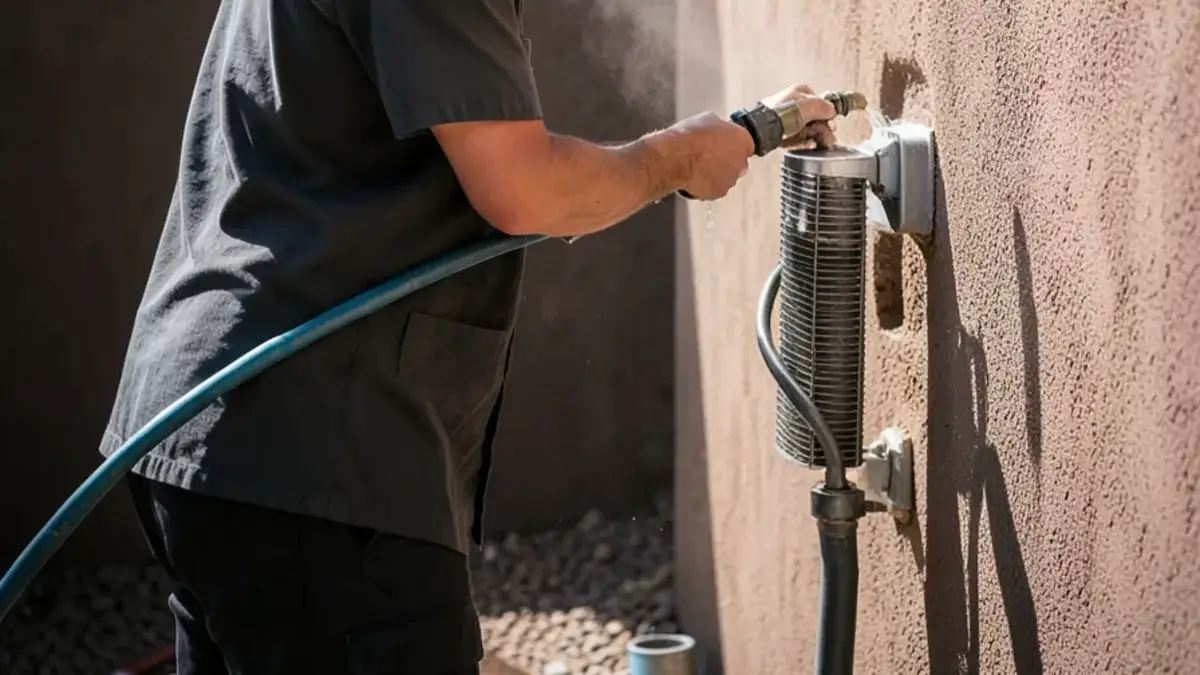
Mini split heads have washable mesh filters. Follow the manual, and rinse them when dirty. PNNL's Building America guide also says that wall-mounted heads tend to collect dust and moisture on the blower wheel, so plan on periodic deep cleaning, typically every one to three years depending on use and humidity.
What We Tell Customers About Filters
- Buy by the case. People change filters on time when the next one is sitting next to the furnace.
- Set a repeating phone reminder. The first of the month is easy to remember.
- Never run without one, even for a day. Dust lands on the coil, and cleaning that costs far more than a filter.
- Write the date on the frame. Memory is a poor maintenance log.
- Read the rating on cheap filters. Basic fiberglass filters tend to sit low on the MERV scale, so they do little for small particles.
- Bring it up at your tune-up. During furnace maintenance or AC maintenance, we can show you how the filter looks against the airflow the system is getting.
The Takeaway
Look at the filter every month, replace it by 90 days at the latest, and let your own house shorten that schedule. Choose a filter your system can breathe through. No other job on the list costs so little and protects so much equipment.
Areas we serve
Common questions
Can I wash and reuse a disposable HVAC filter?
No. Disposable pleated filters are not built for washing, and water damages the media. Replace them on schedule. Some homes have washable electrostatic filters, which must dry completely before going back in. Check the manual, and clean them on the schedule the maker gives you.
Why does my filter get dirty so fast?
Heavy dust, pets and long run times are the usual reasons. A filter that clogs within weeks can also point to leaky return ducts pulling air from an attic or crawlspace. Check the gasket and the fit first, then look for dust streaks around return grilles. If it continues, a duct inspection can show where that air is coming from.
Does a higher MERV filter hurt my furnace?
Usually not, if it fits and gets changed on time. The EPA says most systems can accommodate MERV 13 without equipment problems when the filter is replaced often. The risk comes from running a dense filter past its life, or forcing it into a tight slot on an older blower. Weak airflow after an upgrade is a reason to have it measured.
Should I use a filter at the return grille and another at the furnace?
No. One filtered location is the rule. A second filter adds resistance to the airflow and does little extra work. Older homes sometimes have a hallway filter grille and a forgotten slot at the furnace, so find every filter location once. If you have both, keep the one that fits best, and ask at your next tune-up which spot suits the system.
How often should I clean a mini split filter?
More often than most people expect. PNNL says standard washable mesh filters typically need cleaning about every two weeks, by washing or vacuuming. Follow your manual, and let them dry before reinstalling. Spring dust in the valley can load them faster, and PNNL warns that add-on filters covering part of the filter area let most of the air bypass them.
Sources
- ENERGY STAR, Heating and Cooling
- ENERGY STAR, Maintenance Checklist
- U.S. EPA, Guide to Air Cleaners in the Home
- U.S. EPA, What is a MERV rating?
- U.S. Department of Energy, Energy Saver 101: Home Cooling
- PNNL Building America Solution Center, Ductless Mini-Split Heat Pumps
- U.S. EPA, Reduce Your Smoke Exposure
- U.S. EPA, Wildfires and Indoor Air Quality
Rather have someone look at it?
Call any hour. You get a straight answer, a free written estimate and the price before the work starts.
- NM CID License #413436
- 24 Google reviews
- Led by Dominic Montoya, over 20 years in the trade
- Free written estimates
Red Wrench Company, 5635 Paradise Blvd NW, Albuquerque, NM 87114, (209) 563-1270