

Ductless Mini Split vs Central Air
Good ducts favor central air. No ducts, bad ducts or one problem room favor a mini split.
- NM CID License #413436
- 24 Google reviews
- Led by Dominic Montoya, over 20 years in the trade
- Free written estimates
By Dominic Montoya, Owner of Red Wrench Company. Published , updated .
The mini split vs central air choice mostly comes down to your ducts. Sound ductwork makes central air the simpler, cheaper way to cool a whole house. No ducts, bad ducts or one room that never keeps up usually favor a ductless mini split. Many homes in the end do best with both.
How Do the Two Systems Differ?
Central air cools one large volume of air and sends it through ducts to every room. One thermostat usually controls the whole house, unless it has zoning.
A mini split connects an outdoor unit to one or more wall or ceiling heads by a small refrigerant line. Each head handles its own room or zone. Many mini splits are heat pumps, so they heat as well as cool.
That difference shows up everywhere else: where the losses happen, how you control comfort and what the install costs.
Mini Split vs Central Air, Compared
| Question | Ductless mini split | Central air |
|---|---|---|
| Needs ducts? | No | Yes |
| Room-by-room control | Standard | Only with zoning |
| Heating included | Usually, as a heat pump | No, unless it is a heat pump |
| Duct energy loss | None | Depends on duct condition |
| Whole-house coverage | Takes several heads | Natural fit |
| Filtration | Small washable filters at each head | Central filter, with upgrades possible |
| Look | Visible head in each room | Hidden, apart from vents |
| Listed life span (DOE) | 12 to 15 years | 15 to 20 years |
The cost picture is more nuanced than either camp suggests. The U.S. Department of Energy says that in homes with existing ductwork, a mini split can cost 30 percent more than adding an air conditioner to the existing system. In a home with no ducts, the balance can reverse, because ductwork is costly to add. We do not publish a system price, so get a written local quote for your house.
Are Ducts Really That Big a Loss?
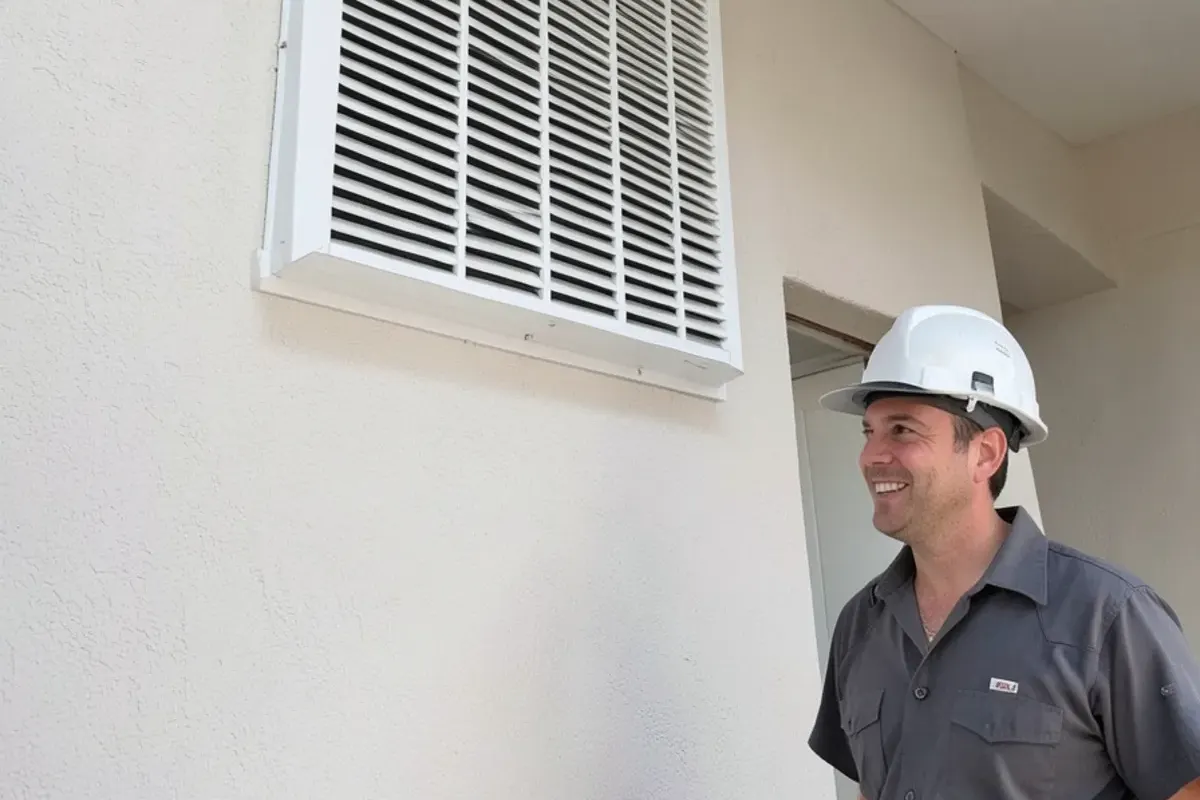
They can be. ENERGY STAR says about 20 to 30 percent of the air moving through a typical duct system is lost to leaks, holes and poor connections. Its mini split fact sheet adds that ductwork losses can account for more than 30 percent of a home's space-conditioning energy use.
Keep that in context. Those are general figures, your ducts may be better or worse, and ducts can be fixed. ENERGY STAR also says sealing and insulating ducts can improve efficiency by as much as 20 percent. Before you give up on central air, it can be cheaper to get a duct repair estimate and see what the current system could do with tight ducts.
The opposite also happens. An installer may promise a mini split will save a fortune, but in a tight house with good ducts in conditioned space there is little loss to recover.
When Does Ductless Win?
These are the houses where we would start with a mini split:
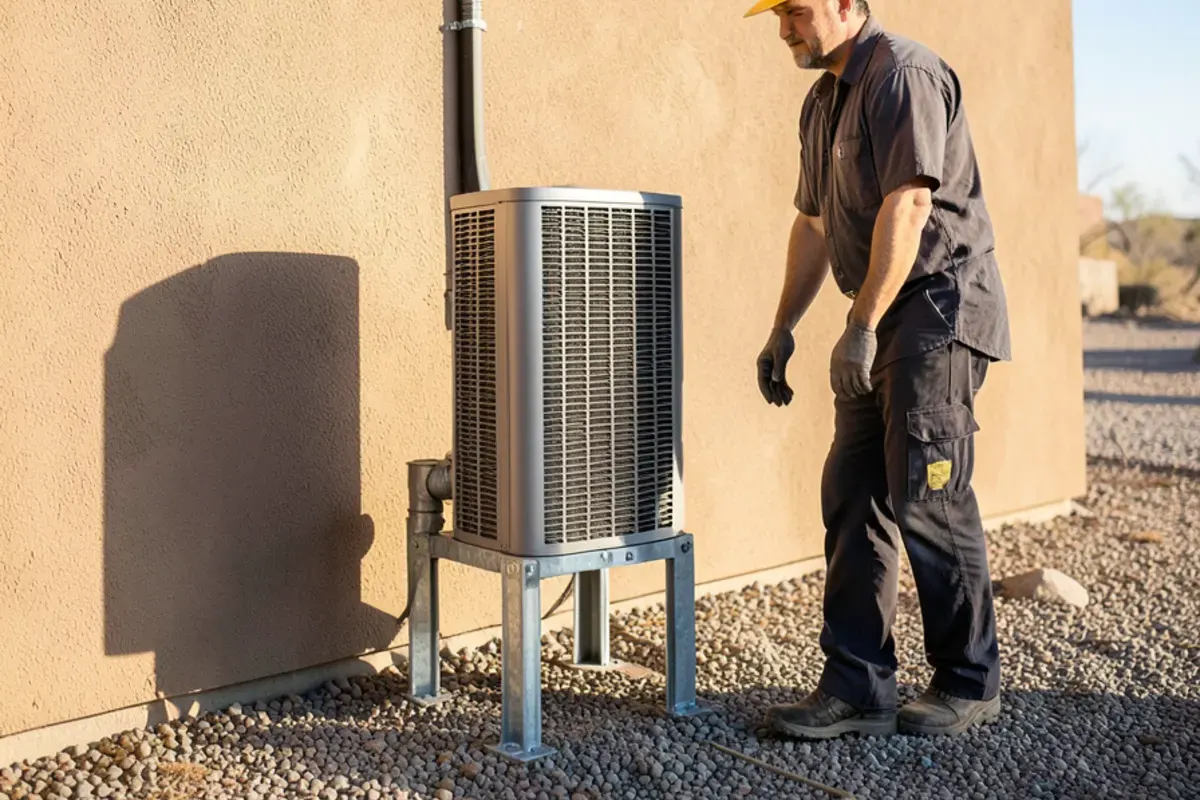
- Homes with no ductwork, including many flat-roofed or adobe houses
- Additions, garages and converted spaces where extending ducts is hard
- A hot or cold room that central air has never handled
- Homes with costly electric heat that also want cooling
- Older houses with no attic or chase space for ducts
Our ductless mini split work starts with the rooms themselves, since ENERGY STAR notes that open spaces are easier to serve than rooms behind closed doors. PNNL's Building America guide also says it is generally not recommended to connect more than three indoor units to one outdoor unit, though some models allow up to eight.
When Does Central Air Win?
Central is usually the right answer in these cases:
- The house has sound, reasonably tight ducts
- You want the whole home cooled evenly from one system
- You want strong central filtration, since a single high-grade filter can serve the whole house
- You would prefer no equipment on the walls
- A furnace is already in place and working
If those describe your home, AC installation on the existing ducts is often the most direct path. Size it with a Manual J load calculation rather than the old label.
Does Altitude Change the Answer?
It shifts the weight toward heating. Sandia Park sits above 7,000 feet, where summers are mild and winters are long, so the question there is often less about cooling than about whole-season comfort. Refrigerated air is less common at higher elevations in general. For a mountain home, a single mini split in the room that overheats may do the whole cooling job, and it can trim furnace use in shoulder seasons.
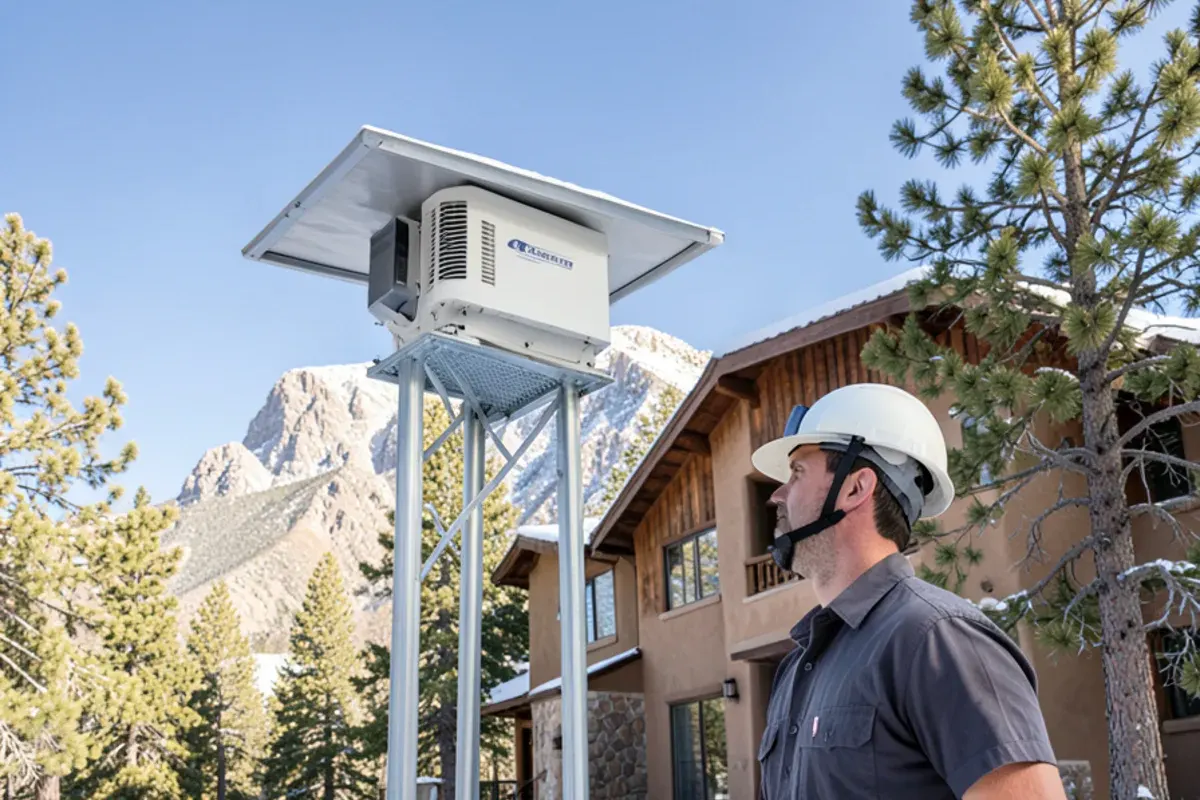
Mountain sites need care outdoors. PNNL says to install outdoor units well above snow height, and to avoid spots where water or melting snow can fall on them. Under an eave is a common mistake. Ask for manufacturer performance data for low temperatures and for your elevation if you expect the unit to carry real heating load.
What We Tell Customers Comparing These Systems
- Inspect ducts before deciding. A pressure test or inspection takes the guessing out.
- Do not put one head in a hallway and expect the bedrooms to follow. Air does not turn corners well without ducts.
- Keep the filters clean. PNNL says standard mesh filters typically need cleaning about every two weeks, and heads often need a deep cleaning every one to three years, depending on use and humidity.
- Ask for the startup numbers. PNNL's guide calls for a nitrogen pressure test and a deep vacuum to 300 microns or lower that stays below 500 during a decay test.
- Leave the fan on auto. PNNL notes that capacity and efficiency can drop when it is locked to one speed.
- Mix the two where it makes sense. Central air for the main house and a mini split for the addition is often the cheapest way to fix both.
The Trade-Offs Neither Brochure Prints
Mini splits have real weak spots, and so does central air. These are the ones worth pricing into the decision.
Shutting off heads saves less than people expect. PNNL says turning off indoor units saves little and can backfire when the remaining load falls below the outdoor unit's minimum output, which causes cycling. If a wing of the house stays empty most of the year, give it a separate outdoor unit.
Multi-head systems need one mode at a time. Keep every head on heating or every head on cooling. PNNL warns that mixed modes can switch the outdoor unit back and forth and sharply reduce efficiency.
A wall head reads the air near the ceiling. In heating, the room can feel colder at chest level than the setting says. A remote with its own sensor, a compatible wall thermostat or a floor console handles that.
Oversizing costs twice. You pay more for the equipment, then get short cycling and weaker humidity control. PNNL says to run Manual J for each zone and for the whole house, then select from the manufacturer's expanded performance table instead of the factory-rated numbers on an AHRI certificate.
Central air puts every room on one machine. When the compressor or blower fails, the whole house loses cooling. Separate outdoor units split that risk at a higher purchase price. Central also pays for any duct leak every hour it runs.
The Short Answer
Keep ducts that work, repair ducts that are close, and go ductless where ducts cannot reach or never served the room. Get a written comparison based on your actual ducts and layout. The right answer for your house is often less exciting than the sales pitch and a lot more comfortable.


Areas we serve
Common questions
Can mini splits cool a whole house?
Yes, with enough heads and a suitable layout. Open floor plans are the easiest. Homes with many closed rooms need more heads, which raises cost and adds equipment to each room. A Manual J load for each zone and for the whole house shows what is needed. When a house has sound ducts, central air is often simpler.
Is a mini split cheaper to run than central air?
Often, but not always. Mini splits avoid duct losses and let you cool only occupied rooms, which saves energy in many homes. The gap shrinks in a house with tight ducts and an efficient central system. Compare efficiency ratings and how you actually use each room. Ask for written estimates based on your own home rather than general claims.
Can I keep my furnace and add a mini split?
Yes, and the pairing often makes sense. PNNL notes that an existing system can stay as backup for extreme cold, and that ductless units can supplement a less efficient central system. In a mountain home, the furnace can stay in charge of winter while one head handles the room that overheats in summer. Agree on setpoints so the two do not fight.
How long can the refrigerant line run between the units?
Each model sets its own limit. The manual gives the maximum length and how much refrigerant to add or recover when the run differs from the factory charge, and PNNL says most ductless units are charged by weight from the outdoor data plate. On a thick-walled adobe house, the route through the wall often decides where the outdoor unit can sit, so settle that first.
Rather have someone look at it?
Call any hour. You get a straight answer, a free written estimate and the price before the work starts.
- NM CID License #413436
- 24 Google reviews
- Led by Dominic Montoya, over 20 years in the trade
- Free written estimates
Red Wrench Company, 5635 Paradise Blvd NW, Albuquerque, NM 87114, (209) 563-1270