

Does Home Insurance Cover a Broken HVAC System?
General information on how policies treat wear, breakdown and sudden damage. Your own policy is the document that decides.
- NM CID License #413436
- 24 Google reviews
- Led by Dominic Montoya, over 20 years in the trade
- Free written estimates
By Dominic Montoya, Owner of Red Wrench Company. Published , updated .
Does home insurance cover HVAC failure? Usually not when a furnace or AC wears out, and sometimes when a sudden covered event damages it. This is general information, not insurance or legal advice, and your own policy controls the answer. Read yours, then ask your agent before you assume anything either way.
Does Home Insurance Cover HVAC When It Just Wears Out?
Home insurance pays for sudden damage from covered causes. It does not pay for age. The widely used ISO HO-3 sample form lists wear and tear, deterioration and mechanical breakdown among the losses it does not insure, and the Insurance Information Institute says damage from lack of maintenance is not covered. The NAIC, the association of state insurance regulators, says a homeowners policy is not a maintenance contract.
So a compressor that dies at the end of a long life, or a blower motor that burns out from age, usually stays with the homeowner. Your policy may use different wording, which is why the form in your own file matters more than any article.
Which Kinds of Damage Might a Policy Cover?
The cause of the damage decides most of this. The table shows how standard forms tend to treat common events, not how yours will.
| What happened | How standard forms tend to treat it | What to look for in your policy |
|---|---|---|
| Age, wear, gradual failure | Usually excluded | Wear and tear and mechanical breakdown wording |
| Fire or lightning | Usually a covered peril | Fire and lightning coverage, deductible |
| Hail or wind | Usually a covered peril | Separate wind or hail deductible, roof-mounted equipment |
| Theft of equipment | Usually a covered peril | Theft wording, police report rules |
| Falling tree limb or object | Depends on the policy type | Falling objects peril |
| Freeze damage | May be covered if you used reasonable care | Maintain-heat language |
| Flood | Excluded under standard policies | Separate flood policy |
| Earthquake | Separate policy or endorsement | Earthquake endorsement |
| Power surge or outage | Wording varies widely | Electrical damage and power failure wording |
Policy type matters. The Insurance Information Institute notes that HO-3 special policies cover all perils except those excluded, while basic forms list a much shorter set of named perils.
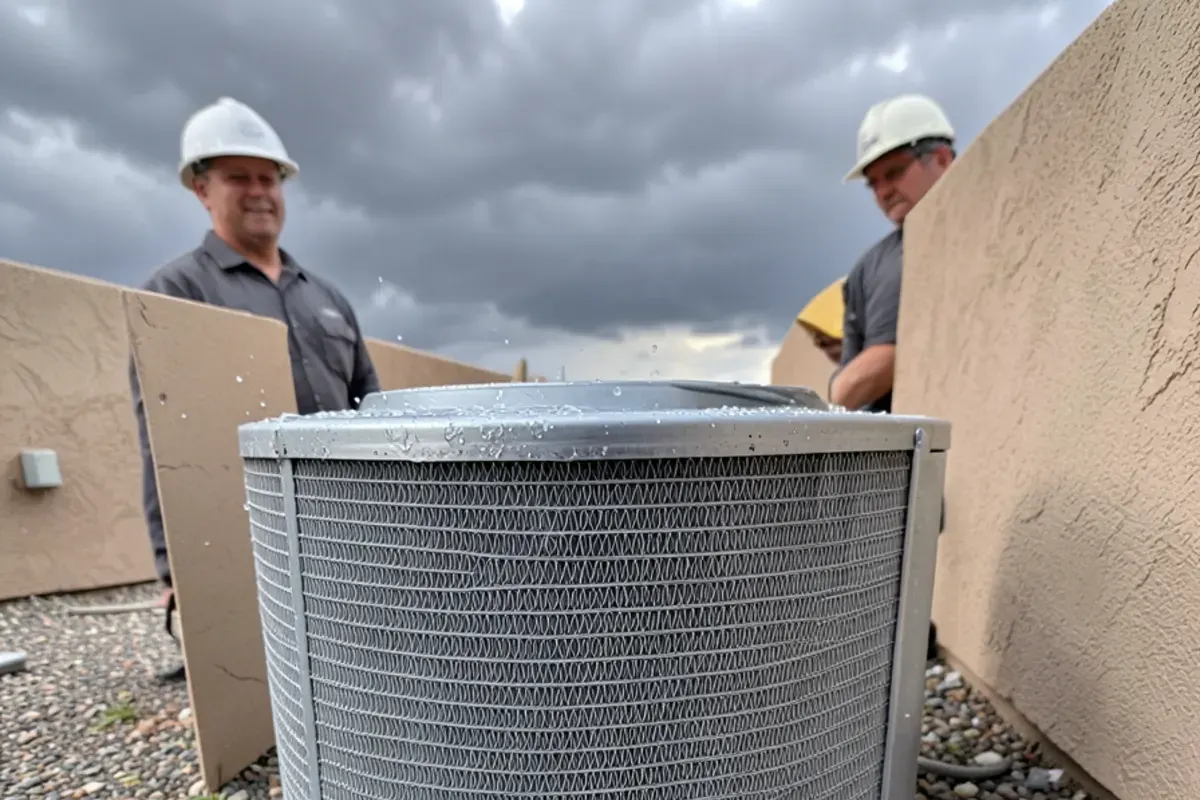
The Freeze Clause Every Second-Home Owner Should Read
Freeze language has a catch. The ISO HO-3 sample covers freezing of a plumbing, heating or air conditioning system only if you used reasonable care to maintain heat in the building, or shut off the water and drained the systems. Form type draws a second line: Triple-I's peril list shows freezing of plumbing, heating and air conditioning systems covered under HO-2 and higher, but not under the basic HO-1.
That matters for a cabin or second home left empty in the cold, and for any home where a furnace has been left broken. In the colder East Mountains around Tijeras, a furnace that quits while nobody is home can become a pipe claim. Ask your agent how your policy defines reasonable care, and have someone check the house during long absences.
Equipment Breakdown Coverage and Home Warranties Are Different Things
Two products fill the gap that home insurance leaves.
Equipment breakdown coverage is an optional add-on some insurers offer. The Mississippi Insurance Department's shopping guide describes it as coverage that pays to repair or replace a home system that breaks down, such as central air or heating. Availability and limits vary by company and state.
A home warranty is really a service contract, as the FTC describes it, and it costs extra. The NAIC says it covers mechanical breakdown of individual parts of a home and has its own exclusions and end date.
Check your declarations page to see which, if any, you already have. Read what each one says about pre-existing conditions and maintenance records before you count on it.
What We Tell Customers Thinking About a Claim
We do not decide claims and we cannot tell you what your insurer will pay. We can tell you what failed, and that is where these rules come in.
- Protect the home first. Shut down damaged equipment and stop any water. Standard policies expect you to prevent further loss.
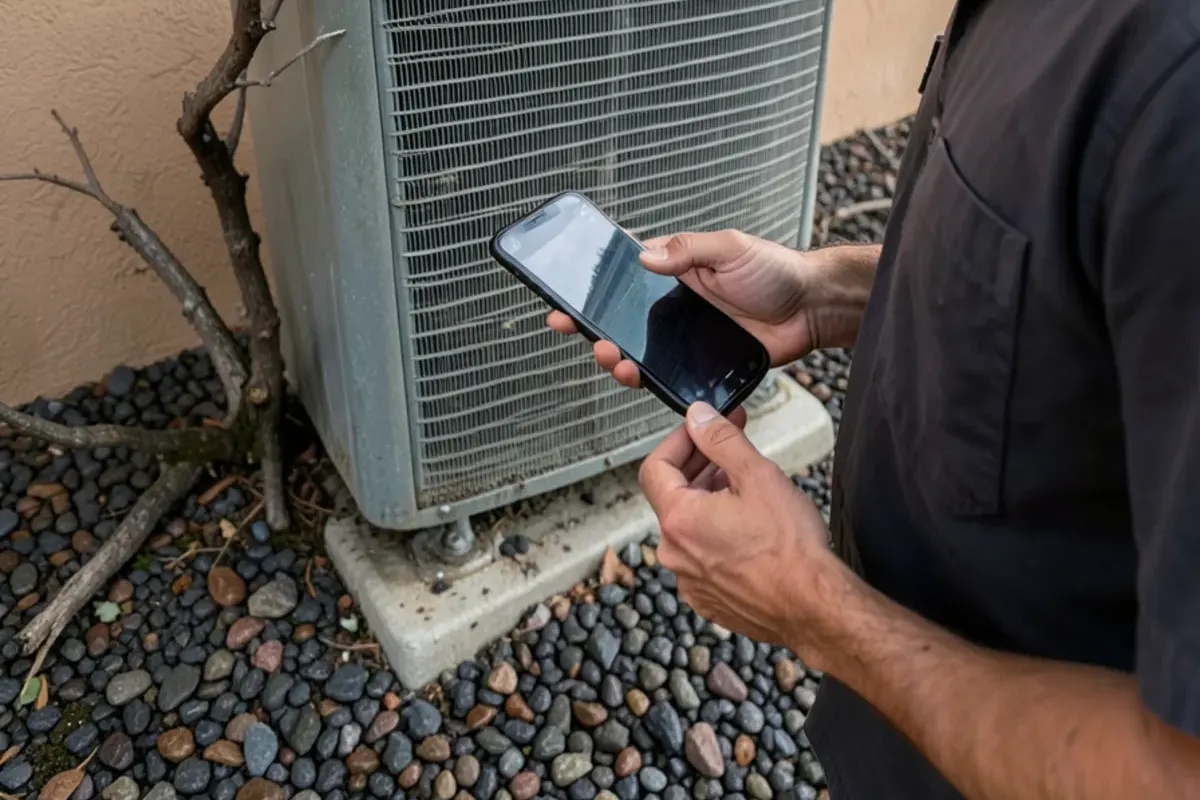
- Photograph everything before it moves. Include dents, scorch marks and the model plate, with dates.
- Keep the failed parts. An adjuster may want to see them.
- Get the cause in writing. A diagnosis saying what failed and why is far more useful than a price alone. Ours is plain English, and the estimate is free.
- Call the insurer before you replace. Ask about their process, unless the home is unsafe without heat or cooling.
- Keep your maintenance records. Invoices help show the system was cared for.
- Consider having your contractor at the inspection. The NAIC suggests this, and it lets a technician point out what the storm did and what age did.
Questions to Ask Before You File
A claim is not always worth filing, even when it is covered. Put these to your agent, and write down the answers.
- What is my deductible, and is there a separate wind or hail deductible?
- Does the policy pay replacement cost or actual cash value? Actual cash value subtracts for age and wear.
- Is equipment breakdown coverage on this policy?
- How will a claim affect my premium or renewal?
If you think an insurer has handled a claim badly, the New Mexico Office of Superintendent of Insurance takes complaints at (855) 427-5674. OSI says to contact your company first and request an explanation.
Is a Small HVAC Claim Worth Filing? The Honest Trade-Offs
Run the numbers before you report it. The NAIC says to compare the expected repair cost with your deductible, and that minor damage may be better paid out of pocket. Triple-I adds that disaster-prone areas may carry separate deductibles for wind or hail, so a dented condenser can land under the amount you would owe anyway.
| Choice | What you gain | What you give up |
|---|---|---|
| File on a small repair | Money above the deductible | A claim on your record, with effects your agent can explain |
| Pay for the repair yourself | Speed and no claim | The full bill |
| Repair the damaged parts | A working system at lower cost | Bent coils may keep losing capacity if straightening falls short |
| Replace the whole system | New matched equipment | Cost beyond the covered damage is usually yours |
| Add equipment breakdown coverage | Help with failures standard forms exclude | Extra premium, plus limits and exclusions |
Claim history can also follow the house. Triple-I describes CLUE reports as holding the insurance claim history of a property, and a future buyer may look at one.
Age changes the math too. On an actual cash value policy, an old condenser pays out at its depreciated value, so a covered claim can still leave most of a new unit on you. Ask for that estimate in writing before you decide.
Read the Policy, Then Get the Facts
Most HVAC failures are a maintenance or replacement cost, not an insurance event. A storm, a fire or a freeze can change that answer, depending on what your policy says.
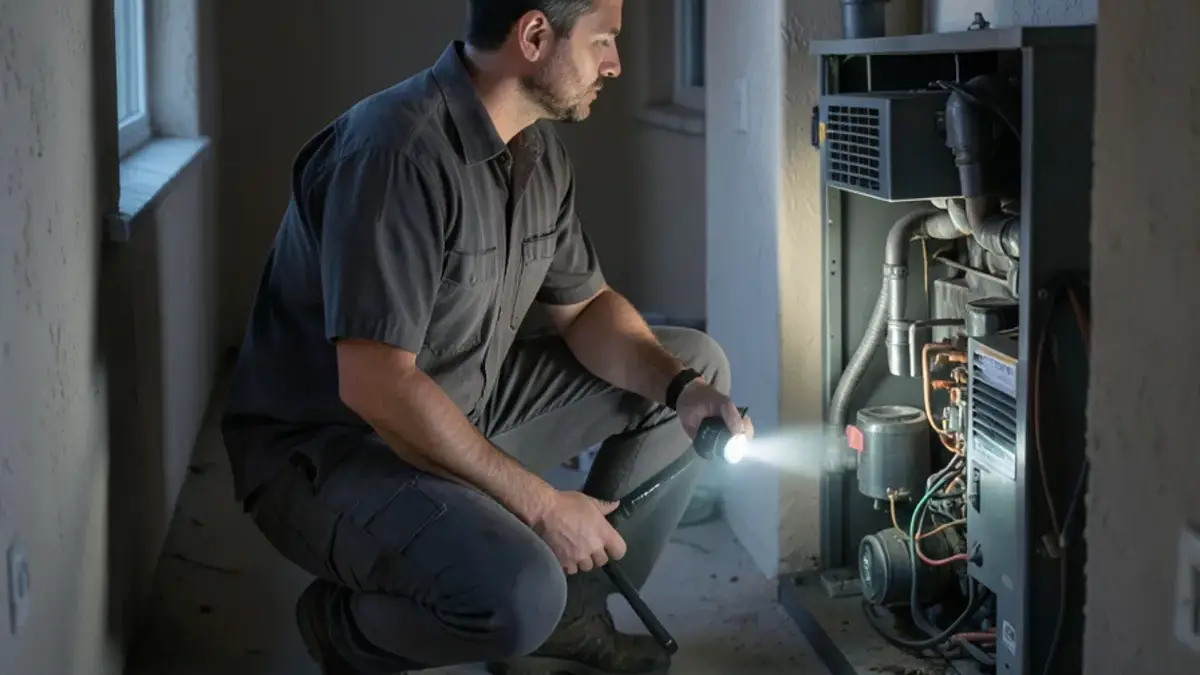
Whatever the cause, you need a clear account of what happened. We repair and replace systems across our heating and air conditioning work, with emergency HVAC service when a system fails after hours. Call (209) 563-1270 and we will tell you what failed and what it takes to fix it.
Areas we serve
Common questions
Will insurance replace an old furnace that stopped working?
Usually not. Standard forms exclude wear, deterioration and mechanical breakdown, so a furnace that fails from age tends to stay with the homeowner. Equipment breakdown coverage may change that if your policy has it. Check your own policy, or ask your agent, since wording differs between companies.
Is hail damage to my AC condenser covered?
Often, since standard policies list windstorm or hail as a covered peril, though your deductible may be separate and higher. Monsoon storms can bend coil fins quickly. Photograph the damage that day, keep the date, and ask your agent how to proceed before replacing anything.
How soon should I report storm damage to my AC?
Promptly. The NAIC says to notify your insurer quickly, because reporting deadlines vary by state, and to find out your deductible first. After a monsoon storm, shut the unit off if it sounds wrong, take dated photos, then call. A written diagnosis can follow, and it gives the adjuster a stated cause to review.
Does a power surge count as covered damage to my HVAC system?
It might. Triple-I's peril list includes sudden, accidental damage from artificially generated electrical current, but wording and limits differ by policy, and outages are a separate question. Ask your agent how yours treats control boards and motors. A written finding that a surge caused the failure, rather than age, is the document that helps most.
Will my insurer pay for a whole new system if only the condenser was hit?
Do not count on it. Policies respond to covered damage, so an insurer may price the damaged outdoor unit and leave the indoor coil out, even when the two are a matched pair. Ask how matching is handled before you sign anything. Have the technician state in writing whether the surviving equipment can work with the replacement.
Sources
- Insurance Information Institute: Which disasters are covered by homeowners insurance?
- Insurance Services Office: Homeowners 3 Special Form HO 00 03 10 00, sample hosted by the Insurance Information Institute
- NAIC: A Consumer's Guide to Home Insurance
- Mississippi Insurance Department: A Shopping Tool for Homeowners Insurance, hosted by the NAIC
- FTC: Warranties for New Homes
- New Mexico Office of Superintendent of Insurance: Complaints
- NAIC: What You Need to Know When Filing a Homeowners Claim
- Insurance Information Institute: 12 Ways to Lower Your Homeowners Insurance Costs
Rather have someone look at it?
Call any hour. You get a straight answer, a free written estimate and the price before the work starts.
- NM CID License #413436
- 24 Google reviews
- Led by Dominic Montoya, over 20 years in the trade
- Free written estimates
Red Wrench Company, 5635 Paradise Blvd NW, Albuquerque, NM 87114, (209) 563-1270